Editor’s Note
This profile of Hermès CEO Axel Dumas reveals an unconventional path to the pinnacle of luxury. His journey—from studying philosophy to investment banking in global markets—underscores how diverse experiences can forge the unique vision required to steward a legendary heritage brand.

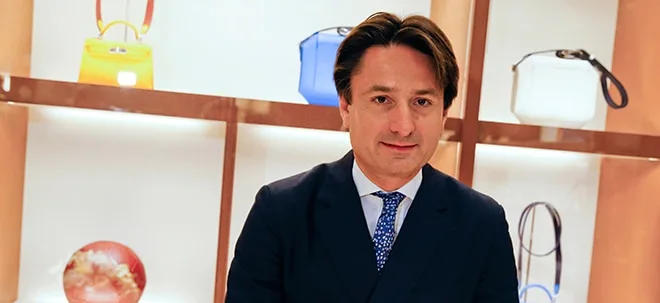
He is one of the biggest names in the elegant world of luxury. But the job as head of Hermès was not handed to him on a silver platter. Axel Dumas, whose ancestors in Paris found success with exclusive horse harnesses and riding equipment, first studied philosophy and law, then worked for Paribas Bank as an investment banker in China and the USA, before his uncle asked him over lunch if he would like to join the family business.
Dumas, the great-great-great-grandson of founder Thierry Hermès, had played in the company’s rooms as a child, where craftsmen later taught him sewing as a teenager. But he would likely have remained an investment banker in New York if not for Jean-Louis Dumas, his uncle and then head of Hermès, who in 2003 made the prospect of joining the family business appealing.
There, he first worked as an auditor and was then responsible for Hermès’s jewelry department. It was the smallest department.
But he did not fail. On the contrary: Dumas rose to CEO within a decade. Today, he leads Hermès from his office on the tenth floor of the company’s headquarters.
The Shakespeare fan, who dreams of occasionally resuming his philosophy studies, wants to preserve Hermès as a family business. That’s why he went into battle with LVMH CEO Bernard Arnault, the richest Frenchman, who wanted to take over Hermès.
Hermès would have fit well with LVMH, so Arnault essentially tried to take over the competitor through the back door. Over the years, he had acquired so-called equity swaps with the help of several banks and LVMH subsidiaries. When the agreed stock price was exceeded in 2010, at which point the banks were supposed to pay LVMH the difference from the original purchase price, Arnault instead demanded Hermès shares. But Axel Dumas knew how to prevent a takeover. He founded a family holding company, which holds 50 percent of the wealth and was intended to prevent a takeover of the company for the next 20 years.
The success story of Hermès began with Thierry Hermès, whose Huguenot ancestors fled from France to the Protestant regions of Germany in the 18th century. Thierry, born in 1801 in Prussian Krefeld, completed an apprenticeship as a saddler in the city and moved to Paris in 1828. In an affordable location in a prime spot, he opened his first shop, where he produced horse harnesses, bridles, and later saddles – products whose elegance and quality were well-received by Parisian high society and which won a medal at the 1855 Paris World’s Fair.
Thierry had one child, Charles-Émile, who continued his father’s business and moved it to the upscale shopping street Rue du Faubourg Saint-Honoré, still the company’s headquarters today. Charles-Émile drove internationalization, supplying customers across Europe, Russia, North Africa, Asia, and America. Charles-Émile – called “Saddler to Emperors and Kings” – was even appointed court supplier by the Russian Tsar. The reason for the excellent reputation of Hermès products was the superb craftsmanship, luxurious materials, and long durability.
When cars and trains began displacing horses and carriages from the streets at the beginning of the 20th century, Hermès began producing high-priced suitcases and bags. This included the precursor to the legendary Kelly Bag, originally a large travel bag for transporting harnesses.
Charles-Émile’s son Émile-Maurice, who later took over the business, expanded the offering around the theme of travel, initially making bags and carrying straps for suitcases to secure luggage to cars. Later, jewelry, silk scarves, and other accessories were added. In the late 1930s, the famous hand-printed silk scarves with equestrian motifs also appeared.
As early as 1935, Hermès had developed the “Sac à Dépêches,” a ladies’ bag with a strap, which was not a bestseller in its first two decades. This changed when Hollywood star Grace Kelly, on the day of her engagement to Prince Rainier of Monaco in 1956, carried the bag like a shield in front of her stomach to hide the first curves of her pregnancy.
In the early 1980s, Hermès launched the Birkin Bag, named after British actress and singer Jane Birkin – the bag is now considered one of the most exclusive and famous in the world.
What’s next for Hermès?