Editor’s Note
This analysis highlights the rapid expansion of the virtual fitting room market, projected to grow from $5.71 billion in 2024 to $24.30 billion by 2032. North America, led by the U.S., currently dominates this transformative segment of retail technology.
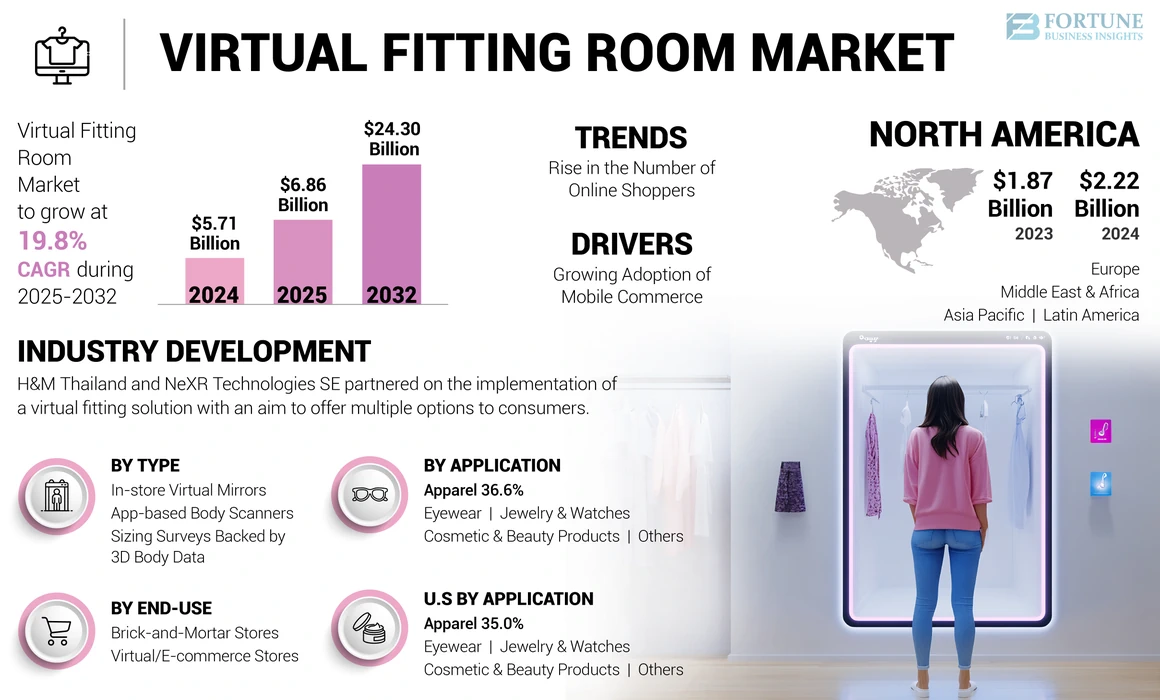
The virtual fitting room market size was valued at USD 5.71 billion in 2024 and is projected to grow from USD 6.86 billion in 2025 to USD 24.30 billion by 2032, exhibiting a CAGR of 19.8% during the forecast period. North America dominated the global virtual fitting room market with a share of 38.88% in 2024. Furthermore, the U.S. virtual fitting room market is expected to increase significantly, reaching an estimated value of USD 7.55 billion by 2032.
Within the scope, we have considered virtual fitting room solutions provided by key players such as Sensemi’s Viubox Mirror, Viubox Syz, YourFit, Mobile Tailor, Fit Analytics Fit-Finder, and 3DLook’s MagicMirror.
Market Size:
2024 Value: USD 5.71 Billion
2025 Value: USD 6.86 Billion
2032 Forecast Value: USD 24.30 Billion, with a CAGR of 19.8% from 2025 to 2032

Market Share:
Regional Leader:
North America held a market share of 38.88% in 2024, driven by widespread adoption of AR, VR, and AI technologies in e-commerce and retail, and significant activity in the United States, which is expected to reach USD 7.55 billion by 2032.
Fastest-Growing Region:
Asia-Pacific is expected to grow at the highest CAGR, supported by China’s dominance in global fashion exports and India’s rapidly expanding digital economy.
End-User Leader:
(Not explicitly stated in the provided text – segments across apparel, eyewear, cosmetics, and jewelry are discussed, with apparel having the largest share, but no single “end-user leader” is identified.)
App-Based Body Analysis: Mobile solutions like YourFit and Mobile Tailor dominate by enabling customers to try on clothes virtually via smartphone.
Retailer Adoption and Partnerships: Fashion brands (e.g., H&M, Gucci, Savage X Fenty) partner with technology providers such as NEXR, Fit:Match, and Intel to deploy virtual fitting technologies.
Augmented Reality and Social Commerce Integration: Features such as Magic Mirrors and Snapchat AR Try-On lenses enhance customer engagement and seamless shopping journeys.
Mobile Commerce Surge: Enhanced VFR access via smartphones and apps supports broader adoption in fashion retail.
Post-Pandemic E-commerce Growth: Global e-commerce grew from USD 3.3 trillion in 2019 to a projected USD 5.4 trillion by 2026, pushing VFR demand.
Influencer and Social Media Engagement: Platforms like TikTok, Snapchat, Instagram, and Pinterest fuel avatar usage and virtual try-on.
Strategic Investments and Acquisitions: Collaborations and product launches from companies like Snapchat, Gap, and 3DLook help scale AR/VR fitting tools.

Retailer Performance Benefits: Virtual fitting rooms reduce returns, increase average order value, and boost customer loyalty.