Editor’s Note
As the luxury sector navigates headwinds, high-end jewelry watches are defying trends with record-breaking performances. This article explores how major luxury groups are doubling down on the Chinese market, showcased vividly at events like the Shanghai CIIE, signaling a strategic pivot toward timepieces as wearable art.
Against the backdrop of an overall downturn in the luxury goods industry, some high-end jewelry watches have emerged as “dark horses” this year, setting impressive new records. At the recently concluded Shanghai China International Import Expo (CIIE), the world’s three major luxury groups—LVMH, Kering, and Richemont—gathered for the first time to exhibit and compete on the same stage, fully demonstrating their commitment to investing in China. According to global consulting firm Bain & Company, China is expected to become the world’s largest luxury market by 2025. Industry insiders indicate that as the trend towards premiumization intensifies, luxury brands are also beginning to compete more fiercely on the “experience” front, based on cultural integration. This particularly focuses on the “gold content” of the products themselves (design and technological application) and “diverse interactions” with consumers (crossovers and sustainable development).
Guangzhou business analyst Xiao Tang stated that under normal circumstances, high-end jewelry, due to its unique perceived value and long-term investment appeal, has always maintained a group of high-net-worth, high-quality clients whose demand for high-end jewelry remains strong. “However, outside the auction house and antique jewelry exhibition markets, brands still need to tap into more potential consumer groups. Therefore, starting next year, the focus will be on elevating entry-level jewelry.” It was also noted that many brands are actively adjusting their product lines, enhancing entry-level designs, and strategically raising the entry threshold.
From a design perspective, high-end jewelry shows two clear development trends: expanding the concept of “high jewelry” across categories, and innovative combinations of small-volume jewelry (such as rings, bracelets, brooches) with technological applications.
Fashion blogger Ren Ren told the reporter that brands at slightly lower price points are also following the trend of smaller engagement rings to meet the needs of emerging consumers with limited budgets but a desire for special mementos. For instance, Dior, Tiffany, and Cartier have all introduced exquisite, compact styles priced below £3,000. It is reported that some wearable jewelry categories with timing functions or infrared capabilities are also favored by the male consumer market.
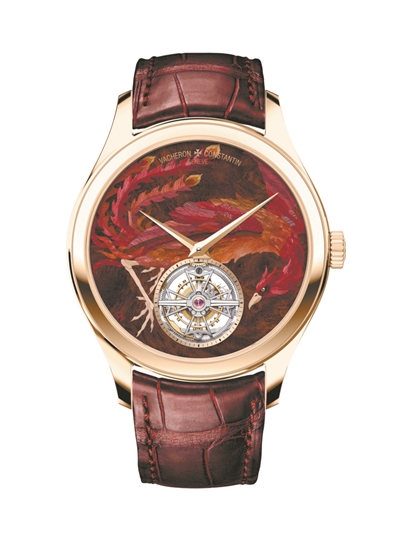
Business analyst Xiao Tang told the reporter, taking this year’s Shanghai CIIE as an example, while showcasing their jewelry prowess, luxury groups also did not forget to flex their watchmaking “muscles,” including brands like Cartier, Jaeger-LeCoultre, and Vacheron Constantin. Among them, Vacheron Constantin presented new works from its Métiers d’Art collection, including the highly praised “Les Cabinotiers Le Temps Divin” series, a new timepiece created in collaboration with a former associate researcher from the Palace Museum in Beijing, paying tribute to the ancient and intricate art of cloisonné enamel.
Blogger Ren Ren believes that the trend of watches becoming more jewelry-like has become increasingly evident in recent years, even in the mid-to-high-end market. Notably, the new generation of consumers pays more attention to environmental footprints and the provenance of gemstones. Therefore, practicing sustainable development is also an important strategy for the entire high-end luxury industry.

According to the “2023 China Luxury Market Report” recently released by global consulting firm Bain & Company, by 2030, China will become one of the world’s leading luxury markets. The proportion of consumption by mainland Chinese consumers in global consumption is expected to increase to 35%-40%, with the share of the mainland market rising to 24%-26%. Fashion industry analysts generally believe that in the Chinese market, luxury groups are continuously advancing youth-oriented strategies. Whether in product design, technological innovation, or cross-border interactions, they need to deeply engage with the entire younger customer base.
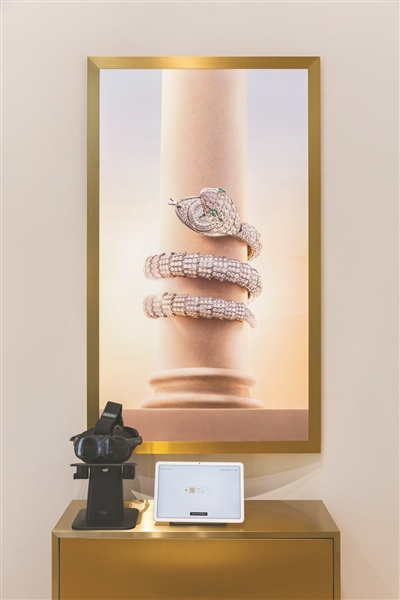
It was noted that in recent years, the renovation and reopening of luxury offline experience stores have first established the importance of high-quality experiences. This year, Beijing’s WF CENTRAL welcomed the opening of flagship stores and boutiques for several jewelry and watch brands, including Van Cleef & Arpels, IWC, and Jaeger-LeCoultre. This not only further strengthened the mall’s advantage in the jewelry and watch category but also provided visiting consumers with a new design and purchasing experience. For example, with the reopening of the Hermès flagship store in MixC, watches have become one of the popular categories within jewelry and accessories. The redesigned Vacheron Constantin store in Guangzhou’s TaiKoo Hui added an AI-powered interactive visual installation on the basis of honoring traditional craftsmanship, placing greater emphasis on telling the story of watchmaking to young people.
Senior industry insiders revealed that this is not simply a store renovation but a comprehensive upgrade of the business model. The traditional store model dominated by display and sales is gradually being replaced by a new type of store centered on experience and service. Behind this transformation lies the watch brands’ deep insight into market trends: as consumers increasingly pursue personalized, high-quality experiences, mere product sales are clearly no longer sufficient to meet demand. A new business model centered on customer operations is becoming an inevitable trend in industry development.
It was learned that during this year’s “Double 11” shopping festival, the Rolex counter at the Oriental Watch Company in Grandbuy Mall (Tianhe Zhongyi) in Guangzhou achieved sales exceeding 10 million yuan, a year-on-year increase of 11%, while Tudor sales doubled year-on-year. At Guangzhou Friendship Store, Vacheron Constantin successfully sold a Traditionnelle Tourbillon watch worth 1.31 million yuan, and both the sales volume and average transaction price for the Omega brand doubled. This shows that the high-end consumption market in Guangzhou continues to perform well.

Ms. Yin, head of Watch World, told the reporter that fashionable pop-up forms and trendy store design styles are attracting the attention and participation of a large number of young consumers. Factors such as brand recognition, materials, design style, and cost-performance ratio will continue to influence consumers’ purchasing decisions. In the future, personalized customization services will also become an important driving factor in the market.