Editor’s Note
This article outlines Botswana’s new 10-year diamond sales agreement with De Beers, a strategic move to stabilize revenues. The initial five-year terms grant a larger share to De Beers, reflecting ongoing negotiations in the global diamond market.

Facing a drop in diamond revenues, Botswana signed a 10-year agreement on Tuesday with the global industry leader, De Beers.
according to a statement released by De Beers. The decade-long sales agreement includes an option for an additional five years.
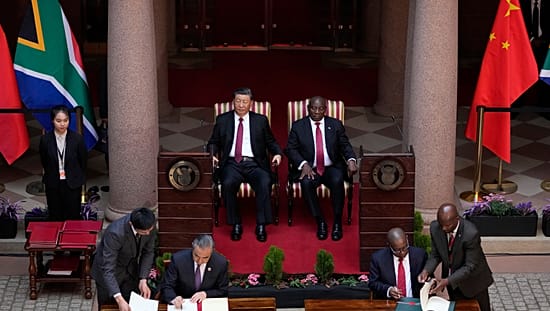
The new agreement, signed by Botswana’s President Duma Boko, will increase the African country’s share to 40% over the next five years, and even to 50% if extended for another five years. This is expected to partially offset the global decline in diamond demand and competition from synthetic stones, which have weighed on the revenues of Botswana, the world’s second-largest diamond producer after Russia. In return, De Beers secured a 25-year extension of its mining licenses in Botswana, from 2029 to 2054.
According to the International Monetary Fund, diamonds account for about 80% of Botswana’s exports and a quarter of its GDP. However, falling diamond prices and demand have severely hampered the country’s economy.

Since 2022, the diamond market has suffered from competition from lab-grown stones, alternatives that are significantly cheaper than precious stones mined from the earth. The decline in demand in China, partly due to a slowdown in the number of marriages, is also contributing to the price drop. China is the second-largest consumer of diamonds after the United States.
Over the past decade, Botswana has discovered all of the world’s largest rough diamonds, including a 2,492-carat stone discovered last year, the second-largest diamond ever mined and the largest in over a century. This precious stone was found by Canadian mining company Lucara.
In 2021, Debswana discovered a 1,098-carat diamond, its largest to date. However, the company’s total sales for the first nine months of 2024 amounted to $1.53 billion, according to Botswana’s central bank, a drop of more than 50% from the $3.19 billion recorded in the same period in 2023. According to the World Bank, the country’s dependence on diamonds has made its economy vulnerable.