Editor’s Note
Kuwait has taken a significant step to modernize its gold and precious metals trade by banning all cash transactions. This move aims to enhance transparency, curb illicit financial flows, and bring the sector in line with global standards.
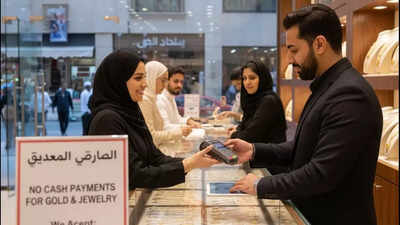
Kuwait has ushered in a new era for its precious metals market, making a bold move that aligns it with international best practices. The Ministry of Commerce and Industry recently issued a landmark decision that completely bans cash payments for the purchase of gold, precious stones, and precious metals. This strategic shift is designed to transform the sector, boosting integrity and fighting financial crime.
The fundamental change comes directly from the top. Ministerial Resolution No. 182 of 2025 was issued by Minister of Commerce and Industry, Khalifa Al-Ajil. This resolution mandates that all companies and institutions that deal in the trade of gold, precious stones, precious metals, and related activities are now strictly prohibited from using cash for any transaction or contract.
The Ministry of Commerce and Industry announced the decision, emphasizing that the directive aims to enhance transparency, combat money laundering, and ensure compliance with financial oversight standards.
Instead of cash, the new mandate now requires that all financial dealings must be executed exclusively through secure non-cash payment methods. These advanced methods must be specifically approved and regulated by the Central Bank of Kuwait (CBK). This immediate nationwide change aims to fully integrate the gold sector into a transparent, secure, digital system subject to full banking supervision.
The core purpose of the decision is to establish a more transparent and safe business environment. Experts in the sector have widely praised the move, acknowledging that the high value and nature of gold products make the industry particularly vulnerable to exploitation in illegal activities, most notably money laundering.
By eliminating cash transactions, the new law:
- Limits Manipulation: Halting the use of cash significantly reduces the risk of irregular transactions and financial manipulation.
- Boosts Transparency: It raises transparency levels and ensures all transactions occur within a regulatory framework.
- Strengthens Trust: It protects consumers and raises standards of integrity, increasing overall confidence in the market.
The move also follows recommendations from international bodies like the Financial Action Task Force (FATF), which urged Kuwait to improve enforcement against financial crimes.
The new resolution is not merely a suggestion—it carries very strict, immediate penalties for non-compliance.
Article Two of the decision makes it clear that any establishment found knowingly violating the prohibition on cash payments will face immediate closure and subsequent referral to the competent investigative authorities for appropriate legal action.
The rule applies to every institution under the Ministry of Commerce and Industry’s supervision that engages in the specified trade. By adopting these non-cash methods, the market is quickly moving towards a new commercial environment governed by the banking system, ensuring full accountability for every sale.
The new regulation also reinforces Kuwait’s Anti-Money Laundering and Counter-Terrorism Financing Law of 2013.
Kuwait’s decision is part of a broader, concerted effort across the Gulf Cooperation Council (GCC) to regulate the flow of funds and transform the precious metals trade. The move brings Kuwait in line with the advanced experience of its regional neighbours:
- United Arab Emirates (UAE): In 2022, the UAE adopted the ‘UAE Gold Chainlink System,’ which mandates the electronic tracking of payments to guarantee transparency.
- Saudi Arabia: The Kingdom implemented a stringent electronic monitoring system for gold transactions, compelling shops to use non-cash payment methods.
- Oman: The Capital Market Authority has also emphasized the prohibition of cash transactions in the precious metals trade to support financial oversight and prevent tax evasion.