Editor’s Note
The market for high-value collectibles is redefining what constitutes an investment, as evidenced by a record-breaking year at auction. From a first-edition Superman comic fetching over $9 million to fossils and film memorabilia, this trend underscores the powerful convergence of popular culture, history, and finance.
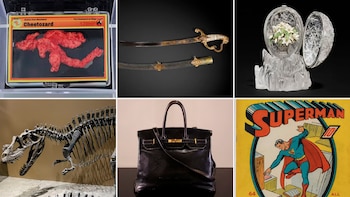
The high-value collectibles market has experienced an exceptional year, with pieces ranging from dinosaur fossils to iconic objects from film and history achieving record figures at international auctions. This phenomenon, which solidifies popular culture and history as investment categories, is reflected in the sale of a pristine copy of the first Superman comic, which was sold for USD 9.12 million in November.
This milestone not only surpassed the previous record of USD 6 million set in 2024 but also positioned comics as top-tier assets in the collector’s universe.
Among the year’s most notable lots was the skeleton of a juvenile Ceratosaurus, found in Wyoming in 1996, which was auctioned in July for USD 30.5 million, shattering its pre-sale estimate of USD 6 million. This dinosaur, which inhabited North America, Europe, and parts of Africa between 154 and 159 million years ago, measured up to six meters in length and was characterized by its three horns and sharp teeth. The sale confirms the trend of dinosaur fossils reaching prices comparable to contemporary art masterpieces.

The world of high jewelry also set a record with the Fabergé Winter Egg, an imperial piece created in 1913 by designer Alma Pihl as an Easter gift from Tsar Nicholas II to his mother, Maria Feodorovna. This work, crafted from rock crystal, platinum, and diamonds, sold in December for USD 30.2 million, becoming the most expensive Fabergé egg ever auctioned, according to Christie’s.
Classic cinema contributed another milestone with the auction of the “Rosebud” sled from Citizen Kane (1941), which reached USD 14.75 million in July at Heritage Auctions. Only three original examples of this object, considered the symbolic key to Orson Welles’s film, are known to exist. The sled, which belonged to director Joe Dante, positioned itself as the second most valuable piece of film memorabilia, surpassed only by Judy Garland’s ruby slippers.
In the musical realm, a 1714 Stradivarius violin, known as from the “golden period” of luthier Antonio Stradivari, was sold for USD 11.3 million at Sotheby’s. This instrument was used by Hungarian violinist Joseph Joachim at the 1879 premiere of Johannes Brahms’s Violin Concerto in D major. Decades later, violinist Yo-Yo Ma acquired it, and upon his passing, his will stipulated that the violin pass to the New England Conservatory, which will use the funds for scholarships for future musicians.
The world of fashion also joined the wave of records with the sale of the first Birkin bag from Hermès, owned by actress Jane Birkin. This accessory, created in 1984 following a casual conversation between Birkin and Hermès chairman Jean-Louis Dumas, was auctioned for USD 10 million after intense bidding among nine buyers, ultimately acquired by a Japanese collector. The bag, personalized with the actress’s initials and decorated with activism stickers, has become a symbol of exclusivity and desire.

European history was represented by the commemorative sword of Napoleon Bonaparte, crafted in 1802 by gunsmith Nicolas-Noël Boutet and presented to General Emmanuel de Grouchy on the eve of the Battle of Waterloo. After remaining with the Grouchy family for over two centuries, the piece was auctioned in May for USD 5.2 million at the Giquello auction house, solidifying the appeal of Napoleonic memorabilia in the French market.
Among objects with high emotional weight, the 18-karat gold pocket watch that belonged to Isidor Straus, co-owner of Macy’s and a passenger on the Titanic, stands out. This watch, a birthday gift from his wife Ida in 1888, was auctioned in November for USD 2.3 million at Henry Aldridge and Son, setting a new record for relics recovered from the shipwreck. The piece remained in the Straus family for over a century before coming to market.
Science also had its moment with the sale of Galileo Galilei’s first publication, “Cecco di Ronchitti da Bruzene. Dialogo in perpuosito de la stella nuova” (1605), which reached USD 1.5 million at Christie’s. Only seven known copies of this work exist, all in institutional collections, in which Galileo refuted the Aristotelian view of the immutability of stars following the appearance of the supernova of 1604.
The market for unusual collectibles surprised with the sale of a Cheeto shaped like Charizard, the Pokémon dragon, which was auctioned for USD 87,840 at Goldin.
