Editor’s Note
This analysis highlights the MENA region’s dynamic imitation jewellery sector, projected to grow from $587M to $741M by 2035. While Turkey, the UAE, and Saudi Arabia lead in consumption, the region remains a net importer, with rising prices and high per-capita demand in the UAE shaping key market trends.

The MENA imitation jewellery market, valued at $587M in 2024, is forecast to grow to $741M by 2035. Consumption is led by Turkey, UAE, and Saudi Arabia, while production is concentrated in Israel and Turkey. The region is a net importer, with imports valued at $678M in 2024, driven by Saudi Arabia, UAE, and Turkey. Key trends include rising import prices and significant per capita consumption in the UAE.
Driven by rising demand for imitation jewellery in MENA, the market is expected to start an upward consumption trend over the next decade. The performance of the market is forecast to increase slightly, with an anticipated CAGR of +1.3% for the period from 2024 to 2035, which is projected to bring the market volume to 24K tons by the end of 2035.
In value terms, the market is forecast to increase with an anticipated CAGR of +2.1% for the period from 2024 to 2035, which is projected to bring the market value to $741M (in nominal wholesale prices) by the end of 2035.
After three years of growth, consumption of imitation jewelry decreased by -0.7% to 21K tons in 2024. Overall, consumption showed a pronounced decline. The volume of consumption peaked at 28K tons in 2013; however, from 2014 to 2024, consumption stood at a somewhat lower figure.
The size of the imitation jewellery market in MENA declined to $587M in 2024, shrinking by -2.9% against the previous year. This figure reflects the total revenues of producers and importers (excluding logistics costs, retail marketing costs, and retailers’ margins, which will be included in the final consumer price). Over the period under review, consumption saw a mild setback. The level of consumption peaked at $723M in 2013; however, from 2014 to 2024, consumption stood at a somewhat lower figure.
The countries with the highest volumes of consumption in 2024 were Turkey (3.9K tons), the United Arab Emirates (3.3K tons) and Saudi Arabia (3.3K tons), together accounting for 51% of total consumption.
Iraq, Algeria, Israel, Iran, Yemen, Egypt and Morocco lagged somewhat behind, together accounting for a further 35%.
From 2013 to 2024, the most notable rate of growth in terms of consumption, amongst the main consuming countries, was attained by Morocco (with a CAGR of +4.7%), while consumption for the other leaders experienced more modest paces of growth.
In value terms, the largest imitation jewellery markets in MENA were Saudi Arabia ($158M), the United Arab Emirates ($124M) and Israel ($89M), together accounting for 63% of the total market.
Among the main consuming countries, Saudi Arabia, with a CAGR of +6.7%, saw the highest growth rate of market size over the period under review, while market for the other leaders experienced more modest paces of growth.
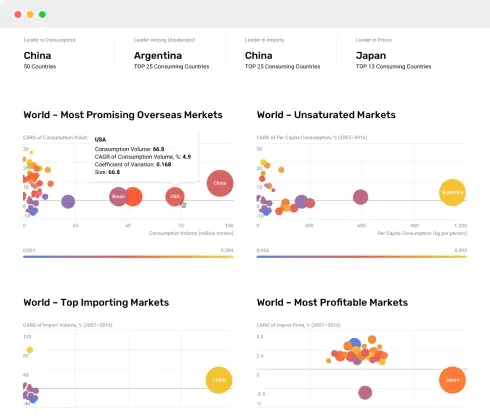
In 2024, the highest levels of imitation jewellery per capita consumption was registered in the United Arab Emirates (326 kg per 1000 persons), followed by Israel (131 kg per 1000 persons), Saudi Arabia (89 kg per 1000 persons) and Turkey (45 kg per 1000 persons), while the world average per capita consumption of imitation jewellery was estimated at 35 kg per 1000 persons.
In the United Arab Emirates, imitation jewellery per capita consumption remained relatively stable over the period from 2013-2024. In the other countries, the average annual rates were as follows: Israel (-1.5% per year) and Saudi Arabia (-3.8% per year).
In 2024, production of imitation jewelry in MENA dropped to 3.5K tons, falling by -14.3% against 2023 figures. In general, production, however, recorded a relatively flat trend pattern. The pace of growth appeared the most rapid in 2014 when the production volume increased by 77%. As a result, production attained the peak volume of 6K tons. From 2015 to 2024, production growth failed to regain momentum.
In value terms, imitation jewellery production contracted to $198M in 2024 estimated in export price. The total production indicated mild growth from 2013 to 2024: its value increased at an average annual rate of +1.7% over the last eleven-year period. The trend pattern, however, indicated some noticeable fluctuations being recorded throughout the analyzed period. Based on 2024 figures, production decreased by -34.0% against 2021 indices. The pace of growth was the most pronounced in 2014 when the production volume increased by 56%. The level of production peaked at $301M in 2021; however, from 2022 to 2024, production stood at a somewhat lower figure.
The countries with the highest volumes of production in 2024 were Israel (2.2K tons) and Turkey (1.2K tons).