Editor’s Note
The global supply chain for strategic minerals is undergoing significant realignment, driven by their critical role in everything from electric vehicles to national security. This article examines the forces reshaping this landscape and the implications for economic competitiveness.

Experts estimate that significant changes in the global supply chain for strategic minerals will continue in the near future.
Strategic minerals, including rare earth elements and other materials such as lithium, cobalt, nickel, and gallium, are indispensable components for electric vehicle batteries, semiconductor chips, renewable energy, as well as defense and high-tech products. Ensuring a stable supply of these minerals is considered crucial for economic competitiveness and national security.
However, the global supply chain for strategic minerals faces several risks: uneven distribution of reserves, concentration of mining and refining operations, and the potential for disruption due to geopolitical instability. In this context, major economies, including the United States, are making efforts to increase control over the supply of these critical materials and reduce its vulnerability.
US Vice President JD Vance announced plans to create a preferential trade bloc with partners for strategic minerals and metals, aiming to diversify supply sources and enhance the self-reliance of the production chain. This initiative was launched at a meeting in Washington yesterday attended by representatives from 55 countries, including Japan, India, South Korea, Germany, and Australia. The main objective of the plan is to establish coordination in setting reference prices at each stage of production, as well as to combine tariff measures to create a stable minimum price, thereby protecting investment in mining, refining, and processing. The US also announced agreements with Mexico, the European Union (EU), and Japan, laying the foundation for a comprehensive cooperation framework to restructure the strategic mineral market.
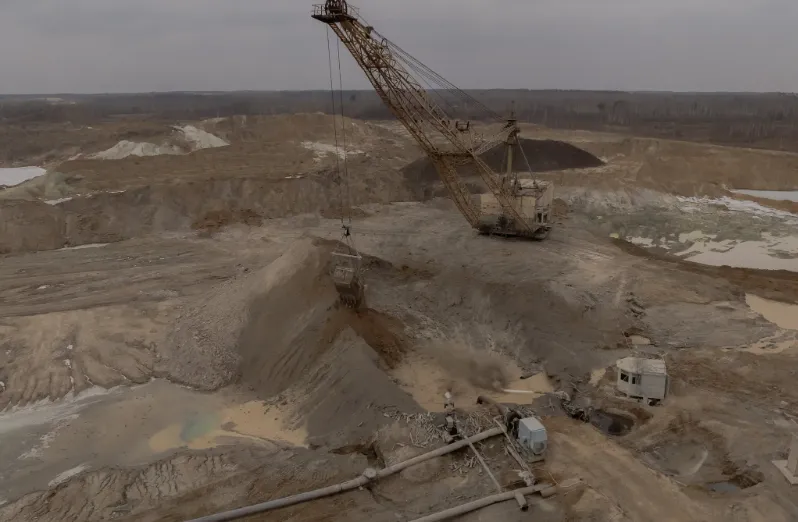
Following this move, shares of several US mining companies immediately experienced a sharp decline, ranging from about 6% to nearly 14%. Investors are concerned that government intervention in the pricing mechanism could impact companies’ profit prospects, reducing the appeal of these stocks in the short term and also increasing product prices.
Another reason for caution in the market is the excessive dependence of economies on strategic mineral supplies from China, particularly rare earth elements. Currently, China accounts for approximately 70% of global rare earth mining and about 90% of global refining capacity. In response to Washington and its partners’ new initiatives, Beijing has confirmed that it has played and will continue to play a constructive role in maintaining the stability of the global mineral supply chain.
Experts estimate that significant changes in the global supply chain for strategic minerals will continue in the coming period, as many countries are prepared to invest billions of dollars in projects to stockpile reserves and expand supply with the aim of increasing self-reliance.
On February 2, the US government announced a plan to create a strategic mineral reserve named Project Volt. With a $10 billion long-term loan from the US Export-Import Bank and approximately $2 billion in private capital, this program aims to purchase and store critical minerals such as gallium, cobalt, lithium, and rare earth elements.
This project operates under a public-private partnership model, where producers commit to purchasing minerals at predetermined stock prices. Analysts believe this is a significant step in promoting the development of the domestic strategic mineral supply chain while also increasing resilience to geopolitical risks and global disruptions.

Meanwhile, the European Union (EU) is also working on a plan to create a strategic mineral reserve. Currently, 10 EU member countries are participating in a pilot project aimed at assessing the size of the reserve, logistical capacity, and long-term storage costs. Italy, France, and Germany are playing key roles. Due to limited domestic mining and refining capacity, the EU is actively expanding the scope of external cooperation.
In resource-rich countries, multiple policies are being implemented simultaneously to attract investment. India recently announced that it will invest over $10 billion in rare minerals and clean energy and establish rare mineral corridors in resource-rich coastal states. Meanwhile, Australia is considering implementing a floor price system for strategic minerals to attract foreign investment and enhance the competitiveness of its domestic mining industry.
![[फोटो] बीते वर्षों के टेट (वियतनामी चंद्र नव वर्ष) के समृद्ध स्वाद हनोई के पुराने क्वार्टर में व्याप्त हैं।](https://vphoto.vietnam.vn/thumb/1200x675/vietnam/resource/IMAGE/2026/02/08/1770534431784_img-2454-1563-jpg.webp)
Efforts to discover new sources of strategic minerals are also gradually spreading to previously unexplored areas. Japan is betting on deep-sea exploration technology and aspires to access rare mineral deposits located in the depths of the Pacific Ocean.