Editor’s Note
This article highlights a troubling security lapse at the Louvre, where a 2018 audit report accurately predicted the method used in a major 2023 heist. It raises critical questions about institutional preparedness and the implementation of expert recommendations.
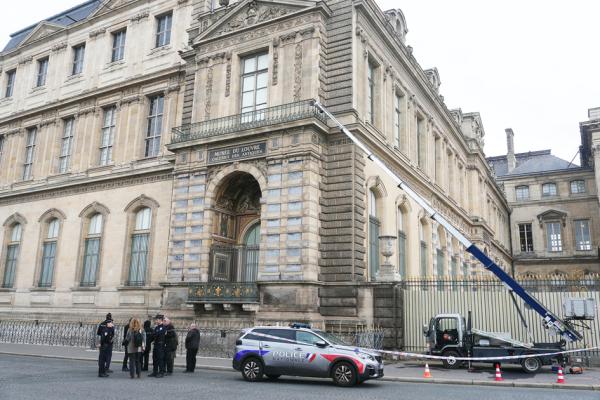
Several weeks have passed since the Louvre’s “heist of the century” on October 19th shocked the world, but the repercussions are far from over. Recently, an embarrassing security audit report for the Louvre has surfaced. This 2018 report remarkably predicted the exact route used in this year’s Louvre break-in.
In 2018, then-Louvre director Jean-Luc Martinez ordered a security audit. At the time, the Paris Police Prefecture and Parisian luxury brands, especially those located around the Louvre area, had expressed concerns about a rise in robberies. Consequently, the Louvre’s leadership decided to commission the security and safety department of the Van Cleef & Arpels jewelry company to conduct the audit.
The audit results revealed multiple vulnerabilities in the Louvre. In a strikingly direct manner, it identified one of the museum’s greatest security weaknesses as “the balcony outside the Apollo Gallery and its window facing the Seine.” The audit document even included a diagram with a red circle, highlighting that the balcony was “easily accessible from the ground” and “partially in a surveillance blind spot.” It also outlined a potential scenario: “Experienced criminals might use a lift to access the balcony.”
Seven years later, thieves arrived at the balcony in precisely the same manner, climbed through the window into the gallery, and within ten minutes stole eight pieces of French royal jewelry, with total losses estimated at 88 million euros.
At the time, Martinez had initiated a study for developing a “global security master plan.” However, this Van Cleef & Arpels security report appears not to have been incorporated into the final plan completed in 2024. The current Louvre director, Laurence des Cars, stated that she only learned of the audit report’s existence after the recent incident. Des Cars began her tenure as Louvre director in September 2021. Following the heist, she requested all documents related to work carried out in the Apollo Gallery over the past 25 years. It was then that multiple documents were found, including this 2018 risk assessment written by external experts. This document was not only excluded from the “global security master plan” finalized in 2024 but was also not transferred during the Louvre leadership handover in 2021.
Des Cars stated that since taking office, she has repeatedly warned national authorities about the museum’s severe aging and security conditions. She reiterated this during a Senate hearing.
According to a report from France’s strategic intelligence agency for combating organized crime at the end of October, criminal groups did not hesitate to recruit external accomplices via encrypted messaging apps. Therefore, whether this unpublished audit was leaked will certainly become a new direction for the investigation.