Editor’s Note
This article highlights a significant shift in China’s diamond market, where consumer preference is rapidly moving away from natural diamonds toward lab-grown alternatives. This trend reflects broader changes in global consumption patterns and poses challenges for the traditional diamond industry.
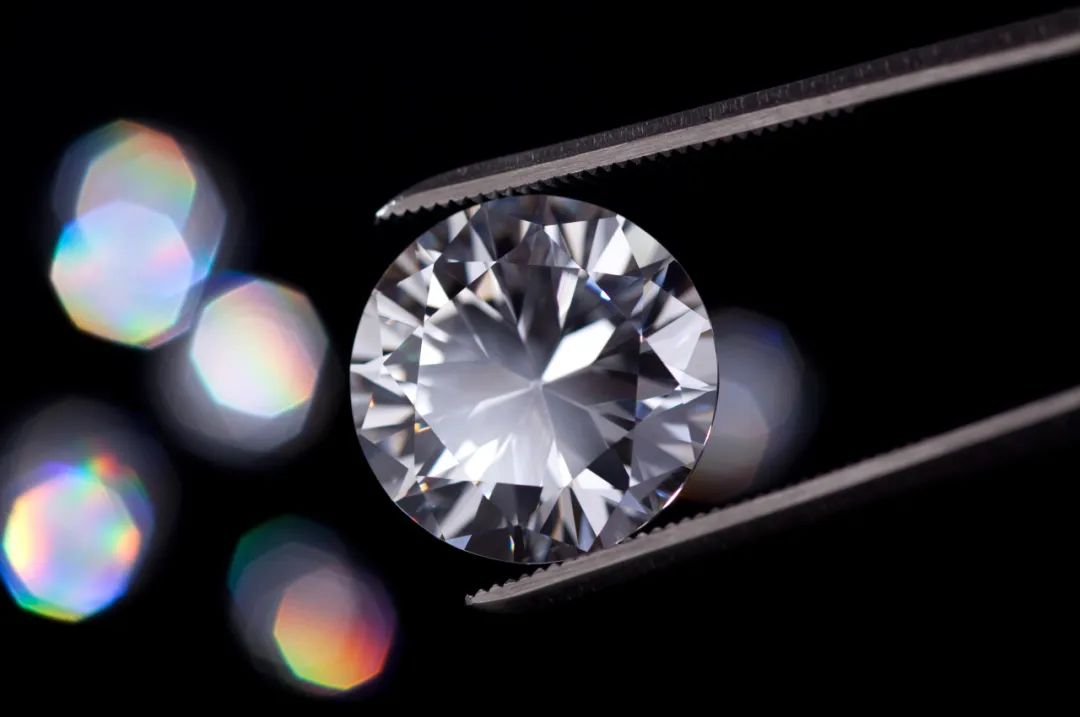
Hong Kong’s South China Morning Post published an article on December 22, stating that as Chinese consumers no longer favor natural diamonds, the demand for diamond consumption has “plummeted off a cliff,” and the entire industry is deeply feeling the impact. Meanwhile, China’s lab-grown diamond sector is rapidly developing and entering the global market. The article mentions that natural diamond prices are falling globally, with Chinese consumers no longer splurging on natural diamonds. In contrast, synthetic diamonds, which cost significantly less, are gaining popularity.
Independent Asian economist Rajiv Biswas stated that China’s diamond market, valued at $9 billion, is second only to the United States globally, but there is a growing perception that diamonds have lost their investment value.
According to data from Bank of America Global Research, global diamond wholesale prices have fallen by about 40% over the past two years. Since hitting a record high in 2022, the global rough diamond price index has plummeted sharply.
Recently, De Beers, the world’s largest natural diamond supplier, cut prices for rough diamonds sold on the secondary market by 10% to 15%. This marks the first significant price reduction since the beginning of this year, with the magnitude being historically rare. This indicates that the world’s largest natural diamond supplier has abandoned its attempt to set a price floor.
Industry insiders attribute the recent sharp drop in diamond prices to shifting consumer preferences from diamonds to gold jewelry, a decrease in the number of weddings reducing demand, and the growing popularity of lab-grown diamonds. Technological advancements have enabled lab-grown diamonds to achieve quality close to natural diamonds but at lower prices, capturing market share from natural diamonds.
Bloomberg earlier cited the latest report from U.S. market research firm Tenoris, pointing out that U.S. finished jewelry retail sales grew by 9.9% in October 2024, with lab-grown diamonds achieving a staggering 46% growth. Furthermore, according to forecasts from the German data platform Statista, in the 2024 global jewelry market, sales of lab-grown diamonds are expected to reach approximately $18 billion, accounting for over 20% of the entire jewelry market.
A founder of a Shanghai diamond company stated that Tiffany’s jewelry is no longer a necessity for people.
Public data shows that China’s monocrystalline diamond output accounts for about 95% of the global total, firmly ranking first in the world. Henan province produces about 80% of China’s synthetic diamond output. In the lab-grown diamond sector, China’s production capacity accounts for about 50% of the global total.
It is noteworthy that China’s domestic lab-grown diamond sector is strengthening. On December 23, the lab-grown diamond sector led gains. At the time of writing, Huifeng Diamond surged 21%, Liliang Diamond rose nearly 18%, Sifangda gained over 10%, and Huanghe Whirlwind hit the daily limit up. Analysts pointed out that with technological advancements and increasing market acceptance, the lab-grown diamond industry is entering a period of rapid growth.
In fact, high-quality, large-size, ultra-pure CVD diamonds can be used not only for jewelry but also in high-end advanced manufacturing and consumer fields such as precision cutting tools and optical windows. Huaan Securities noted that with technological development and growing market demand, the prospects for the lab-grown diamond industry will continue to be viewed positively, especially in applications for high-end manufacturing, semiconductors, quantum computing, and environmental protection, where the market will continue to expand.