Editor’s Note
De Beers’ latest price cuts reflect mounting pressures in the diamond industry, including high inventory levels and softening demand. This move underscores broader challenges facing luxury markets amid shifting consumer trends and economic uncertainty.
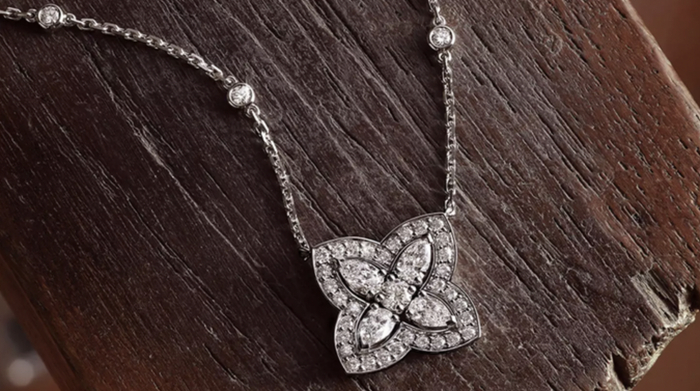
Recently, De Beers, the world’s largest diamond producer, has once again cut prices after a year, drawing significant attention. According to Daily Economic News, this price reduction comes against the backdrop of the brand’s accumulated inventory exceeding $2 billion and a decline in the sales rate at its diamond auctions.
Previous reports indicate that in this round of price cuts, De Beers significantly reduced the prices of rough diamonds above 0.75 carats. The exact magnitude of the adjustment is not yet known. Industry insiders estimate the negotiation range to be around 10%-15%.
In January and December 2024, De Beers cumulatively reduced diamond prices by 25%. This move is seen as a sign of a major shift in the diamond market, as the company had previously refused to lower prices.
Founded in 1888, De Beers is the world’s largest diamond production and sales company. Its turnover once accounted for 90% of the world’s diamond supply market, and it still controls 60% of the world’s rough diamond trade. Its famous slogan “A Diamond is Forever” was widely disseminated, while also being called “the most successful marketing scam of the 20th century.” Against the current economic backdrop and shifting consumer mindsets, De Beers’ price cuts signal that the diamond industry is transitioning from being marketing-driven to value-driven.
In fact, it’s not just De Beers; domestic diamond brands are also facing bleak sales. Taking Chow Tai Seng as an example, its main products are divided into gold products and diamond-set products. Interface News reviewed its financial report and learned that in 2024, its revenue from plain gold products decreased by 16.62% year-on-year, while revenue from diamond-set products decreased by 17.36% year-on-year. The wholesale gross profit per store for set products saw a year-on-year decline of as much as 55.49%. The financial report stated, “Consumption of diamond-set jewelry is still in a cyclical adjustment phase.”
The period from 2017 to 2022 was once a golden age for the diamond industry. Public reports show that in 2022, global production of rough natural diamonds continued to decline, and natural diamond prices rose significantly. In February 2022, the 1-carat diamond index rose by 5.6%, up 12.9% from the beginning of the year. This was mainly due to successive price increases by De Beers and others.
Furthermore, in 2022, a diamond named the “Williamson Pink Star,” an 11.15-carat fancy vivid pink diamond, sold for HK$453.2 million at a Sotheby’s Hong Kong autumn auction, setting a new world auction record for the price per carat of any gemstone.
Just as natural diamond prices were soaring, lab-grown diamonds gained more market attention. Natural diamonds are formed under extreme high temperature and pressure conditions about 200 kilometers below the earth’s surface, possessing brilliant sparkle and hardness, but they are expensive. Lab-grown diamonds are cultivated in laboratories, sharing the same physical and chemical properties as natural diamonds, but at about one-third of the price. This has brought a huge impact to the industry.
In 2023, global rough diamond prices plummeted. According to a July report that year by Securities Market Weekly, diamond prices had fallen by 18% from the historical high in February 2022. For a time, talk of the end of the “sky-high diamond myth” was rampant.
In recent years, driven by factors such as rising international gold prices, gold jewelry has been sought after for its value preservation and appreciation, putting further pressure on diamond demand.
According to Cover News, a decade ago, Ms. Li from Chengdu spent 100,000 yuan to buy a one-carat diamond ring. Today, after consulting multiple recyclers, the highest valuation she received was only 30,000 yuan. A woman from Anhui who spent 18,000 yuan on a diamond ring ten years ago shared on social media that she can now only get a 180 yuan recovery price, a depreciation of 99%.
In stark contrast, reports of gold jewelry consumers seeing their goods appreciate in value are common. According to a January 21 report by Nanguo Jinbao, a man who continuously bought gold for his wife and daughter for 15 years now has an estimated value exceeding 1.7 million yuan, with estimated profits over 1 million yuan and a return rate of 159.28%.
Against this backdrop, diamond producers like De Beers undoubtedly face immense pressure and challenges, making strategic adjustments or asset sales one of the options.
It is reported that Botswana currently holds a 15% stake in De Beers and is seeking to acquire a majority stake to strengthen industry control; Angola prefers joint holdings with other African diamond-producing countries and plans to acquire a large minority stake; Namibia has also simultaneously expressed acquisition interest, aligning with Cook’s proposed direction of promoting deeper participation of diamond-producing countries in the global diamond value chain.