Editor’s Note
This article explores the core purpose of privacy coins: to counteract the inherent transparency of public blockchains like Bitcoin and Ethereum, which can expose sensitive financial details. It examines how these digital assets are designed to obscure transaction data, offering users greater anonymity.
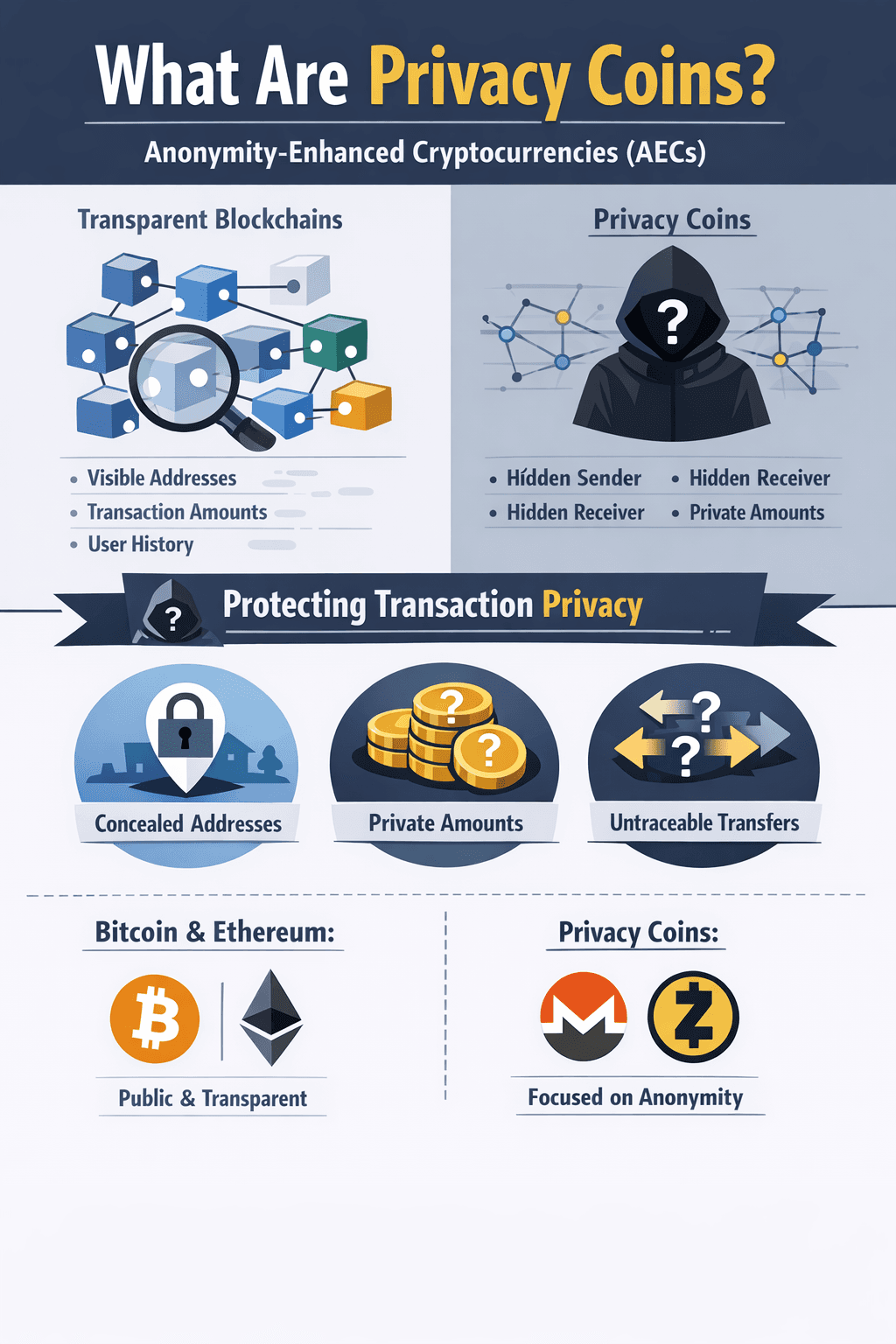
Privacy coins exist for a simple reason: most blockchains leak more financial information than people realise. On Bitcoin and Ethereum, anyone can see amounts, addresses, timing, and in Ethereum’s case, app activity too. That makes verification easy, but it also makes profiling cheap.
Privacy coins flip that default. They aim to limit what outsiders can learn from the ledger itself, whether that is who paid whom, how much moved, or how transactions link together over time. Some do this with privacy enforced on every transaction. Others make it optional, which changes the real-world outcome.
This guide breaks down what privacy coins are, how they work, where they actually help, and where the trade-offs show up: exchange access, wallet friction, liquidity, and regulation.
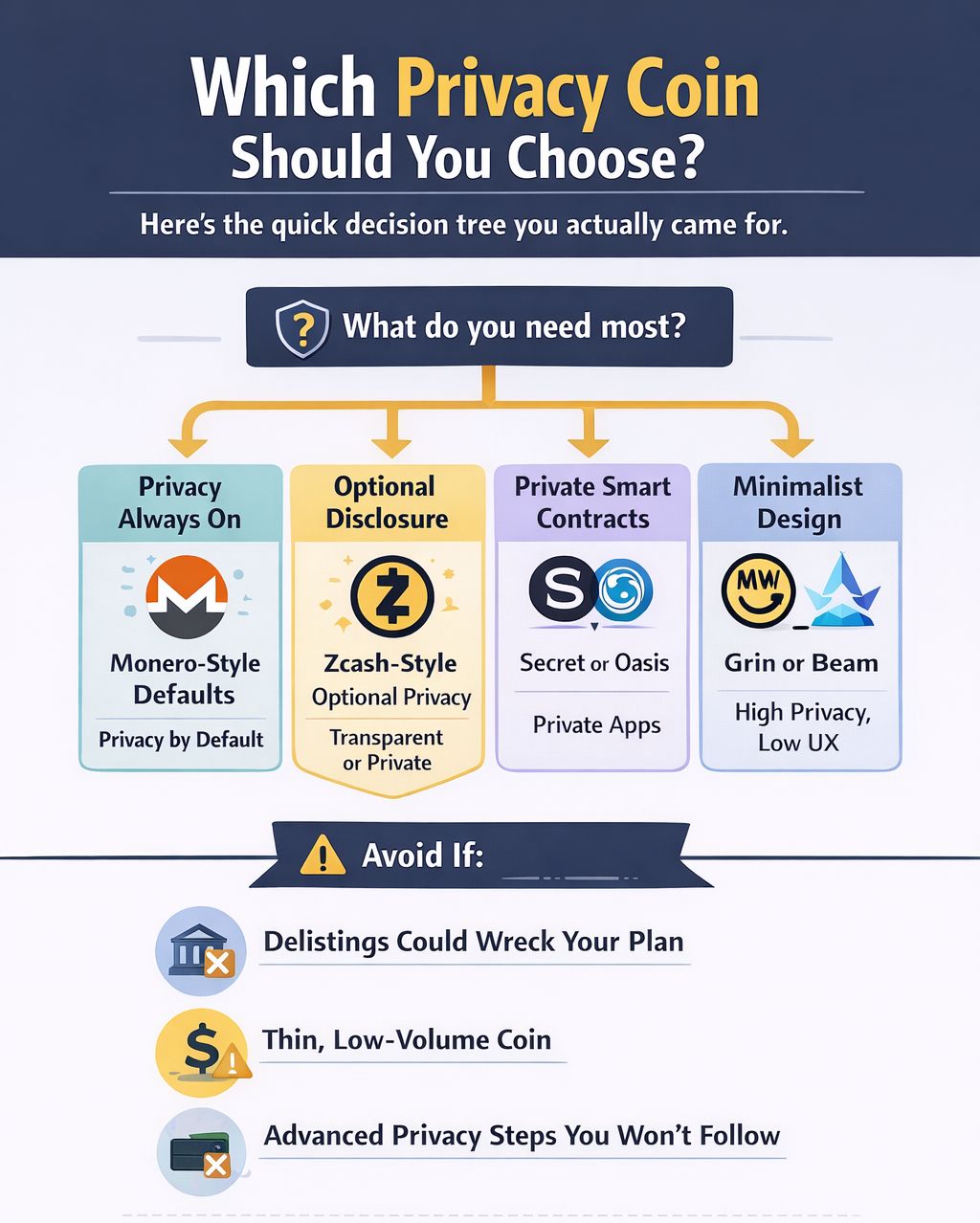
1. Monero (XMR) | Privacy-by-default that doesn’t ask permission
2. Zcash (ZEC) | Powerful privacy tech, but you have to actually use it
3. Dash (DASH) | Fast payments with CoinJoin-style privacy tooling
4. Secret Network (SCRT) | Encrypted smart contracts on a Cosmos-style chain
5. Oasis Network (ROSE) | Confidential compute and privacy-enabled apps
6. Decred (DCR) | Governance-heavy chain with privacy tooling (not privacy-by-default)
7. Firo (FIRO) | Privacy-focused transfers with modern cryptographic designs
8. Grin (GRIN) | MimbleWimble minimalism with real UX friction
9. Beam (BEAM) | MimbleWimble plus an “ecosystem” approach
10. Beldex (BDX) | Privacy ecosystem messaging, VPN, and token utility (higher scrutiny category)
11. MobileCoin (MOB) | Mobile-first private payments with Fog services
12. Horizen (ZEN) | ZK infrastructure and sidechain framework, not “private cash” anymore
13. Aleph Zero (AZERO) | Privacy narrative anchored in ZK identity and selective disclosure