Editor’s Note
This article highlights a surprising tourism promotion in Henan, China, where diamonds were gifted to visitors. It explores the province’s lesser-known status as a major hub for lab-grown diamond production, challenging common perceptions of the region.
At the beginning of this year, tourism bureaus across China launched various promotional activities, bringing many local ‘special products’ into the public eye. Luoyang, Henan, was particularly surprising, generously giving diamonds to tourists, with the largest weighing up to 1 carat, distributing 100 stones in a single day!
For a moment, netizens were filled with questions—isn’t Henan an agricultural province? When did its specialty become diamonds?
In fact, Henan not only excels in growing crops but also has years of experience in ‘growing diamonds.’ 80% of the world’s lab-grown diamonds come from Henan, especially concentrated in Shangqiu City’s Zhecheng County.
“A diamond is forever.” This is the most familiar diamond advertisement and is considered one of the most successful ads of the 20th century. Due to their brilliance and close association with love and marriage, diamonds, though expensive, have always been in the public eye.
What if diamonds could still shine brightly but cost far less than they do now? This is where lab-grown diamonds come in.
The English name for lab-grown diamonds is ‘lab grown diamond,’ directly translated as diamonds cultivated in a laboratory.
Are they real diamonds? Of course!
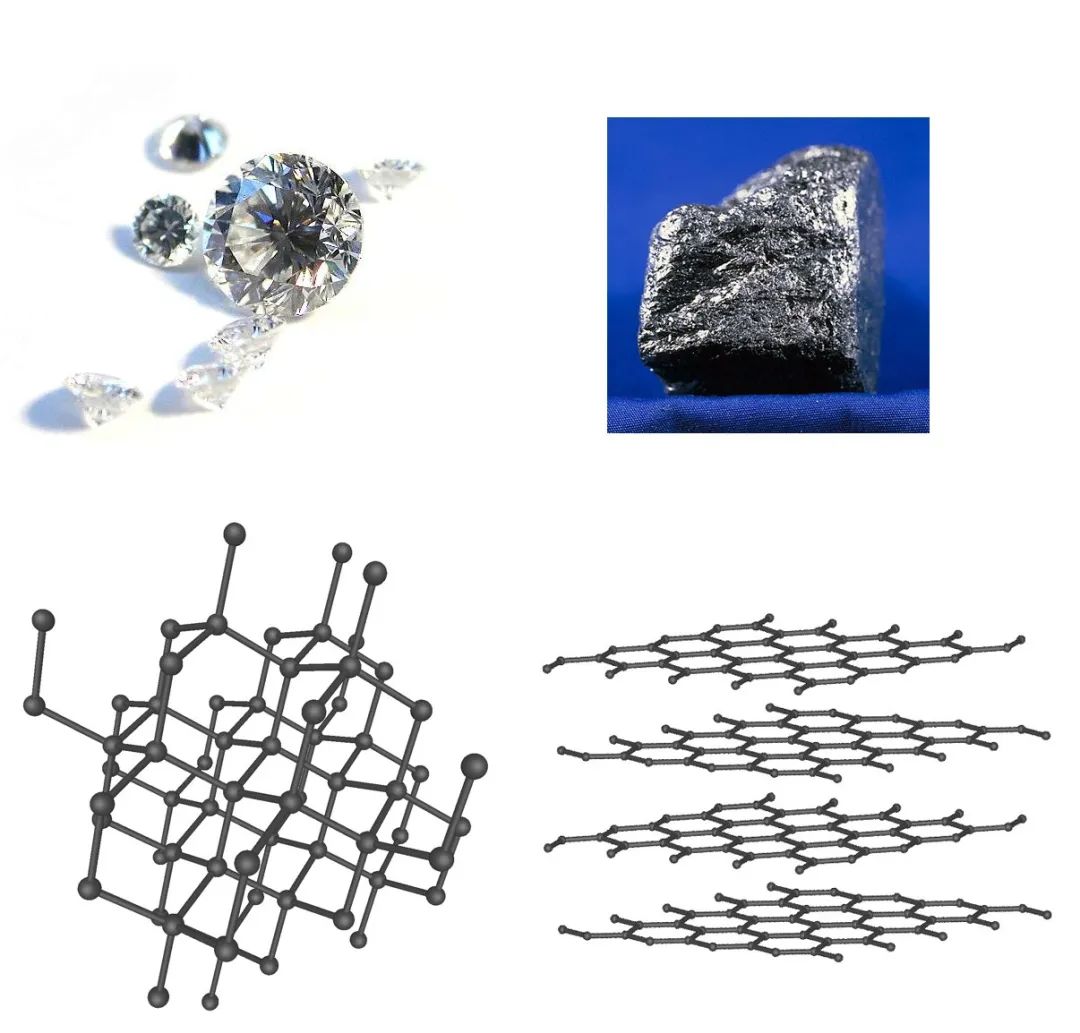
Diamonds are gem-grade diamonds, composed of nearly pure carbon, an allotrope of carbon substances like graphite. Inside a diamond crystal, each carbon atom is tightly bonded to four surrounding carbon atoms, forming a unique three-dimensional structure not found in other minerals. It is this dense structure that makes diamond the hardest natural mineral.
Lab-grown diamonds and natural diamonds are both crystals composed of pure carbon atoms. There is essentially no difference in their crystal structure, physical properties, chemical properties, or optical properties. Experts vividly describe the difference between the two:
Lab-grown diamonds can obtain certification documents issued by the three major diamond industry appraisal institutions, proving their genuine diamond status is officially recognized. In 2018, the U.S. Federal Trade Commission adjusted the definition of diamond, officially categorizing lab-grown diamonds under the diamond category for the first time.

Natural diamonds are hidden deep within the Earth. They are carbon-containing minerals with a certain proportion of iron-group metals, formed over hundreds of millions of years under high temperatures of 900°C~1400°C and high pressures of 5~6 GPa in an oxygen-free environment.
Natural diamonds take an extremely long time to form, resulting in high acquisition costs. Lab-grown diamonds, however, require only a few weeks, or even just a few days, to produce gem-grade diamonds.
Currently, there are two main methods for growing diamonds: High Temperature and High Pressure (HPHT) technology and Chemical Vapor Deposition (CVD).
High Temperature High Pressure (HPHT) technology is China’s mainstream diamond cultivation technique, especially concentrated in Henan. The main equipment is the cubic press. The synthesis process involves placing a graphite column, wrapped with graphite powder, diamond seed crystals, and metal catalysts, into an ultra-high temperature and high-pressure reaction chamber. The graphite powder is catalyzed by the metal powder and crystallizes on the seed crystals. The diamond slowly grows around the seed crystal, forming in about a week, and is then polished, cut, and transformed into shiny new diamonds.
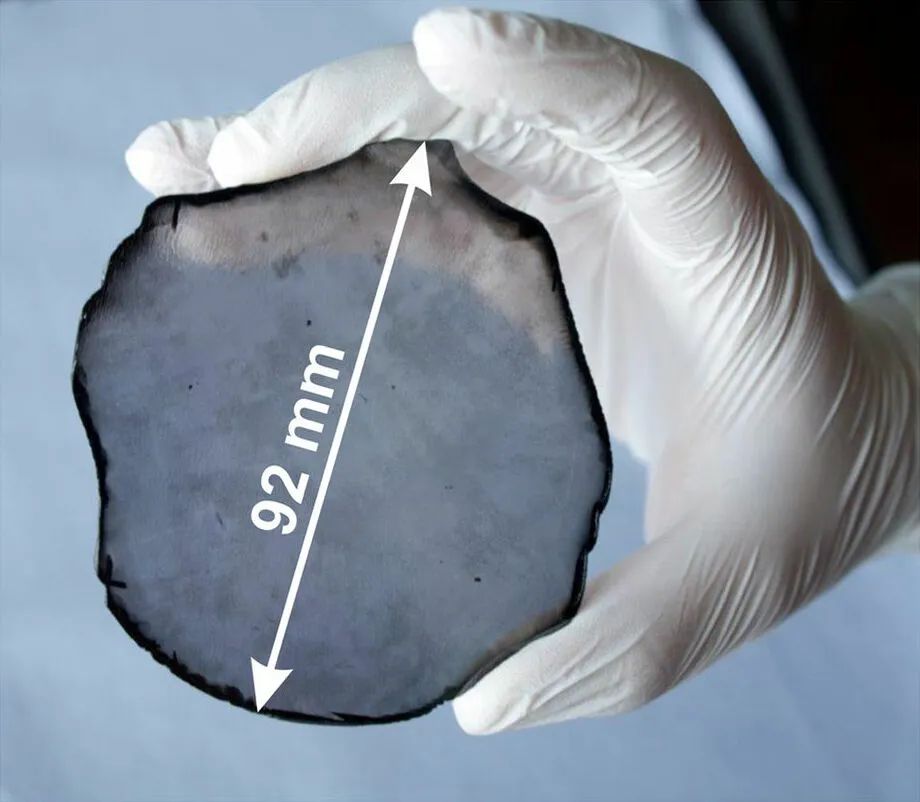
Chemical Vapor Deposition (CVD) is currently the main method used in European and American countries. The basic process is: under high temperature and low pressure in a vacuum environment, diamond seed crystals and carbon-containing gases are placed together in a reaction chamber. The active carbon atoms from the decomposed gas are uniformly deposited onto natural diamond flakes under controlled growth conditions, forming new diamonds. After two weeks, the diamond flakes can be ten times their original size. These diamond flakes wrapped in graphite are rough and need laser adjustment and cutting, then polishing, resulting in shiny diamonds.
Both cultivation methods have their pros and cons, with the core technology lying in raw material ratios, production processes, and machinery. CVD-grown diamonds have a longer cultivation cycle, higher costs, and color is harder to control, but they have high purity and are more suitable for synthesizing diamonds over 5 carats. HPHT-grown diamonds grow quickly at low cost, but have slightly lower purity and cannot cultivate larger diamond crystals, making them suitable for mass-producing 1~5 carat diamond melee.
Currently, China, India, and the United States dominate the production, processing, and retail markets for lab-grown diamonds.
The original purpose of diamond’s raw material—diamond—was not for appreciation but for mechanical processing.
In the 1950s, some European and American countries successfully synthesized artificial diamonds using methods like high temperature and high pressure and chemical vapor deposition.
During the same period, New China began selecting sites nationwide to build abrasive wheel factories and mass-produce grinding tools to develop its manufacturing industry. Because large-scale bauxite deposits were discovered in Gongyi, Henan, China’s second abrasive manufacturing plant was eventually located in Zhengzhou. This abrasive wheel factory and the Zhengzhou Abrasives Grinding Research Institute (Abrasives, Grinding Tools, and Grinding Research Institute) within it later became the “Whampoa Military Academy” for China’s superhard materials.
The core material needed for making abrasive grinding tools is diamond. At that time, China relied on imported diamonds. To accelerate industrialization, China had to develop its own synthetic diamonds.
With this historical mission, in 1960, the Zhengzhou Abrasives Grinding Research Institute undertook this national research project. In 1963, China finally successfully developed its first synthetic diamond, becoming the fifth country after the United States, the Soviet Union, and others. However, having synthetic diamonds was not enough; to achieve mass production, machines to manufacture diamonds were necessary.
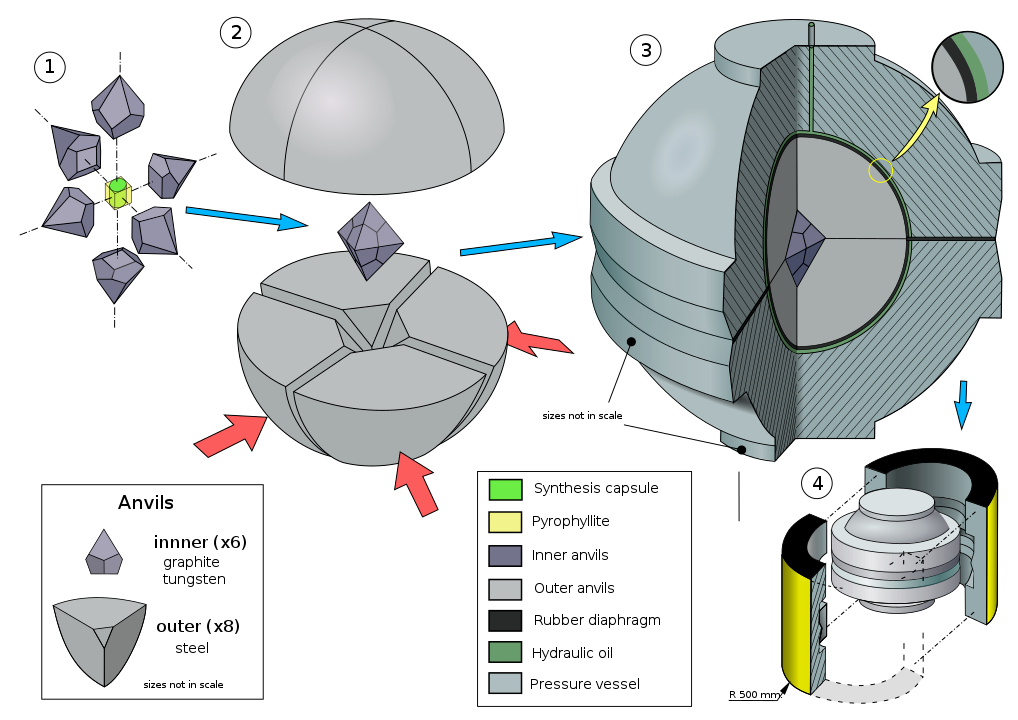
In 1965, the Zhengzhou Abrasives Grinding Research Institute and the Jinan Casting and Forging Machinery Research Institute collaborated to overcome technical challenges and finally developed China’s first cubic press. The production efficiency of the cubic press was 20 times that of foreign two-anvil presses. With the advent of this “meritorious press,” Zhengzhou began to become a center for abrasive materials, cultivating many technical talents and establishing Henan’s leading position in superhard materials. China also began to transform from an importer to an exporter of superhard materials. According to statistics, Henan currently has about 300 superhard material enterprises above designated size and 7 listed companies.
With technological advancements, the purity of diamonds cultivated using cubic presses became higher and higher, easily reaching gem-grade diamond standards. Today, Zhecheng County in Henan has become China’s “Capital of Synthetic Diamonds,” giving birth to many related well-known enterprises.
Will the market buy them?
Currently, gem-grade natural diamonds on the market cost about 20,000 RMB per carat. Although high mining costs are a factor, the main reason for the persistently high price is the monopoly on diamond resources. Data shows that 70% of the world’s diamond resources are controlled by five major diamond manufacturers. They set the rules for the entire industry and possess absolute pricing power.
However, with improvements in lab-grown diamond technology, the quality of synthetic diamonds can now rival natural diamonds, and the cost is said to be only about 10% of that of natural diamonds. Such a large profit margin has even attracted traditional jewelry giants like De Beers and Swarovski to begin布局 the synthetic diamond market. Luxury brands like LVMH and GUCCI have also started investing in related projects.
For collectible-grade diamonds, natural origin and rarity are key to their value. But as everyday wearable accessories, lab-grown diamonds are gradually being recognized by consumers for their extremely high cost-effectiveness, with broad market prospects.
Many people are concerned: can lab-grown diamonds be distinguished? The naked eye cannot tell the difference at all. Whether in terms of fire, clarity, or color, they are identical to real diamonds. Only large instruments detecting their光谱 can identify the difference. With the industrialization of diamond cultivation, the price of lab-grown diamonds will continue to decrease.
Diamonds, which seem only suitable as art pieces, actually have very extensive applications in the industrial field and are even called the “industrial teeth.”
Due to their extreme hardness, diamonds have long been used in areas ranging from glass cutting and manual研磨 to machine tools, and large-scale applications like oil and gas drilling, geological exploration, coal mining and mineral extraction, and new energy production.
In addition, diamonds themselves have stable chemical properties, are resistant to acid and alkali, and have extremely high thermal conductivity. They are considered a more environmentally friendly, efficient, and ideal ultimate semiconductor material than “silicon.”
Currently, the vast majority of semiconductor materials on the market use silicon. But silicon has some weaknesses—it heats up easily and has low cooling efficiency, and it is also a major source of electronic waste. Diamond has none of these problems. Diamond semiconductors can increase power density and also enable the manufacture of faster, lighter, and simpler devices. A very important future布局 for lab-grown diamonds is their application in optics, thermal management, and semiconductor research.