Editor’s Note
This article highlights a complex financial picture for Harry Winston Diamonds. While revenue in both mining and retail segments showed strong growth, the company’s net profit fell significantly due to specific financing and exploration costs.
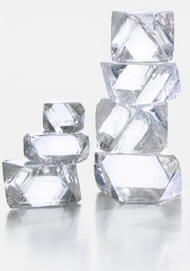
Despite a 19 percent drop in the volume of rough diamonds it sold, Harry Winston Diamonds’ mining segment revenue increased 29 percent to $290.1 million. Retail revenue for the year increased 19 percent to $411.9 million.
The company’s net profit fell 38.6 percent to $25.5 million. Excluding a de-recognition charge, the bottom line suffered from financing expenses related to the Kinross buy-back transaction with the final payment made in August 2011, higher mining exploration expenses and higher income tax expense.
Consolidated sales increased 13 percent to $702.0 million for the year ended January 2012 compared to $624.0 million for the prior year.
Operating profit declined to $56.5 million from $68.3 million last year, partially due to a non-cash $13 million charge. EBITDA increased to $148.2 million.
Harry Winston sold 2.1 million carats for an average $137 per carat compared to 2.6 million carats for an average $106 p/c in the prior year.
The company said the decrease in rough diamond volume follows a decision to hold inventory.
Rough diamond production at Diavik was 3 percent higher, totaling 6.7 million carats, due primarily to an increase in ore processed. Harry Winston’s 40 percent share of production is 2.7 million carats, which means the company has an increased inventory of about 600,000 carats.
The luxury brand segment sales increase resulted in an operating profit of $19.4 million compared to $14.9 million in the prior year.
The company noted that in small high-quality diamonds that are primarily used in high-end watches, that supply demand imbalance is noticeable, with prices of some categories more than doubling in the first nine months of last year and only coming off slightly when the overall market weakened towards the end of 2011.