Editor’s Note
This article explores how lab-grown diamonds, driven by advances in AI and manufacturing, are transforming diamonds from rare luxuries into accessible elements of everyday jewelry, challenging long-held perceptions of value and occasion.
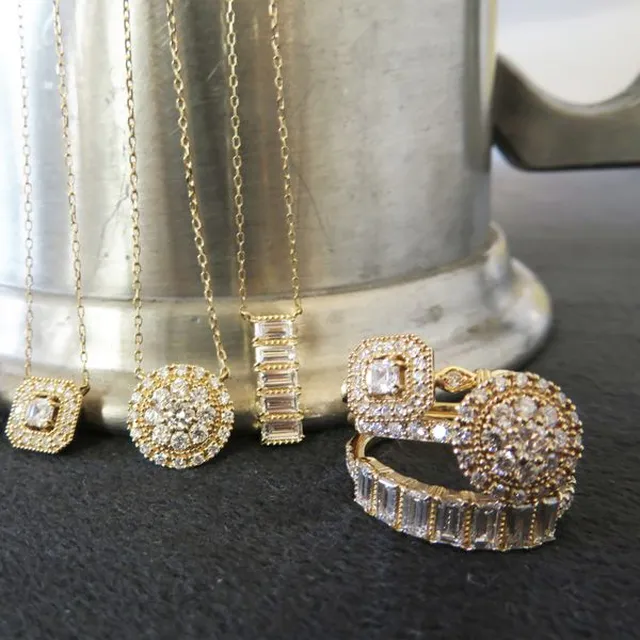
Diamonds are rare, expensive, and chosen for special occasions—this “common sense” is quietly being rewritten.
The main agent of change is the Lab-Grown Diamond (LGD) born in research facilities. While distancing itself from environmental burdens and ethical issues at mining sites, this material, indistinguishable in brilliance from natural diamonds, is fundamentally shaking the values associated with jewelry.
Generation Z, in particular, seems to be beginning to accept this trend as the “natural future.” For them, who value the background story and transparency more than high price, LGD is “smart luxury” itself. It’s accessible, not burdensome, and they can explain their reasons for choosing it based on their own values.
In January 2026, at Japan’s largest jewelry exhibition, the “37th International Jewelry Tokyo (IJT)” held at Tokyo Big Sight, LGD will be treated as one of the most important themes. Numerous movements foretelling the future of jewelry will be introduced, offering clues to understand the turning point the industry is currently facing.
A large-scale trend has emerged in the jewelry market, with 620 companies reportedly lining up over 1.25 million products. At its center, the discussion is not a simple confrontation of “Natural VS Lab.” Rather, it’s about how the two will coexist and connect with consumer values.
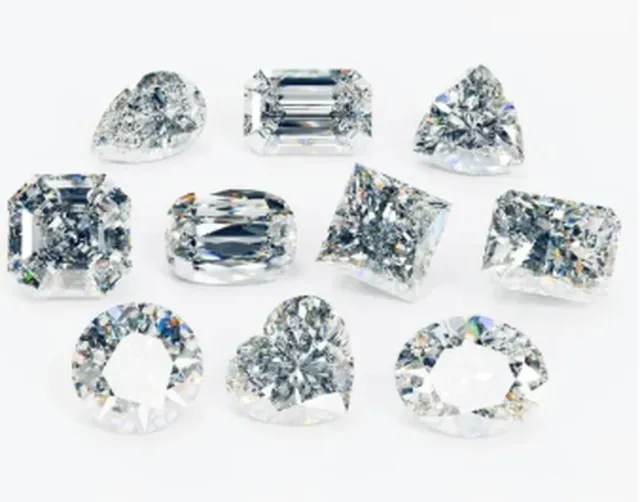
Natural diamonds have a solid value based on rarity. However, on the other hand, the environmental burden of mining and the conflict diamond issue have long been pointed out.
LGD removes those concerns and presents “new values” such as being “traceable,” “realistically priced,” and “capable of achieving cuts and colors difficult with natural diamonds.”
The exhibition examples introduced at IJT include products symbolizing this change. S.F.D., which realizes original cuts; MJ, which combines antique-style designs with LGD; T’s for T, which creates an overwhelming presence with platinum and diamonds; Imayo, which pursues settings that maximize light capture—all indicate that a market is forming where one can freely choose “how they want it to shine,” a step away from the traditional notion that “value comes from rarity.”
Market growth is also reflected in numbers. According to “RX Japan Co., Ltd.,” the LGD market is predicted to grow to about three times its current size, reaching approximately 150 trillion yen by 2032. The background is said to be the values of Generation Z.
It’s not that they don’t want expensive things. They choose things for which they can explain “why they chose it.”
Sustainable, ethical, and realistically priced—LGD meets those conditions.
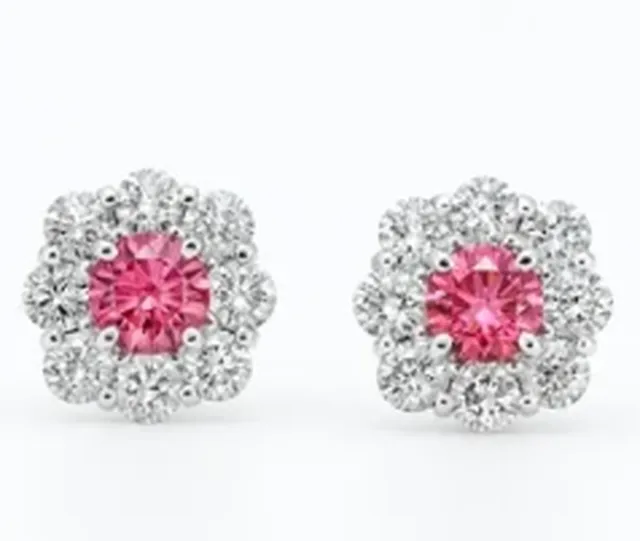
Thus, jewelry may be shifting from “luxury for special days” to “brilliance that can be brought into everyday life.”
The more rapidly it spreads, the more unavoidable issues arise. The “authenticity problem” is that it’s difficult to distinguish natural from lab-grown with the naked eye.
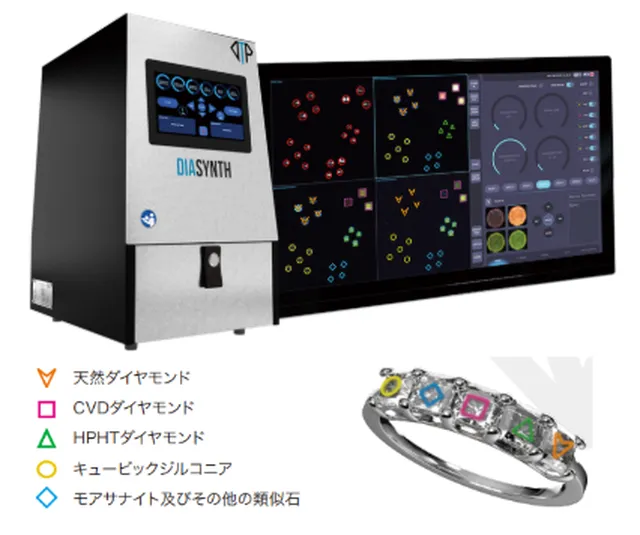
At IJT, an AI-equipped diamond identification device will be demonstrated to solve this problem. The technology, where AI classifies chemically and optically nearly identical diamonds at high speed and with high accuracy, brings peace of mind to consumers and contributes to the formation of a healthy market for the industry.
This is also a major topic in that AI is fully intervening in the world of luxury. We are entering an era where even the judgment of material value is being handled by technology.
The existence of lab-grown diamonds is not merely a material replacement; it is leading to a reconstruction of the question, “What is luxury?” The focus is shifting not to rarity, nor to ethics or price, but precisely to the “reason for choosing” that aligns with one’s own values.
The debate between natural and lab-grown is symbolic of this. The “Natural Diamonds VS Lab-Grown Diamonds” discussion to be held at IJT will likely serve as an indicator of where the industry is headed.
Affordably priced, with no burden in the background, and high design freedom—the new market brought about by LGD and AI clearly shows that luxury is entering an era of “deciding for oneself the reason to own.”