Editor’s Note
On World Food Day, we examine the stark reality that over 670 million people still face hunger. This article explores the complex drivers—from conflict to climate change—behind persistent global food insecurity.
Daniel Dickinson
October 16, 2025
SDGs
According to the United Nations, more than eight percent of the world’s population, i.e., over 670 million people, do not have access to sufficient food and are forced to go hungry. Conflict, violence, climate change, and inequality are major reasons, but there are many other causes of “food insecurity.”
On the occasion of World Food Day, observed every year on October 16, five simple facts can help understand why, despite there being enough food for over eight billion people, such a vast number of people in the world still cannot get enough to eat.
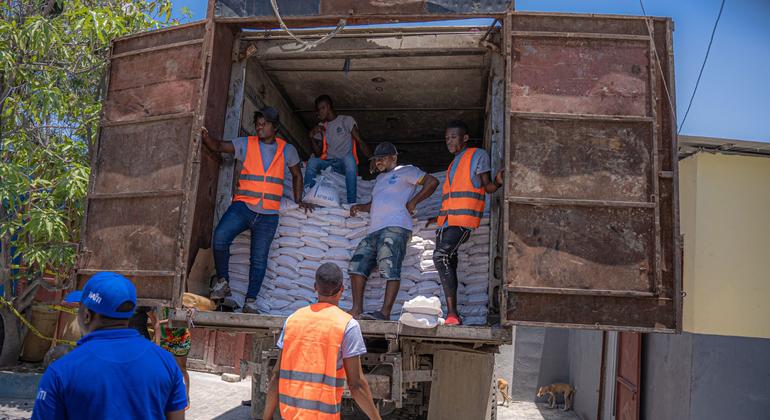
Armed conflicts like those in Ukraine, Sudan, and Gaza cause food production to halt, supply chains to break, and access to markets to become difficult. As a result, millions of people are forced to leave their homes and face severe food shortages.
© WFP/Tanya Birkbeck
The United Nations, primarily through the World Food Programme (WFP), provides immediate food assistance to people facing severe food insecurity in conflict-affected areas. Affected communities are also provided with seeds, livestock, and agricultural tools so they can grow their own food and not rely on external aid.
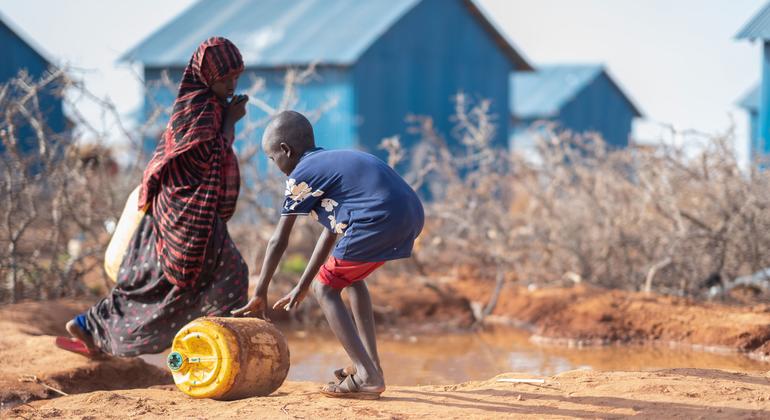
Increasing climate instability such as droughts, floods, and heatwaves is severely affecting farmers’ production capacity. This directly impacts agricultural productivity and food availability, especially in areas that are already vulnerable.
For example, Somalia is grappling with the most severe drought in the past four decades, which has exacerbated the long-standing situation of conflict and displacement there.
© UNICEF/Zerihun Sewunet
The United Nations promotes climate-resilient agricultural practices to reduce the impact of environmental shocks and adapt to changing climate trends. For instance, the “half-moon” agricultural technique is being adopted in Africa’s Sahel region.
Global and regional recessions, rising food and energy prices, and inflation have collectively reduced people’s purchasing power. Especially in poor countries, this has made it even more difficult to obtain nutritious food.
As a result, people in poor countries have become unable to afford nutritious food and have had to cut back on their meals.
© WFP/Arete/Damilola Onafuwa
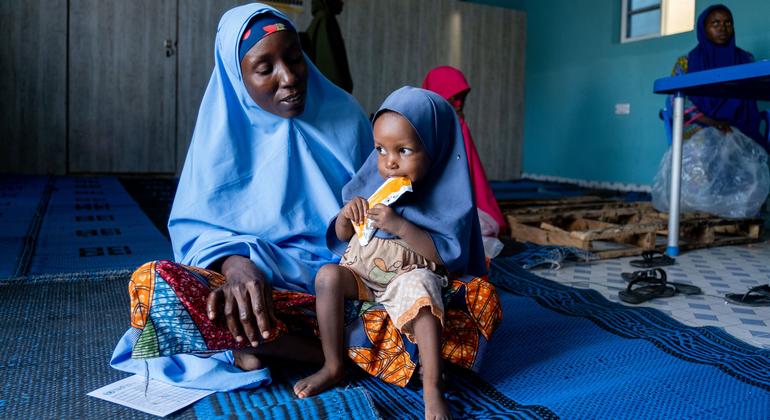
The United Nations increases the supply of food rations and nutritious materials during periods of economic shocks and inflation, while also providing cash assistance to families to buy food from local markets. This improves nutrition and strengthens the local economy.
Deep-rooted poverty and social inequality limit access to food and resources, especially in rural and marginalized communities, perpetuating the problem of chronic hunger.
According to the United Nations, nearly 700 million people worldwide are living in extreme poverty, two-thirds of whom live in sub-Saharan Africa.
Through various agencies, the United Nations is working to strengthen social protection systems and promote a model that moves beyond crisis-focused aid, enabling low-income countries to develop self-reliant, inclusive, and sustainable food systems. This initiative empowers communities to reduce the number of people suffering from hunger, enhance their local capacity, and ensure long-term food security.
Export restrictions, import tariffs, and fluctuations in commodity prices create instability in food markets, making food expensive and scarce in food-deficient countries.
© IFAD/GMB Akash
In Brazil and Mexico as well, trade tensions and inflation have slowed economic growth. This has reduced people’s purchasing power and increased food insecurity among low-income communities.
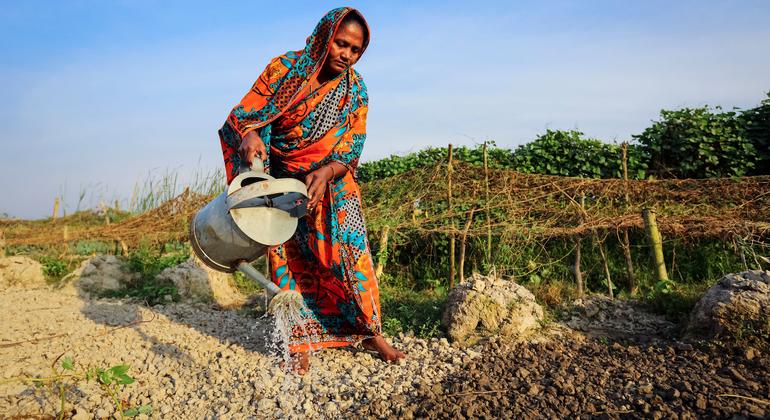
The United Nations helps affected countries in various ways. It monitors global prices, provides policy guidance, and coordinates internationally to address interconnected crises related to food, energy, and finance. The goal of these efforts is to stabilize markets and protect vulnerable groups.