Editor’s Note
This article traces the extraordinary journey of gold, from its cosmic origins in asteroid impacts to its geological formation and eventual refinement by human hands. It highlights the immense natural and human effort required to bring this precious metal from the Earth’s core to our vaults.

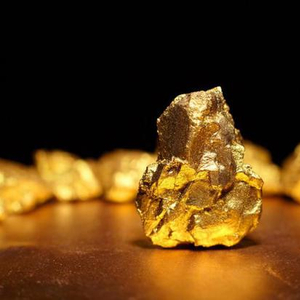
While pies rarely fall from the sky, gold has literally done so. From the initial delivery of gold elements via asteroid impacts to the massive transport of gold from the Earth’s core to the mantle and crust through volcanic eruptions in the Archean era, followed by marine sedimentation and regional metamorphism, the initial gold ore sources were formed. Then, through immense effort, humans collected this underground gold, refining it multiple times before casting it into ingots or crafting it into jewelry.
From mining and transportation to refining, the gold industry chain bears the distinct mark of heavy industry, appearing outdated in an era pursuing green and digital transformation. In stark contrast, Bitcoin has been a native of the digital age since its birth, waving the banner of blockchain technology and rallying a crowd of “crypto” followers.
Which possesses greater technological depth, gold or Bitcoin? The answer might seem obvious at first glance. However, impressions can be misleading, as the technology behind these industries is not that simple.
The technological sophistication of gold is not as low as one might think, nor is it a primitive, fetishistic remnant. Substantial investment in technology tells the true story. While mining companies’ gold reserves are shrinking, exploration expenditures are increasing. Although almost no major projects were discovered between 2017 and 2019, global gold mining companies spent a staggering $13.2 billion on exploration-related expenses. Current gold exploration spending is approximately 2.3 times higher compared to 30 years ago. Driven by this continuous investment, exploration technology is constantly iterating and updating.

Exploration technology leads the industry. Spurred by this, every segment from mining to refining is actively embracing the wave of automation and digitalization. Professional gold mining is a large-scale modern industry that continuously introduces advanced, clean, and safe technologies. Particularly as the gold industry adheres to Environmental, Social, and Governance (ESG) rules, the demand for environmental friendliness is once again pushing the sector towards technological upgrades. Furthermore, gold continues to play a significant role in ongoing technological innovation. The properties of gold are constantly fostering its many new applications in electronics, medicine, engineering, and environmental management.
In comparison, Bitcoin’s technological sophistication is not as high, nor is it a key that unlocks the future. Although funds continue to flow into the Bitcoin space, current “hot money” is focused on investment returns, not technological belief. Few recent converts to cryptocurrency share the dream of early “believers” that Bitcoin will replace government-issued fiat currency. After all, from a technical architecture perspective, Bitcoin’s transaction efficiency is not high, processing less than ten transactions per second, making it largely impractical for payments. In contrast, payment platforms like Alipay and Tencent Pay perform much better in this regard; for instance, Alipay’s peak processing rate during the 2019 Tmall Double 11 shopping festival reached 61 million transactions per second.
Moreover, Bitcoin, which exists on the internet, is not as green as it seems. Bitcoin mining is a veritable “electricity guzzler,” with “miners” running power-hungry equipment to earn rewards. As Bitcoin’s price continues to hit new highs, the total energy consumption of the Bitcoin network is also growing at an alarming rate. According to the latest report from the International Energy Agency, the electricity consumption of the entire Bitcoin network has surpassed that of many countries. Bitcoin production also leaves a significant carbon footprint, with its CO2 emissions exceeding Denmark’s total emissions last year. Mining also relies heavily on electronic equipment, with the industry generating more electronic waste annually than the total discarded equipment of the entire country of Luxembourg. It is for these reasons that Tesla, which recently became involved with Bitcoin, has been criticized by its supporters for being less green.
Mined gold is not as backward as stereotypes suggest, and Bitcoin, branded as a “child of technology,” is not the destined choice of the new era as many believe. Only by looking beyond the surface can we more clearly see their true technological essence and environmental attributes.