Editor’s Note
China’s cultivated diamond industry is reshaping the global market, achieving in weeks what nature takes eons to create. This report from Zhengzhou examines the rapid rise of a sector that is challenging established players worldwide.

Workers are inspecting equipment at the Jiafengfu Diamond factory in Zhengzhou, China. The explosive growth of China’s cultivated diamond industry has shaken the entire sector, leaving established companies struggling.
It takes the Earth over a billion years to form a diamond, but Fan Canjun only needs a week to cultivate one.
On a hot summer afternoon in Zhengzhou, the capital of Henan province in central China, the Jiafengfu Diamond factory is bustling with activity. Inside, 600 machines, each larger than an African elephant, simulate the immense geological pressure and intense heat deep underground where diamonds grow. These machines can produce three carats of diamonds in just seven days, equivalent to a large engagement ring.
Over 70% of the lab-grown diamonds used in jewelry worldwide (many of which are made for newlyweds’ nameless rings) come from Chinese factories, with Henan at the center of the cultivated diamond trade.
For the natural diamond industry, Fan’s factory and others like it are undoubtedly a devastating blow. The surge in man-made diamonds in the international jewelry market, coinciding with a slump in demand, has driven the price of small natural diamonds to its lowest level in a decade.
Martine van der Heijden, head of the Lab-Grown Diamond Trading Organization, said lab-grown diamonds have “brought enormous disruption. Industry insiders initially didn’t believe it, and then they couldn’t accept it.”
This year, the future of natural diamonds faces a public test. The famous diamond company De Beers, founded by Cecil Rhodes, has been put up for sale by its owner, the London-listed Anglo American. Anglo American valued the division at $4.9 billion in its accounts, but the declining sales figure suggests the selling price could be far lower. The first round of bidding from potential buyers will close next month.
Last year, De Beers’ revenue was only half of its 2022 level. Other mining companies like Alrosa, Rio Tinto, and Petra Diamonds have also seen similar declines in their diamond businesses.

Lab-grown diamonds first appeared in the jewelry field over a decade ago. Although diamond production technology has been widely understood since the 1950s, recent technological advancements have made it cheaper to cultivate perfect diamonds suitable for jewelry (with chemical properties identical to natural diamonds).
According to analyst Paul Zimnisky, today a three-carat lab-grown diamond sells for only about 7% of the price of a mined diamond.
Data from consultancy Tenoris shows that lab-grown diamonds now account for 17% of the US retail market (by volume), up from just 3% in 2020. In the engagement ring segment, the market share for lab-grown diamonds is even higher. A survey by online wedding planning platform The Knot found that over half of respondents had purchased a lab-grown diamond engagement ring. Many jewelers believe this number will continue to grow.
Ben Davis, a mining analyst at Canadian investment bank Canaccord Genuity, said natural diamond companies “seem to be suffering a permanent erosion.” For these companies, some of which have endured centuries of trade wars, real wars, economic recessions, and pandemics, cultivated diamonds constitute the most severe survival challenge to date.
Mr. Liu was initially shocked by the idea of using lab-grown gemstones: “As a senior jewelry designer, my initial reaction was, ‘No, not interested.'” But ultimately, the price difference “amazed me,” he said.
Eighteen months ago, he incorporated these elements into his work and was surprised by the response. He said customers, especially younger ones, rarely care about the origin of the diamond. “If you ask someone in their thirties or forties, they would say they have no objection to lab-grown diamonds at all. In fact, lab-grown diamonds are more popular.”
China’s turn to diamonds did not stem from a desire for high-end jewelry, but from geopolitical factors. In the early 1960s, Sino-Soviet relations broke down, trade relations collapsed, and Moscow cut off the supply of industrial diamonds crucial for military use. Lacking large natural diamond reserves, China turned to cultivated diamond production and produced its first lab-grown diamond in 1963.
By the 1980s, the diamond industry had taken root in Henan. An engineer with an entrepreneurial spirit established a factory in the then-poor town of Queshan. Queshan quickly became the center of China’s diamond industry.
Diamonds possess unique physical properties that give them valuable applications. Composed of pure carbon, diamond is one of the hardest substances on Earth.
For years, Queshan factories produced industrial-grade synthetic diamonds, such as diamond drill bits and saw blades, and diamond powder. “For decades, China has been the world’s largest producer of synthetic diamonds for abrasive use,” said Zimnisky.
It was only in the past decade that companies like Jiafengfu began shifting to the more profitable jewelry business.
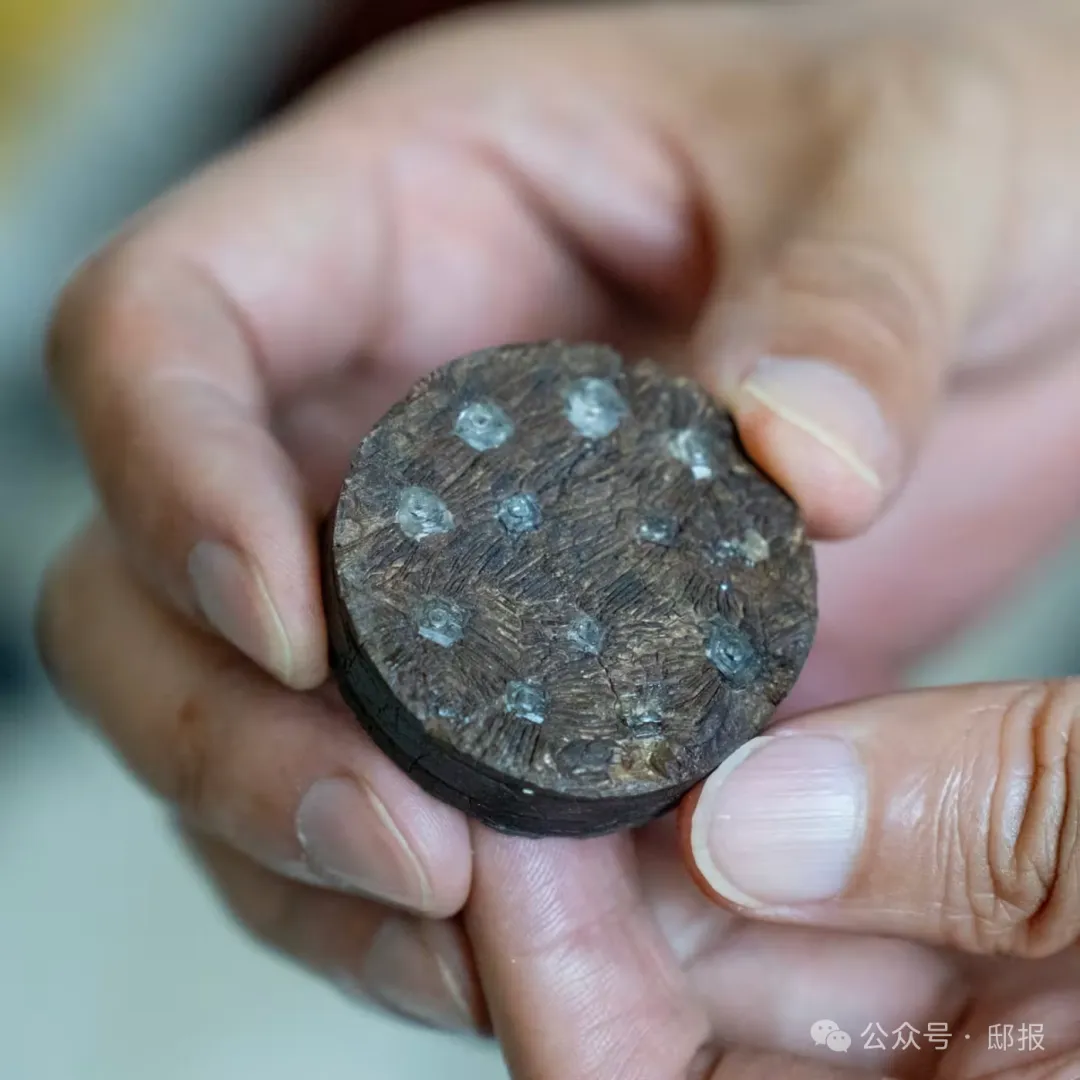
Today, most cultivated diamonds in China are produced using the “high-pressure, high-temperature” method. However, more manufacturers are starting to use “chemical vapor deposition” to produce larger gemstones, a method that grows diamonds layer by layer in a microwave chamber.
Rough diamonds are sent to Surat, India—the world’s diamond polishing capital—where labor costs are lower. Fan estimates that polishing a carat of diamond in China costs 400 yuan ($56), which is higher than his production cost for that diamond, while in India, the production cost is only 86 yuan.
From there, diamonds are shipped to trading centers like Antwerp or Dubai before entering the retail market.
Few consumers realize that China has become the center of the global diamond trade—customs labeling practices obscure this fact, as labels typically list the diamond’s “country of origin” as the polishing country, not the country of growth or mining.
China’s diamond industry holds strategic significance due to its applications in military and defense equipment.
Properties like hardness, thermal conductivity, and chemical inertness make diamond a useful material for a range of high-tech applications—from lasers and optics to nuclear fusion and even semiconductors.
Although many applications are still in their infancy, the technological uses of cultivated diamonds are expected to grow in the coming years.
China’s advantage lies in its ability to control the technology and energy that drive these energy-intensive machines. Fan Canjun’s diamond cultivation machine, developed in collaboration with a local manufacturer, costs about 2 million yuan ($280,000), cheaper than anywhere else.
Gemstone consultant Robert Wake-Walker said China has a “technical advantage” in diamond production and is continuously improving its production methods.
However, this equipment is classified as dual-use technology, prohibited from export, meaning only domestic companies can benefit from China’s mature industrial supply chain.
Electricity is another major cost in diamond cultivation. China’s industrial electricity costs are relatively low, especially compared to Europe, and generally lower than the US.
Fan’s factory utilizes solar energy and government subsidies, cutting energy costs in half—from 0.9 yuan per kilowatt-hour to 0.4 yuan.

Traditional diamond companies have tried various ways to resist the rise of cultivated gemstones.
In 2018, De Beers established its own lab-grown diamond company, Lightbox, to mass-produce low-cost cultivated gemstones. One of its ideas was to create a differentiated market, ensuring the exclusivity of expensive natural gemstones while weakening the competitiveness of cultivated diamonds.