Editor’s Note
The traditional diamond market is undergoing a significant transformation. As prices for rough stones fall sharply, the long-held perception of diamonds as a stable, high-value asset is being challenged. This article examines the factors behind this shift and its implications for the industry.

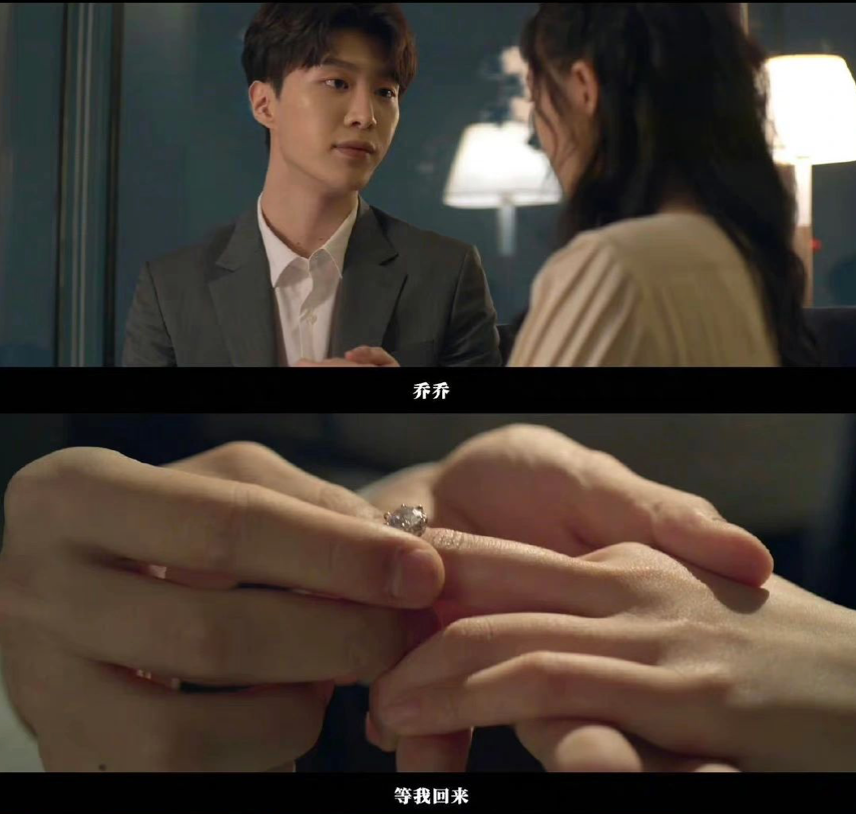
Diamonds have long been known for their exorbitant prices and have become a symbol of eternal love and marriage. However, with prices plummeting, the enduring “persona” of diamonds is beginning to crumble.
De Beers, the most monopolistic giant in the diamond industry, has continuously lowered the price of rough diamonds over the past year. A year ago, the price for a 2-carat rough diamond was around $1,400; now it’s just over $800, a drop of about 40%. Looking at the international diamond price index, prices have also fallen by approximately 30% since March of last year. Due to the price collapse, another global diamond giant, Alrosa, recently announced it would suspend diamond sales in an attempt to halt the continuous decline in diamond prices.
The primary reason is the rare deterioration in both supply and demand, leading to an accelerated decline in diamond prices.
From the demand perspective, the sharp drop in diamond prices is directly related to the global economic downturn. As global economic growth slows, during an economic downturn, under the influence of the “lipstick effect,” people are more inclined to consume cheaper goods, while many are deterred by expensive diamonds.
Beyond the macroeconomic backdrop, the sharp decline in diamond sales is more directly linked to falling marriage rates. In China, the marriage rate was about 10‰ a decade ago; by last year, it had dropped to 4.8‰, halving over ten years. In absolute numbers, over 13 million couples registered for marriage in 2013, but in 2022, it was less than 7 million, hitting a nearly 40-year low. The trend of declining marriage rates is expected to continue in the foreseeable future.
In neighboring South Korea, the marriage rate is only 3.7‰, a record low. Japan’s marriage rate is 4.3‰, also essentially a historic low. It’s not just young people in East Asian countries who are reluctant to marry; the marriage rate in the United States is also declining, currently around 5‰. Although slightly higher than in Asian countries, the trend shows a year-on-year decrease, reaching a new low in over a decade.
Weddings are the primary consumption endpoint for diamonds. Globally, the United States, China, and Japan are the largest diamond consumers, accounting for over 70% of global diamond consumption. If young people in these three countries are unwilling to marry, diamond consumption will naturally shrink significantly.
From the supply side, the competitive landscape of diamonds has undergone significant changes. Not only are there more producers of natural diamonds, but more disruptively, lab-grown diamonds are rapidly rising, completely breaking the diamond market’s monopoly.
For many years, the global diamond market was dominated by South Africa’s De Beers, which controlled about 90% of the global diamond supply. Under this super-monopoly, De Beers tightly controlled supply, creating an illusion of diamond scarcity in the market, thereby maintaining diamonds’ expensive positioning long-term. The classic slogan “A diamond is forever” was crafted by De Beers, successfully merging the image of diamonds with love, marriage, and expensive heirlooms.
However, as diamond deposits have been discovered worldwide—beyond South Africa, large deposits have been found in Russia, Australia, and elsewhere—new players have entered the market. De Beers’ monopoly has significantly weakened, with its share of global diamond supply dropping from 90% to around 30%. Consequently, its pricing power over global diamonds has also diminished. Where De Beers once single-handedly controlled global diamond supply, it no longer holds its former dominant position.
The fatal blow to the traditional diamond industry comes from the rapid rise of lab-grown diamonds. These diamonds are created in laboratories by simulating the growth environment of natural diamonds using specific technologies. As lab-grown diamond technology advances, these diamonds are not only visually indistinguishable from natural ones—sometimes even more visually striking—but also nearly identical in key intrinsic properties, making them difficult to differentiate using traditional methods.
However, the cost and price of lab-grown diamonds are far lower than those of natural diamonds. They are not only cheaper to produce but also have high yields, with batch production achievable in just weeks. This fundamentally undermines the scarcity attribute of natural diamonds.
The maturity of lab-grown diamonds has completely rewritten the rules of the diamond industry. Filip Van Dingenen, a board member of the Belgian Diamond Exchange Federation, stated:
With mature lab-grown diamond technology, traditional natural diamonds are no longer the only choice. Especially for young people, they are unwilling to pay the “IQ tax” for the inflated prices of natural diamonds.
In recent years, lab-grown diamonds have gained increasing favor. In the diamond market, lab-grown and natural diamonds now each hold roughly half the market share. Moreover, given current trends, the share of natural diamonds is expected to shrink rapidly. According to the latest market data, U.S. sales of natural polished diamonds fell by 30% in July, while sales of lab-grown diamonds rose by 50%.
It is worth noting that China is the largest producer of lab-grown diamonds. Last year, global production capacity for lab-grown diamonds was about 20 million carats, with China contributing approximately 9 million carats, nearly half of the global total. Henan Province, in particular, is a major hub for lab-grown diamond production in China, accounting for about 80% of the country’s capacity.
The disruptive revolution of lab-grown diamonds against traditional diamonds may have just begun.
In 1951, diamond giant De Beers introduced the slogan “A diamond is forever,” which has since become deeply ingrained. No matter how expensive diamonds were, many felt they were worth the price and willingly paid. However, over 70 years later, more and more people are realizing that diamonds are not a necessity for marriage. Even if they were, people can now more readily accept more affordable alternatives.