Editor’s Note
This article highlights how EU-funded research is leveraging laser technology to advance diamond-based industrial tools, potentially strengthening Europe’s competitive edge in high-precision manufacturing sectors.
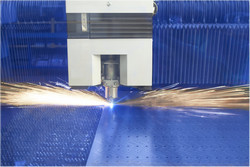
Researchers from the DIPLAT project are using laser technology to develop the next generation of high-performance tools based on industrial diamond.
Diamonds and other ultra-hard materials are used in many industrial sectors and in the field of manufacturing. For example, small diamond particles can be incorporated into saw blades, drill bits, and grinding wheels for cutting, drilling, or grinding. They can also be reduced to powder and take the form of a diamond paste used for polishing or very fine grinding.
However, paradoxically, it is this extreme hardness (the very quality that gives industrial diamonds their value) that has presented a constant challenge in developing the next generation of high-performance tools. Creating precise, complex 3D freeform geometries and structures from industrial diamonds and other ultra-hard materials has proven very difficult from a technical standpoint. The EU-funded DIPLAT project, launched in January 2013, aims to address this issue by presenting a laser-based technological breakthrough for the first time.
This breakthrough will allow the European industry to fully capitalize on the growing market for high-performance machining and tooling. Indeed, it is hoped that the project, which will receive a total of €3.2 million in EU funding, will open up new opportunities aligned with the design of high-performance tools.
DIPLAT seeks to harness the potential of high-brilliance ultra-short pulse lasers. This tooling technology will be based on 3D Pulsed Laser Ablation (PLA) and will be developed and demonstrated for numerous industrial applications. Laser ablation involves removing material from a solid surface by irradiating it with a laser beam, thereby achieving a smoother and better-defined edge.
A specific material focus of the project is working with polycrystalline diamond (PCD). This material offers abrasion resistance up to 500 times that of cemented carbide, and its high thermal conductivity allows heat to be diverted from the cutting edge, thus preventing rapid tool wear. PCD products are widely used in the aerospace, optical, electronics, and automotive industries, as well as in woodworking.
While PCD materials with larger crystals exhibit greater abrasion resistance, they often have rougher cutting edges. Conversely, smaller crystals offer a sharper edge but with a shorter tool life.
Cubic boron nitride is another very hard material used as an abrasive (it is the second hardest material after synthetic diamond). One of the physical advantages of cubic boron nitride compared to conventional abrasives is that, in addition to being harder at room temperature, it maintains its hardness over a wide temperature range.
The DIPLAT project aims to enable tool manufacturers to design highly specific functional surfaces (with controlled micro-geometries) from these materials, in order to provide industry with the exact performance required. The project, which is scheduled to conclude in July 2016, will then demonstrate the superior performance and functionality of these new tools in complex industrial applications.