Editor’s Note
As lab-grown diamonds achieve near-identical quality to their natural counterparts at a fraction of the cost, they are disrupting the traditional diamond market. This shift highlights how price advantage is becoming a decisive factor for market entry, challenging long-held perceptions of value and luxury.
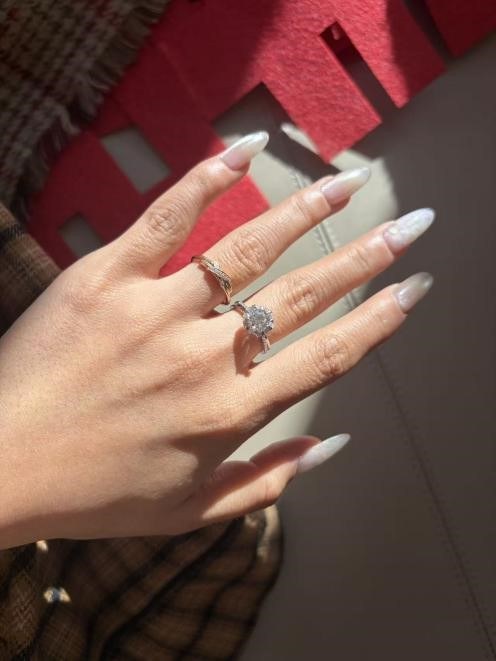
“The naked eye can’t tell the difference between natural and lab-grown diamonds.” Recently, a reporter saw at a lab-grown diamond wedding ring customization store in Hangzhou that store clerk Coco was showing customers samples from the display case.
This scene is a snapshot of the current transformation in the diamond consumer market. Once, the marketing myth of “a diamond is forever” built the price fortress of natural diamonds; today, with the breakthrough of lab-grown diamond technology and the evolution of consumer perceptions, a tug-of-war between “true love” and “cost-effectiveness” is playing out.
Price advantage is the key factor for lab-grown diamonds to open up the market.
According to the reporter’s on-site visits, in Hangzhou, the price for a custom-made 1-carat lab-grown diamond ring is roughly 6,000 to 10,000 yuan. In comparison, a natural diamond of the same grade costs approximately 30,000 to 100,000 yuan.
This was explained by Coco, a clerk at the WinkShine lab-grown diamond wedding ring customization store on Yan’an Road in Hangzhou.
The huge price gap has led many consumers to re-evaluate the value of diamond rings.
A post-00s woman who just got engaged this January chose a lab-grown diamond ring costing less than 10,000 yuan. She saved the money originally intended for a natural diamond ring and plans to travel with her loved one.
The woman expressed.
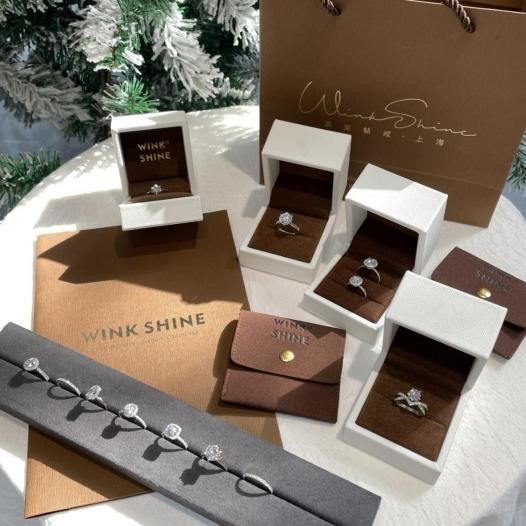
Store manager Mr. Zhang stated.
This impact is particularly evident in sales data. Staff at XY·Xingyu Lab-Grown Diamonds (Hangzhou West Lake Store) revealed that their lab-grown diamond sales volume has shown significant year-on-year growth, with monthly increases reaching up to 100,000 yuan.
In recent years, with the maturation of cultivation technology, the quality of lab-grown diamonds has continuously improved.
Store manager Mr. Zhang indicated that the lab-grown diamond industry started around 2018. Currently, the mainstream lab-grown diamond technologies are mainly HPHT (High Pressure High Temperature) and CVD (Chemical Vapor Deposition). The HPHT method simulates the high-temperature, high-pressure environment in which natural diamonds form in the earth’s mantle. The technology is mature and constitutes the mainstream of China’s diamond synthesis technology. The CVD method, on the other hand, involves decomposing carbon-containing gases in a vacuum environment, causing carbon atoms to deposit and grow on a substrate. It has advantages in producing large-grain diamonds.
With the strong rise of lab-grown diamonds, will natural diamonds completely lose their divine status?
During visits, the reporter found that in Hangzhou’s core commercial districts, such as Hangzhou Intime, Hangzhou Tower, and MixC, natural diamond brands still dominate, for example, Cartier, Harry Winston, and DR. Lab-grown diamond brands, such as Xiaobaiguang, LOVEE, and XY·Xingyu, are currently distributed in places like Intime Department Store, Wulin Intime, and Gongshu CC.
Faced with the trend of lab-grown diamonds, Professor Ruan from the Jewelry College of Shanghai Jianqiao University believes this is not a life-or-death battle of one replacing the other, but a return of consumer choice.
As lab-grown diamonds enter consumers’ view, vigilance is needed against the chaos of “fish and dragons mixing.” Some unscrupulous merchants sell moissanite and other imitations as “lab-grown diamonds.” Professor Ruan from Shanghai Jianqiao University’s Jewelry College provided a simple identification method: Moissanite has a kind of “hazy feeling,” like water mixed with milk. If observed with a magnifying glass or a smartphone’s macro mode, the facet lines on the side of moissanite are often not sharp and clear.
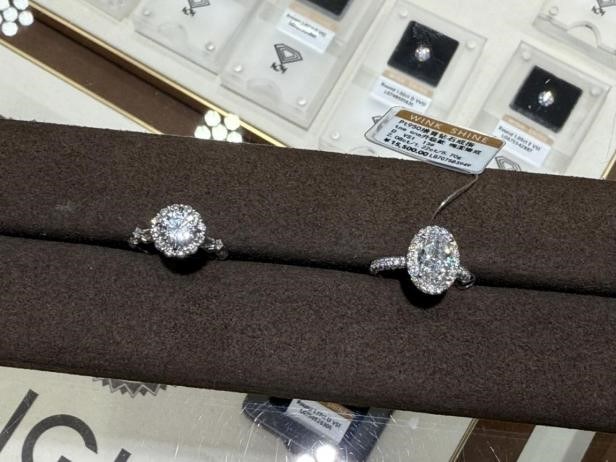
(Left: Moissanite, Right: Lab-Grown Diamond)