Editor’s Note
As global demand for ethical sourcing and transparency intensifies, Thailand’s gem and jewelry sector is proactively adapting. This article examines how the industry is embedding sustainability into its core operations to maintain its competitive edge and meet evolving international standards.
Thailand is stepping up efforts to integrate sustainability across its gem and jewelry industry, aiming to strengthen its position as a global leader amid growing international scrutiny over ethical sourcing, labor practices, and transparency.
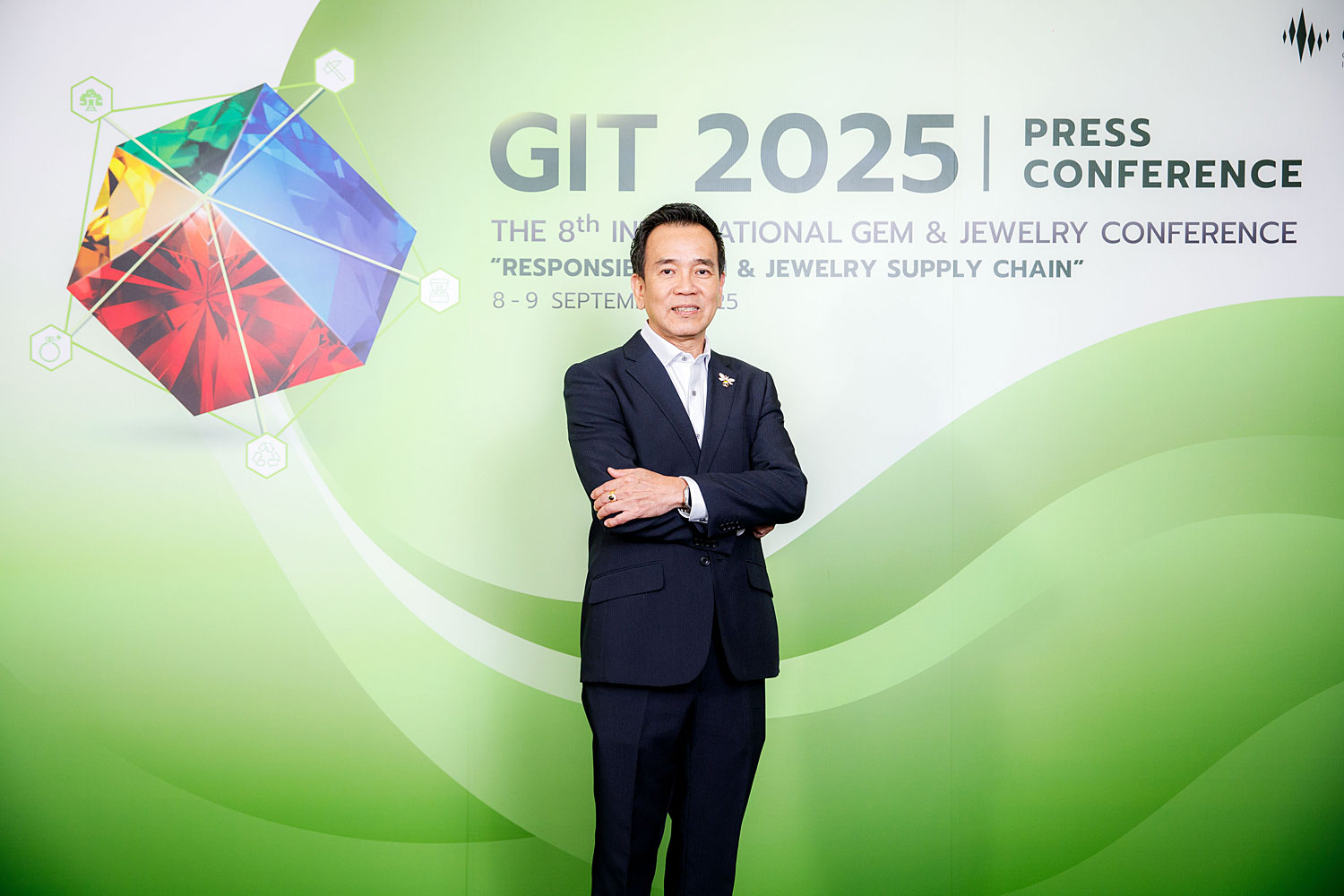
Sumet Prasongpongchai, Director of the Gem and Jewelry Institute of Thailand (GIT), said the shift was partly prompted by the global reckoning that followed the “blood diamond” crisis in Africa.
Today, sustainable practices span the entire supply chain, encompassing traceable sourcing, fair labor compensation, the use of blockchain technology, and adherence to global standards such as those set by the Responsible Jewellery Council (RJC). Thailand adopted these standards in 2019, reinforcing its role as Asia’s key processing hub for rubies and sapphires and a global centre for gem enhancement, cutting, trading, and auctions.
To support this transformation, GIT has ramped up research, compliance mechanisms, and training programmes. This year, it aims to help at least 40 small and medium-sized enterprises (SMEs) meet international standards, including the RJC Code of Practices. In the long term, GIT is working toward Thailand being formally recognised as a Standard Development Organization (SDO).
While sustainability standards remain voluntary in Thailand, GIT has proposed supportive government policies, including a revision of the tax structure. It is advocating for a flat 0.6% tax on sales—replacing the current 20% tax on profits—to ease cost burdens and improve access to raw materials.
The gem and jewelry sector is a significant contributor to the Thai economy, comprising more than 13,000 businesses and employing over 800,000 people. In the first five months of 2025, exports surged by 90% year-on-year to more than 400 billion baht, driven largely by strong global demand for gold and accelerated stocking in anticipation of potential changes to U.S. import tariffs. Domestic retail sales, however, remain subdued.
Looking ahead, export performance in the second half of the year will depend heavily on U.S. tariff policy. Competitive rates will be essential for sustaining momentum, particularly in original design manufacturing (ODM) and in expanding market share across ASEAN countries such as Indonesia and the Philippines, as demand from China slows.
Currently, 90% of Thai production still relies on original equipment manufacturing (OEM), but the future lies in value-added products, brand building, and empowering local artisans and SMEs to meet global sustainability standards.
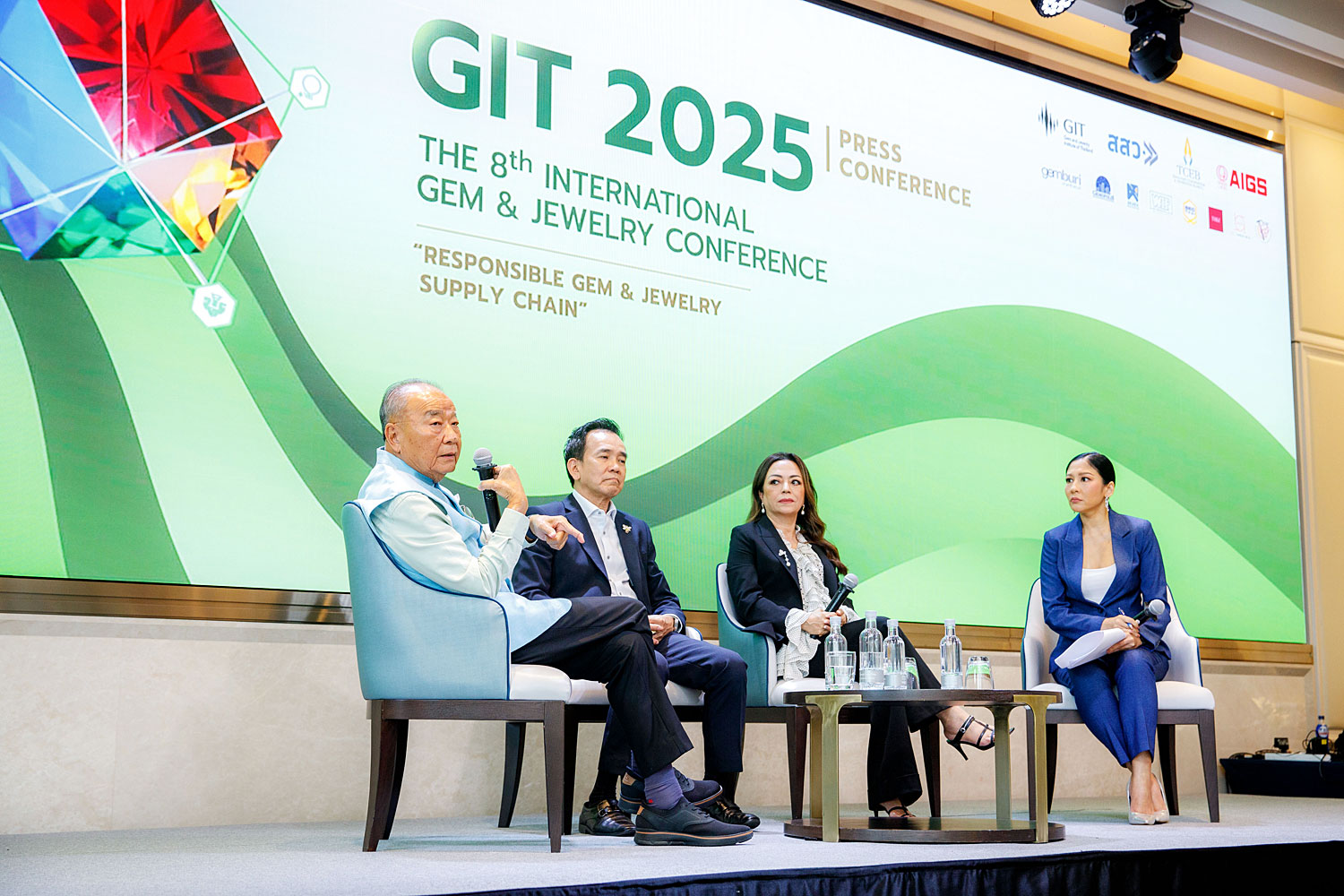
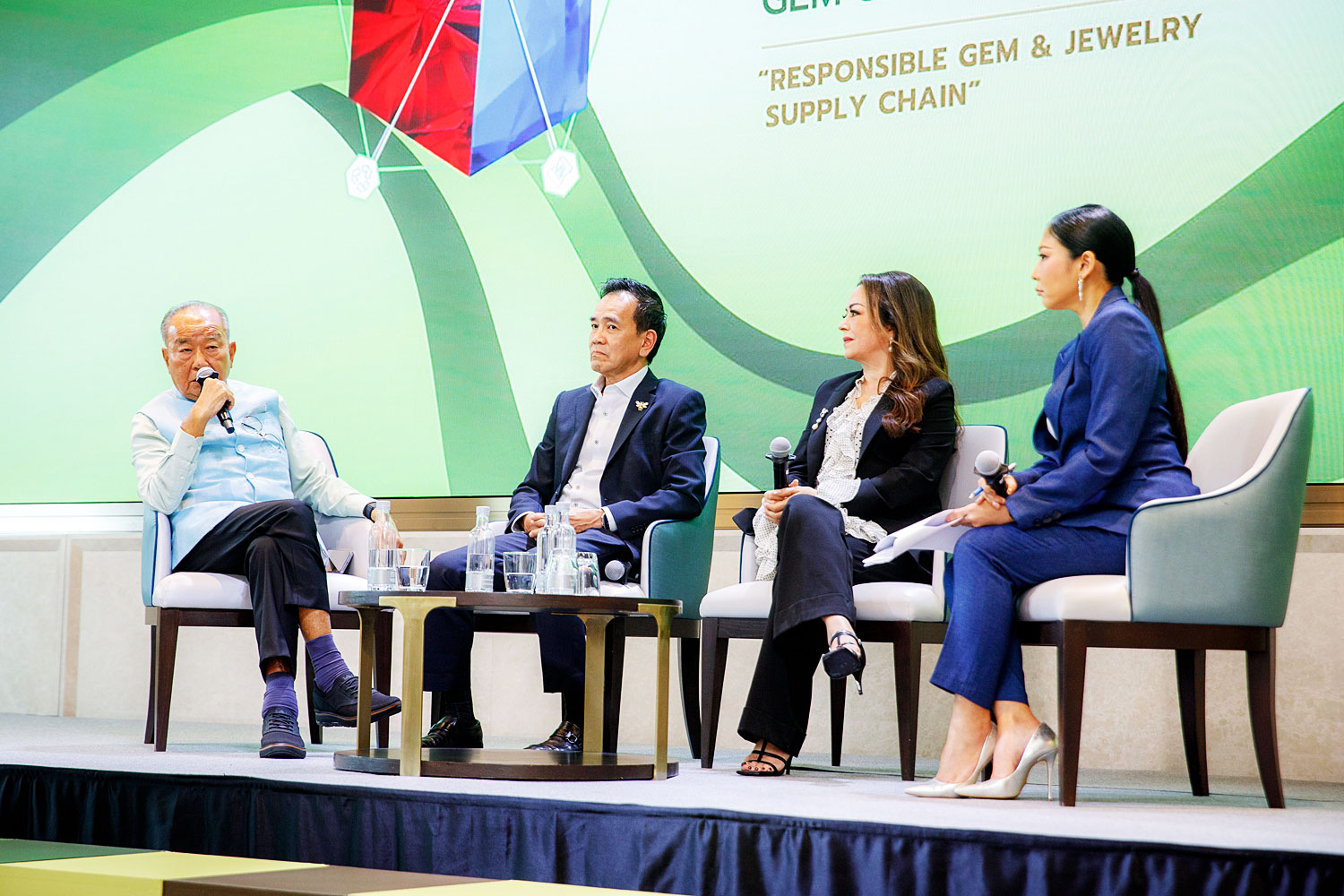
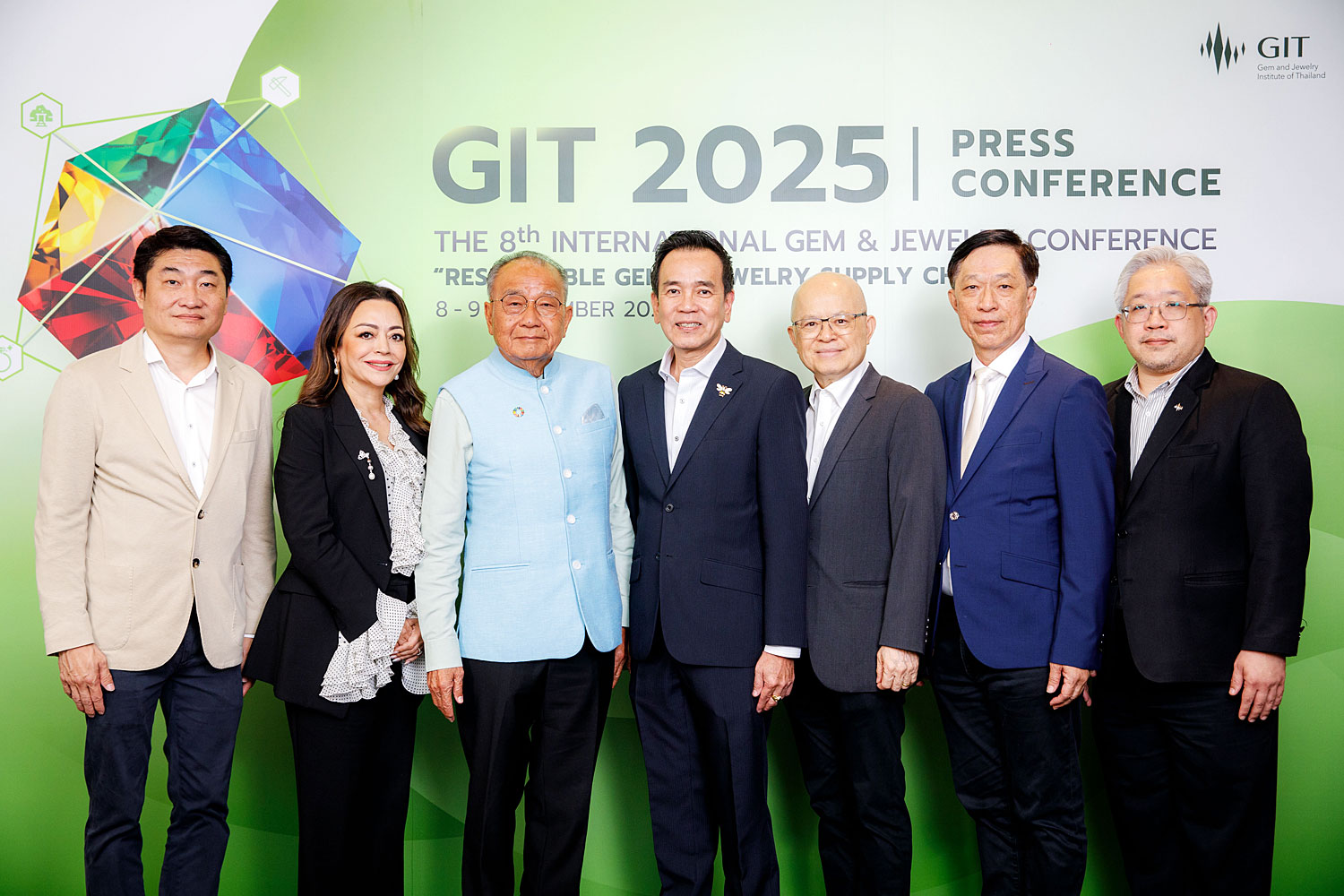
A major step in that direction will be the “GIT 2025: Responsible Gem & Jewelry Supply Chain” international seminar, to be held from September 8–9 at the Grand Hyatt Erawan Bangkok. The event will gather global experts, researchers, and stakeholders to exchange insights and promote Thailand’s role in the global industry.
The seminar will be followed by the Bangkok Gems & Jewelry Fair from September 9–13 at the Queen Sirikit National Convention Center, a key platform for business matching and driving export growth in the second half of the year.
As the industry navigates a changing global landscape, Thailand is positioning itself to lead through responsible growth, with sustainability at the core of its strategy.