Editor’s Note
This article explores the luxury watch market’s remarkable growth, driven by its dual role as both a personal accessory and a tangible investment asset.
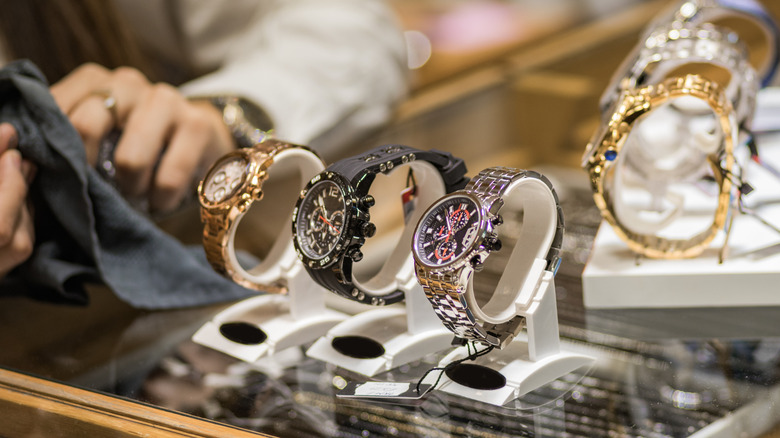
Most luxury watches you can think of cost more than most cars. People wear them, but they’re also investments that can actually go up in value. They’re status symbols, sure, but they hold their worth better than a lot of stocks. Right now, the global luxury watch market is exploding. It’s expected to jump from nearly $60 billion in 2025 to almost $135 billion by 2032, according to Fortune Business Insights. A big part of that is collectors who treat these mechanical watches like solid, physical assets. The resale scene’s no joke either — in 2024, the secondary market hit $26.52 billion worldwide and was projected to reach nearly $60 billion by 2033, according to Business Research Insights. There’s real action out there; People are buying, selling, trading.
Not every luxury brand deserves a pedestal. Some names still push real craftsmanship and deliver watches that actually make good investments, while others lean hard on their history but cut corners where it counts. For this ranking, we’ll break down 13 major luxury watchmakers, judging them on five factors: how deep their roots go, how much they innovate, how well they control production, whether their value holds up, and whether collectors actually want them.
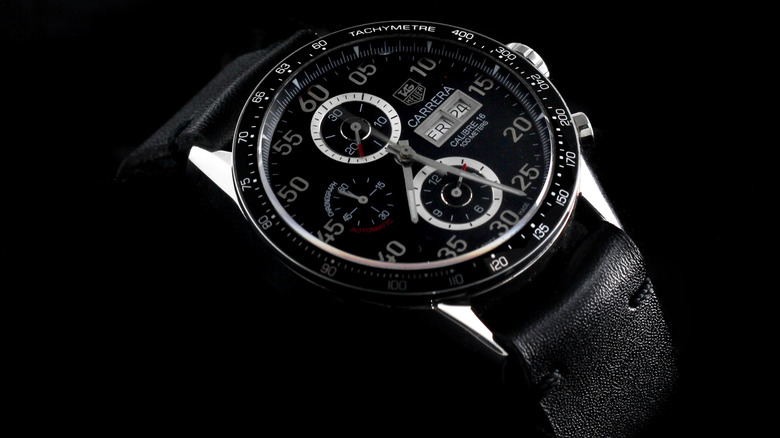
TAG Heuer has been making watches since 1860. That’s a long run and, honestly, pretty impressive. Early innovations in chronographs did set industry standards. Somewhere between then and now, though, the brand got caught up in being Formula 1’s poster child. The recent deal as F1’s official timekeeper sounds cool in press releases. It doesn’t actually make the watches better, though. What it does is drown out the watchmaking with marketing noise. Celebrity endorsements and motor racing sponsorships — rather than the actual watches – become the story.
Besides these issues, TAG Heuer ranks lowest here because it churns out roughly 380,000 watches annually. Compare that to the scarcity of Patek Philippe, and the gap becomes obvious immediately. Most TAG Heuer models don’t hold value. Even when pieces do appreciate, it’s usually vintage rarities, not current releases. Features like the TH-Carbonspring show technical ambition, sure. It reads as trend-chasing rather than timelessness, though. If you’re spending the same amount, Breitling or Omega just turn more heads among collectors. That’s not a knock on TAG Heuer’s quality; It’s just the truth about where the brand really stands.
Cartier started as a jewelry house way back in 1847, which is a factor in why it ranks in this position. In 1904, it launched the Santos, the first real modern wristwatch for men. It wasn’t just another watch on the market. It really shook things up, and people are still talking about it. Today’s models bring exciting innovations such as SolarBeat technology, which is quite impressive on paper. Yet somewhere along the way, watches became jewelry’s afterthought. The Tank and Santos remain stunning pieces, and that’s not debatable. The problem is that everything about Cartier screams accessories. Watches feel secondary to the broader luxury empire.
That kind of value retention shouldn’t be dismissed, placing Cartier in rare territory among luxury brands. Popular models like the Tank and Santos have staying power in collector circles. The issue isn’t craftsmanship or collectability. It’s positioning. When a brand does so much — jewelry, leather goods, and fragrances — it’s easy for the watches to get lost in the shuffle. Cartier makes enough watches (680,000) each year to satisfy a wide luxury crowd, so you don’t see the same sense of scarcity you get with some of the top competitors.
Hublot was founded in 1980 by Carlo Crocco, so it’s basically the youngest brand in this collection. That newness is shown by the fact that the brand pioneered combining gold with a rubber strap, which was genuinely bold. Nobody was doing that. Since then, Hublot’s entire identity has been built on fusing materials that traditionally shouldn’t go together. Magic Gold, colored sapphire crystals, proprietary alloys like Hublonium — the technical ambition here is real. The Big Bang collection hit the scene in 2005 and flipped the script on luxury sports watches. That’s something you can’t ignore.
Limited editions and rare materials like Magic Gold tend to sell out, but to most collectors, Hublot releases may come across as chasing trends. This is because the brand uses flashy marketing like partnering with Ferrari, hanging out with celebrities, and pumping out new limited releases left and right. The materials break new ground, and the designs really stand out. Still, you get the sense this was made to look good on social media rather than become a classic down the line. When you stack Hublot up against other brands in this price range, like IWC or Breitling, the latter two just carry more weight with collectors.