Editor’s Note
The implementation of a 25% U.S. tariff on certain Indian goods has been postponed from August 1 to August 7, as announced by the White House. The extension provides additional time for customs authorities to prepare for the new duties.
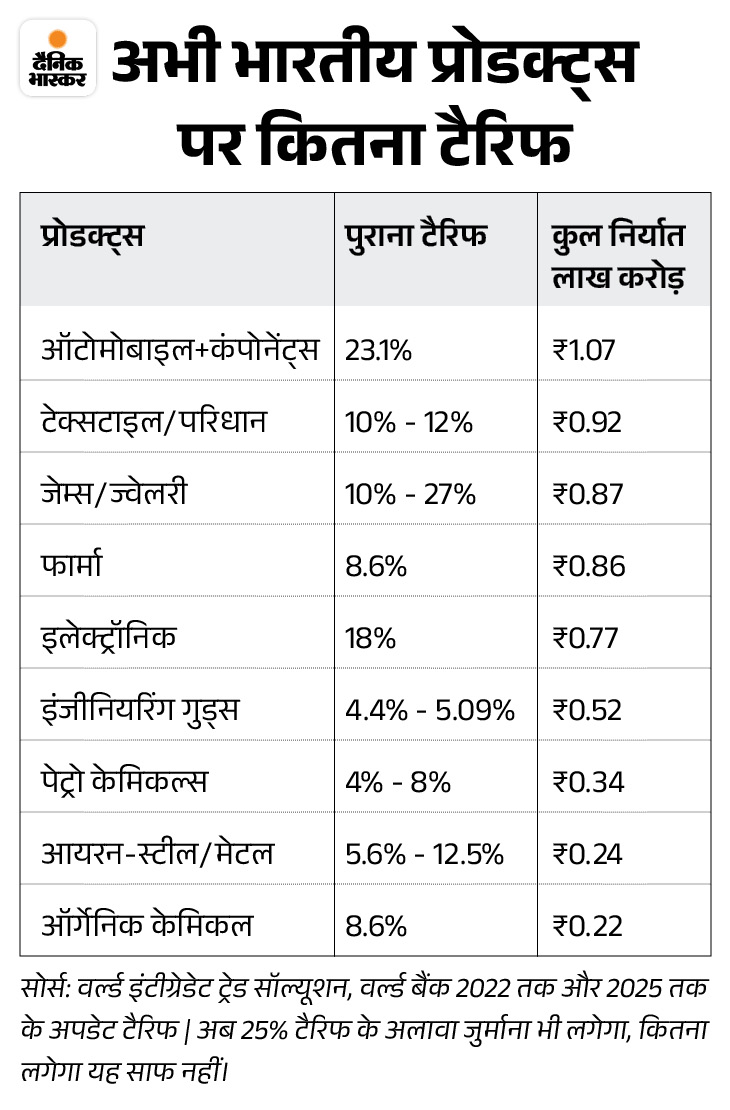
The 25% tariff on goods imported from India to the United States, which was scheduled to take effect from today, will now be implemented from August 7. The White House announced this just before the August 1 deadline expired. The deadline has been extended to give Customs and Border Protection time to make the necessary changes to collect the new duties.
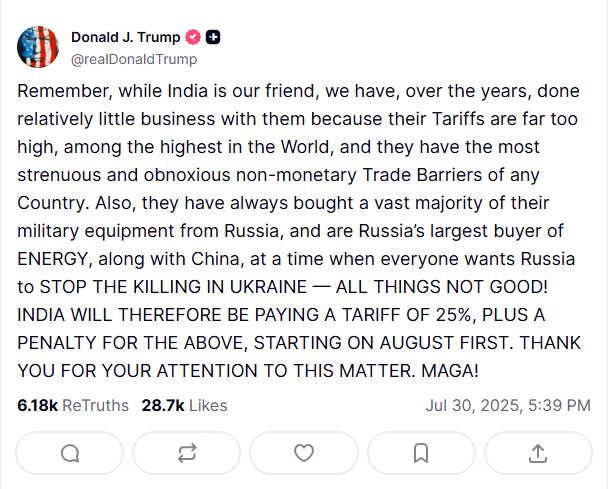
On July 30, US President Donald Trump announced a 25% tariff on India. Trump had also spoken about imposing penalties on India for its trade with Russia, though he did not clarify what these penalties would be or their magnitude.
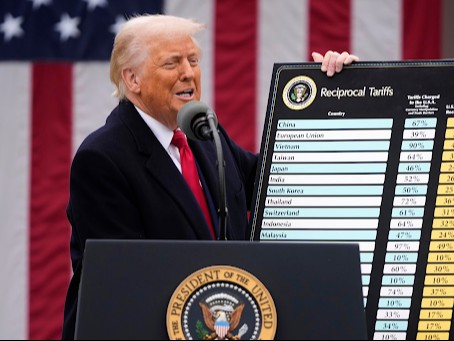
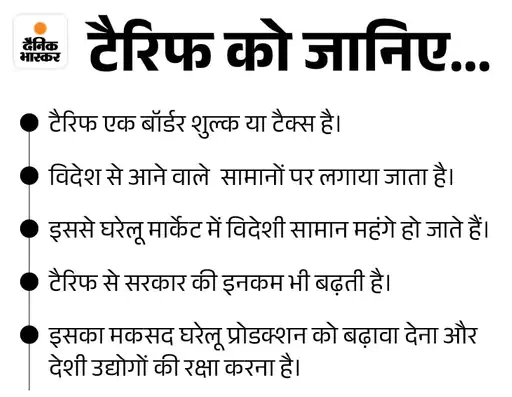
Currently, an average tariff of about 10% is applied. The 25% tariff will make goods exported from India, such as medicines, textiles, and engineering products, more expensive. This could reduce demand for Indian products in the US market and potentially decrease India’s trade surplus with the US.
Smartphones: India became the largest supplier of smartphones to the US in Q2 2025, surpassing China. Indian smartphone exports captured a 44% share in this US segment. While no tariffs are currently applied, future 25% tariffs could increase their prices, affecting competitiveness.
Diamonds and Jewelry: Over $9 billion worth of jewelry is exported from India to the US, including natural and lab-grown diamonds, gold and silver ornaments, and colored gemstones. New tariffs could increase their prices, potentially reducing demand for Indian jewelry and threatening jobs.
Electronics: Approximately $14 billion worth of electronics products like laptops and servers are exported from India to the US. These products are currently duty-free due to an ongoing US Section 232 investigation, but if tariffs are imposed in the future, India’s cost-competitiveness could diminish.
Pharmaceuticals: The Indian pharma sector is a major global supplier of affordable medicines. The US imports generic drugs, vaccines, and active ingredients from India, with exports exceeding $7.5 billion in 2025. A tariff on pharma would be a major blow to India’s exports, as the US accounts for over 30% of India’s pharma exports.
Textiles and Apparel: Exports from India to the US range from handcrafted silk to industrially produced cotton fabrics, valued at over $2.5 billion in 2025. A 25% tariff will increase their prices, potentially impacting demand for Indian textiles and weakening the sector.
Experts say the 25% tariff is bad news for India, and the focus is now on quickly finalizing a trade deal with the US. If the deal is delayed, it could impact India’s FY26 GDP.
Kapoor noted that the 25% tariff rate is certainly negative, as countries like Vietnam, Indonesia, and the Philippines face lower tariffs. Precise details on tariffs for exempted goods like pharma and goods with varying rates like iron, steel, and autos are not yet available, but if tariffs are applied to pharma, it would be more damaging for India’s exports.
Alongside announcing the 25% tariff, Trump also mentioned imposing penalties but did not clarify what they would be or their magnitude. The penalty could mean additional taxes on specific Indian goods or sectors, or the elimination of certain trade concessions.