Editor’s Note
This article explores a little-known but highly lucrative international trade, uncovered through a financial investigation. It highlights how complex global networks can operate in plain sight, revealing gaps in oversight that allow such activities to flourish.
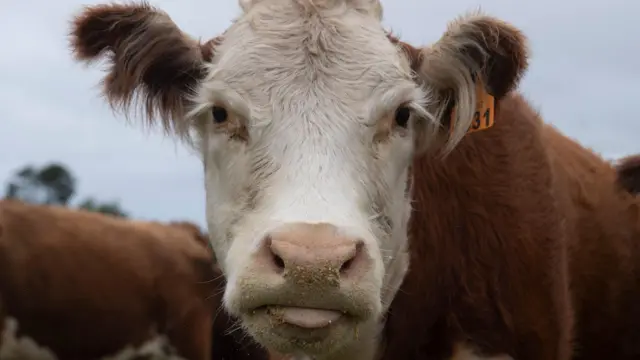
Prosecutor Enrique Rodríguez was unaware of the existence of “bovine gold” until he received an alert about suspicious money transfers from China to Uruguay and began an investigation.
The transfers of hundreds of thousands of dollars made between 2020 and 2023 originated from two Hong Kong companies and arrived at various Uruguayan bank accounts. However, something caught the attention of the asset laundering prosecution unit led by Rodríguez: these companies lacked records of foreign trade with the South American country.
The investigation revealed that the payments corresponded to illegal shipments of cattle gallstones to Hong Kong—stones that form in the gallbladder of some cows and are used in traditional Chinese and other Asian medicines.
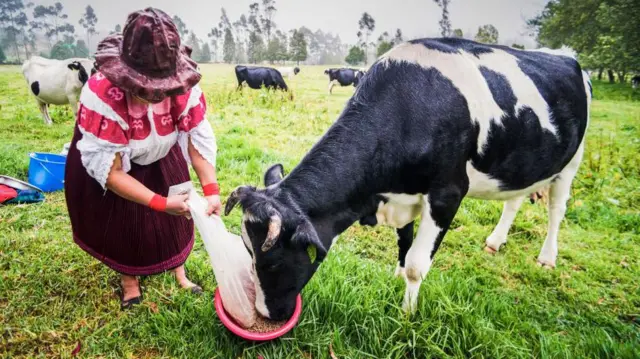
The case, which already has several convicted individuals and remains open, is just a sign of the growing interest sparked by the trafficking of these rare stones, whether legal or criminal.
The medicinal use of bovine gallstones in Asia is far from new. In fact, they are mentioned in a book considered the first text on substances in Chinese phytotherapy, with over 2,000 years of history, points out Reginaldo Filho, president of the Brazilian Chinese medicine school Ebramec.
One of its current uses, he explains, is for the treatment of neurological disorders such as strokes or seizures. They are also used for medicinal purposes in other Asian countries, such as South Korea and Japan.
But these yellowish or reddish stones are scarce in the market. One reason is that, as in humans, their natural production is infrequent: it is estimated that out of every 100 slaughtered cows, only about two have gallstones in their gallbladders, often small ones. They tend to appear more in aged cattle.

However, they are only extracted after the animal is dead, and since large meat producers slaughter more short-lived cows, their occurrence is also limited in slaughterhouses.
It is estimated that China produces about 1,000 kilograms of bovine gallstones per year, according to a local Chinese medicine association, but the country has a demand for 5,000 kilograms annually and seeks to acquire the shortfall from abroad, at rising prices after the COVID-19 pandemic.
A U.S. Department of Agriculture document that collected these figures in April noted that global imports of bovine gallstones into Hong Kong “have grown significantly since 2019, jumping 66% to US$218 million in 2023.” It specified that Brazil is the largest supplier to that Chinese region, with sales tripling in the last four years to reach US$148 million in 2023, followed by Australia, Colombia, Argentina, the U.S., and Paraguay, according to Trade Data Monitor figures.
The report highlighted the business opportunities arising for the U.S. due to the scarcity of such products and the seemingly increasing interest from consumers. But others have also taken note of this.
Argentina announced last month the agreement on a new protocol with China to export gallstones to the Asian giant. The news emerged days before the meeting between the presidents of both countries, Javier Milei and Xi Jinping, on November 19 during the G20 summit in Rio de Janeiro.

The final approval of the protocol by China is awaited, and the goal is to give value to these cattle stones in the formal commercial market, explains Daniel Rodolfo Urcía, president of the Argentine Federation of Regional Meatpacking Industries (Fifra).