Editor’s Note
A new report from SmarTech Analysis projects the 3D-printed jewelry market will double to nearly $1 billion by 2031, driven by advances in precious metal printing and more affordable resin-based systems. This highlights how additive manufacturing is transforming traditional craftsmanship and luxury markets.
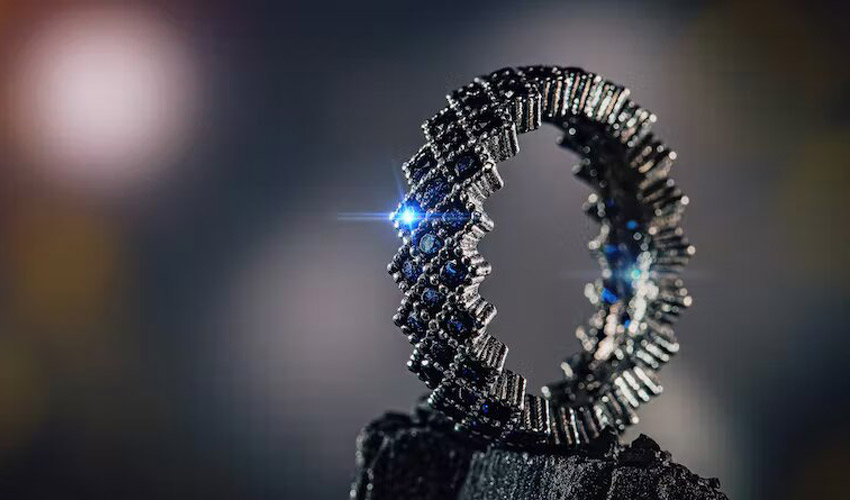
SmarTech Analysis has published a new study dedicated to the 3D printing market, this time focusing on the jewelry sector. According to the report, the market for 3D printed jewelry is expected to reach a value of $989 million by 2031, compared to $489 million this year, representing an annual growth of 10% over the studied period. This evolution could be attributed to the emergence of precious metal printing processes and the decreasing costs of resin machines, which are highly valued by the sector, particularly for producing molds for lost-wax casting.
The jewelry industry is a complex market, most often associated with luxury, relying on very traditional methods and long-standing artisanal know-how. And yet, it is also a field where innovation is crucial, where players must reinvent themselves to offer unique and sensational pieces. The use of additive manufacturing in jewelry is not new, and historically, the technology was primarily used in the design of prototypes and lost-wax casting models. This is still the case, and the recently published report shows that these application cases hold a significant market share.
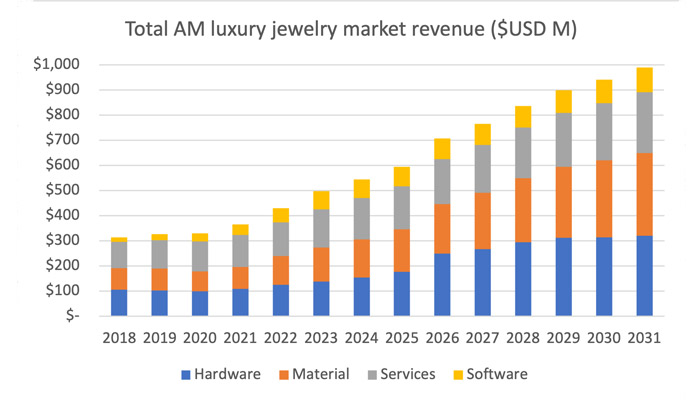
However, if the market for 3D printed jewelry is experiencing annual growth of 10% until 2031, it is notably thanks to the rise of processes like metal binder jetting or developments around laser powder bed fusion, which allow for the design of jewelry with precious metals. It is now possible to rely on 3D printers to produce more complex and unique rings, necklaces, and bracelets. However, caution is advised regarding the costs such a machine can represent – we are not sure that tomorrow all jewelers will be able to equip themselves with a metal 3D printer even if the entry ticket is lower than before.
The answer may lie in photopolymerization: according to the SmarTech Analysis study, one of the growth factors for the market would be better accessibility to resin 3D printing solutions. These also offer high resolution – as we know, stereolithography is renowned for manufacturing highly detailed parts. And today, manufacturers are striving to improve not only this print quality but also speed and volume. Players in the jewelry market could therefore rely on more reliable and high-performance 3D printers.
Finally, the study offers comprehensive forecasts on the different segments of the value chain, focusing on 3D equipment, materials, as well as software and services. Among the most influential players, names like Sisma, Formlabs, Desktop Metal, and 3D Systems are found.