Editor’s Note
This article explores how Lea Sonderegger’s academic research on omnichannel retail anticipated today’s blended shopping reality, highlighting the journey from theoretical concept to established business practice.
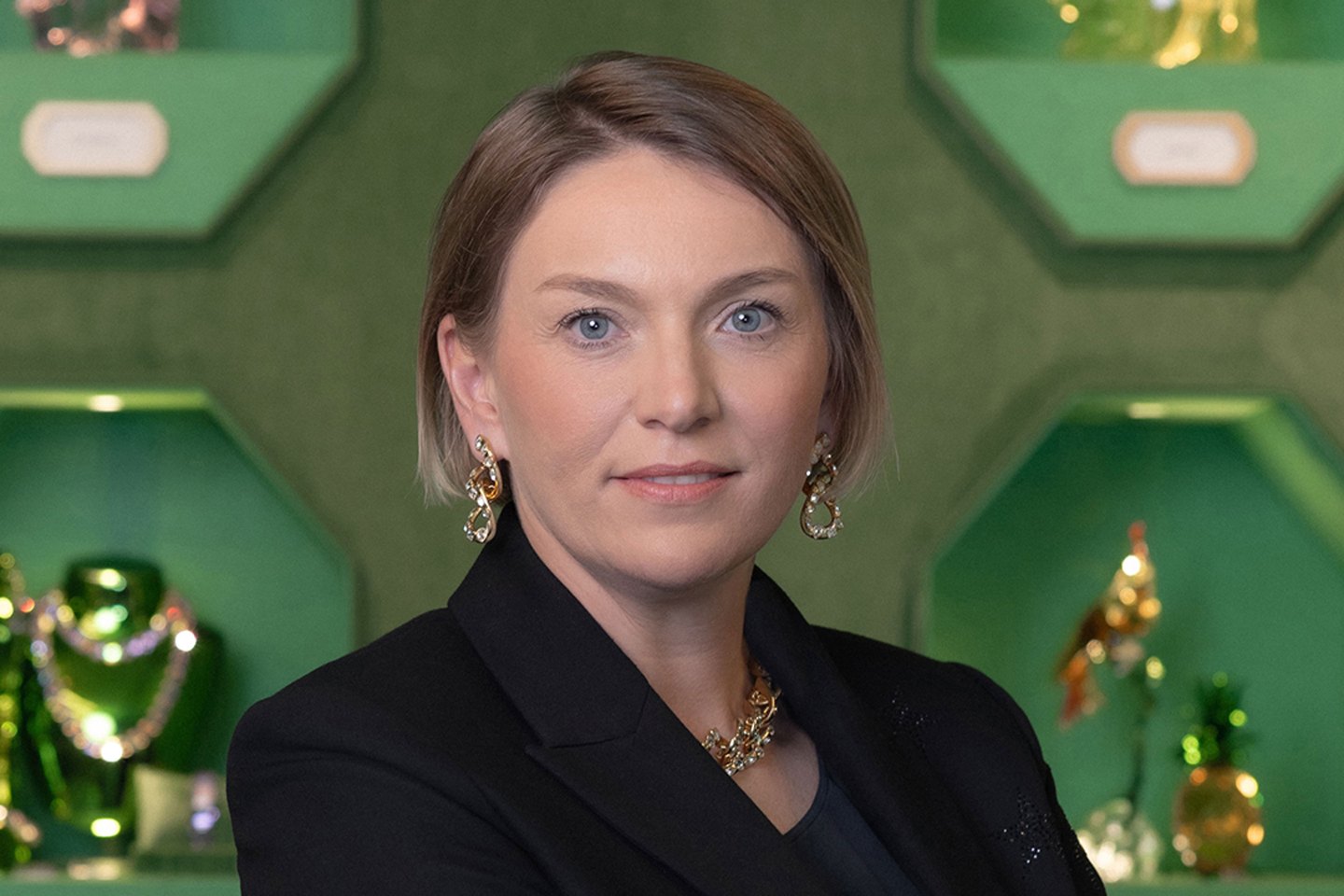
While studying at the University of Vienna, Lea Sonderegger’s PhD research focused on omnichannel retail, arguing that consumer spending would increasingly blend across the physical and digital worlds.
It proved to be a prescient pitch that caught the attention of Swarovski, who hired Sonderegger 15 years ago to serve as an e-business project manager for the luxury jewelry retailer. Today, three out of every four American shoppers are omnichannel, accounting for 27% of total retail spending, according to research published by credit-card giant Capital One.
Over the course of her technology career at the crystals and gemstones manufacturer, Sonderegger has risen up the ranks, taking on increasing responsibilities that included oversight of the main e-commerce business for swarovski.com, operations in China, and eventually a successor for the chief information role that would be combined with the chief digital officer title in 2022.
Sonderegger reports directly to CEO Alexis Nasard and sits on Swarovski’s executive committee, a prime position that reflects the importance of digital commerce as a core pillar of Nasard’s “LUXignite strategy,” which the executive unveiled in 2022 that included a focus on opening new flagship stores, including a shop on New York’s Fifth Avenue that opened in late 2023. He also lauded a commitment to investing in digital experiences, a key modernization effort for a brand that began in 1895.
Sonderegger says despite its long history, Swarovski has always been an early adopter when it comes to consumer-focused technologies. The company opened a web-based online shop in 2001, then a mobile website in 2010 and an online store two years later. Today, 80% of the company’s online transactions come via mobile.
As consumer shopping patterns have migrated online, Swarovski’s approach has evolved. The company now offers “buy online, pick up in store” and even a service that allows shoppers to order something from a local shop and have it shipped to their home within a single day.
The retailer has credited the “LUXignite” strategy for why the company reported a 6% increase in revenue for the fiscal-year 2024, as well as an operating profit that was fully positive for the first time in five years.
Sonderegger says there’s been a lot of internal curiosity and excitement among Swarovski’s employees for new generative artificial intelligence tools.
A few of Swarovski’s generative AI applications in production today include a tool that helps customer service representatives handle client questions, which has reduced the response time of those agents by 55% and boosted the company’s net promoter score, a metric that tracks how likely shoppers will recommend a brand or service.
Sonderegger says she hasn’t been locked in on any one single vendor relationship throughout Swarovski’s AI journey, though Google and SAP were named as two key partners.
Swarovski’s test-and-learn approach to technology has helped it avoid spending too much money on earlier forms of technology that later lost their shine. Several years ago, a test of a virtual try-on tool didn’t move beyond the pilot phase because the technology wasn’t sharp enough.
But Sonderegger says she’s currently exploring virtual try-on again, which is expected to launch early next year. And she can do so because Swarovski was cautious during its earlier attempt.