Editor’s Note
This article explores the rise of lab-grown diamonds, detailing their identical properties to mined stones and their growing market presence. It highlights the technology, consumer appeal, and industry debate surrounding these sustainable alternatives.

On the 25th of last month, at the KDT Diamond store in Jongno-gu, Seoul, a laboratory of about 33㎡ (approximately 10 pyeong) was nestled in a corner of the store displaying dazzling rings and necklaces. This is where Indian polishers create lab-grown diamonds. While literally grown in a lab, lab-grown diamonds are 100% identical to mined natural diamonds in terms of chemical, physical, and optical properties.
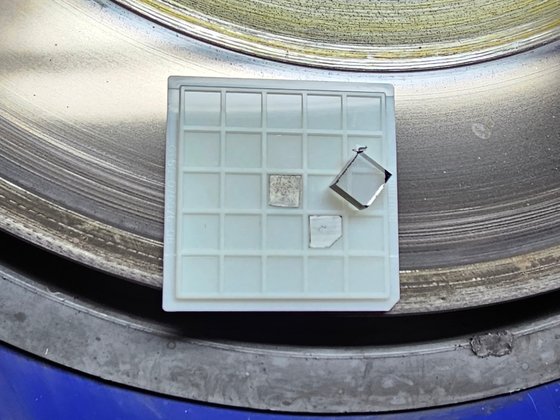
KDT Diamond succeeded in developing lab-grown diamonds for the first time in Korea in late 2021. When a 7mm x 7mm diamond seed is placed into a Chemical Vapor Deposition (CVD) machine, a diamond rough is formed in about 500 hours. The principle involves attaching carbon atoms onto the seed. The still-unsparkling rough then transforms into a brilliant gem-quality diamond through the hands of polishers. The process involves determining size and shape with a 3D scanner, cutting the rough with a laser machine, and then meticulously processing it with a diamond-coated disc plate to completion.

Diamonds artificially created in laboratories are changing the market landscape. De Beers, the world’s largest diamond producer, unveiled engagement rings made from lab-grown diamonds in June this year, reversing its previous declaration that it would not create engagement rings that directly compete with the natural diamond market.
According to a report by diamond expert Paul Zimnisky, the global lab-grown diamond market is projected to double in size from about 2.6 trillion won in 2021 to 5.2 trillion won by 2025. In Korea, E-Land Group’s jewelry brand ‘LLOYD’ was the first to introduce lab-grown diamonds in late 2020. LLOYD’s sales of lab-grown diamonds this year are expected to increase by 150% compared to 2021.
As the popularity of lab-grown diamonds rises, department stores are also actively attracting these brands. ‘ALOD’, the brand of KDT Diamond that entered Hyundai Department Store’s Trade Center branch earlier this year, achieved the top monthly sales among domestic precious metal stores for the first time last month. In terms of the number of items sold, it far outsold natural diamond brands. The lab-grown diamond specialist brand ‘The Grace London’ sold 100 million won worth of products in just 2 hours during a VIP event at Lotte Department Store’s Dongtan branch last August.
The secret to their popularity is reasonable pricing. For mid-to-high-grade stones, natural diamonds cost around 15 million won per carat, while lab-grown diamonds cost about 3 million won. Due to this significant price advantage, many existing customers who own natural diamond products are making additional purchases, often seeking ‘fancy cuts’ (shapes other than round cuts) rather than the common round cut.
SSG.com is developing and selling pink diamonds, considered among the rarest gems, using a method of growing them in a laboratory.
The influence of MZ-generation consumers, who value ethical consumption, has also been significant. Controversies over environmental pollution and labor exploitation in the natural diamond mining process have led to lab-grown diamonds emerging as an alternative. Lab-grown diamonds, which avoid issues like soil pollution and excessive carbon emissions associated with mining, are also called ‘eco-diamonds’.
