Editor’s Note
This article highlights the alarming expansion of counterfeit goods beyond typical luxury items to essential everyday products, posing significant risks to consumer safety and economic integrity.
The global counterfeiting industry reaches all types of goods and goes far beyond copying mass consumer products like sneakers and brand-name clothing. In our country, every day the National Customs Service and the Investigative Police are finding new cases of piracy involving “non-traditional products”: rice, whiskey, tequila, contact lenses, vitamins, car parts, power tools, and phone chargers that come with an alleged certification from the Superintendency of Electricity and Fuels.
Below we present the story of four counterfeit products that have reached consumers’ hands, and whose cases reflect how the black market for pirated products operates in Chile today.
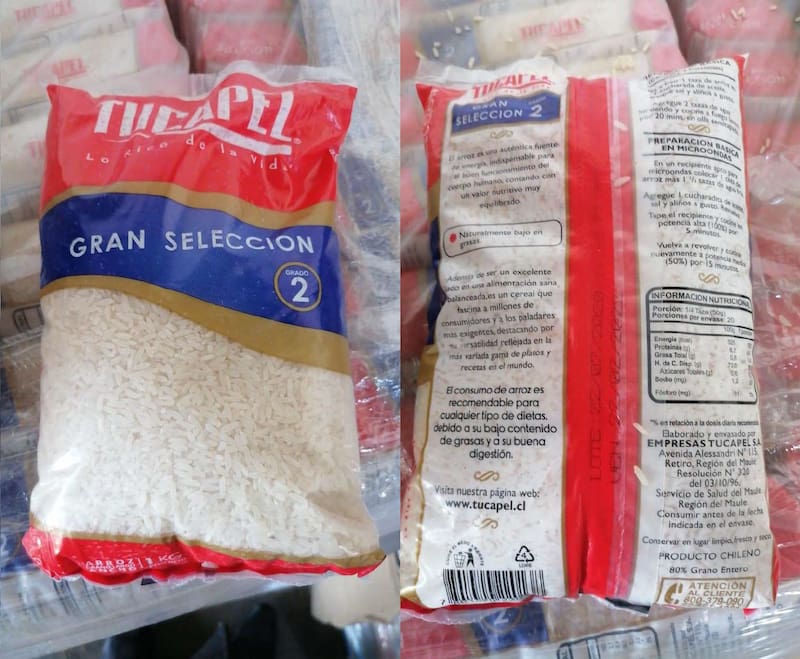
It was March 2021, and in a sushi restaurant in the commune of La Granja, the cook was having trouble. Despite his experience and all his attempts, the sushi roll he was cooking that day fell apart when rolled. As usual, he was using “Tucapel Gran Selección Grado 2” rice, but this time he felt the grain was smaller and its texture was different.

Annoyed by what he believed was a product defect, he wrote to the company and sent them photos of the one-kilogram package, including the printed codes that allow for the traceability of all packaged foods. “Batch 22/07/2020 17:40 P2 RMM,” read the bag.
After reviewing the images, several details caught the attention of Tucapel’s quality control area. For example, the packaging from the complaint was smaller, had more muted colors, and did not bear a logo commemorating the company’s 80th anniversary, which was being used in 2021. Furthermore, the texts had some spelling errors, such as the absence of accents and the use of the word “agreque” instead of “agregue” in the cooking instructions.
Analysis of the fake rice determined there were differences; for instance, the sealed part of the original packaging was red, while on the fake one it was transparent.
Days later, information from a distributor allowed for a deeper review. The man reported that in a wholesale warehouse in Lo Espejo, bags of rice identical to those from the sushi restaurant complaint were circulating. Company investigators went to the place, bought some units, and confirmed their suspicions: counterfeit Tucapel rice was being sold there.

Although this is an unprecedented event for the company, the import, manufacture, and sale of fake food, medicine, and medical devices is a phenomenon that has quietly emerged in the country in recent years. Among the detected cases are fake tequila brought from Mexico, alleged Jack Daniel’s whiskey made in Melipilla, thousands of fake contact lenses seized in Iquique, and copies of vitamins in capsules detected in Talcahuano.
Following Tucapel’s complaint, the Intellectual Property Crime Investigation Brigade of the PDI located the warehouse in Lo Espejo. It was the “Comercializadora y Distribuidora Ángelo Araya Acevedo E.I.R.L.” Its owner, of the same name, had recorded two large rice imports from Paraguay in 2020, totaling 406,000 kilograms. According to expert reports, the imported rice was smaller and of lower quality than the national product packaged by Tucapel.
Additionally, they detected another wholesale warehouse in Quinta Normal called “Comercializadora San Damián,” which offered the same pirated rice at $700 per kilogram, a price even below the cost value of the original. This company, owned by Christian Hormazábal Figueroa, had also imported 82,500 kilograms of rice from Paraguay in 2020.
Finally, on September 2, 2021, all the warehouses were raided by the PDI, but evidence was only found at the Quinta Normal location.
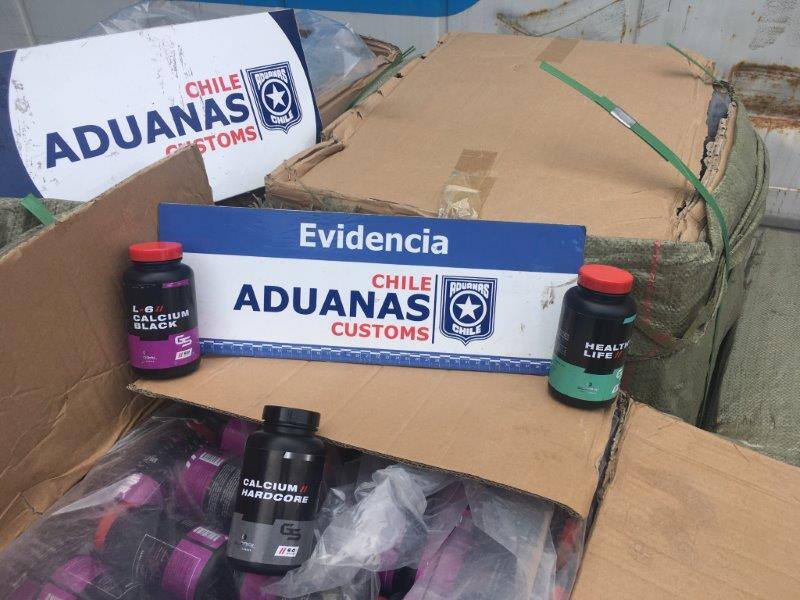
There, they found 3,091 one-kilogram packages of the fake Tucapel rice and another 3,574 printed empty bags ready to be filled and sealed by hand. In the lawsuit filed by the rice company with the justice system, it stated that “we cannot rule out the presence of this type of counterfeit product at other points of sale, such as wholesale and retail markets and street fairs, among others.”