Editor’s Note
This report details the latest round of sanctions imposed by Western nations on Russia, citing the death of opposition figure Alexei Navalny as a catalyst. It follows extensive prior economic measures taken since the onset of the war in Ukraine.
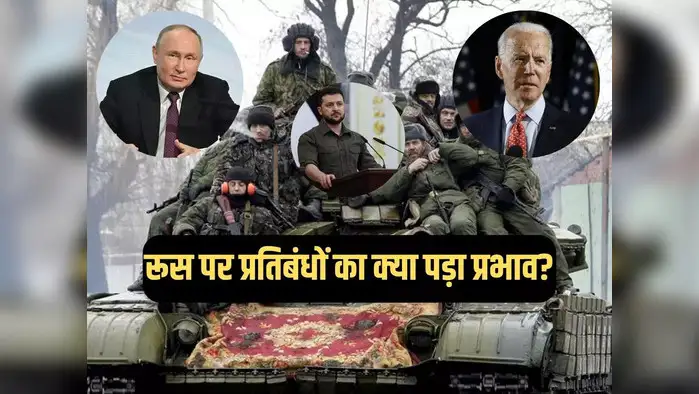
Two years after the invasion of Ukraine, the United States, Britain, and the European Union have announced new sanctions on Russia. These sanctions were imposed following the death of Russian President Vladimir Putin’s critic and opposition leader Alexei Navalny. Prior to this, many Western countries, including the US, had already unleashed a barrage of sanctions against Russia. These include bans on trade with Russia, restrictions on payments in dollars, and the seizure of assets belonging to Russian businessmen and leaders. The European Union has even banned Russian commercial ships from flying in its airspace. Despite this, Russia has not stopped its attacks on Ukraine. These attacks continue with the same intensity even after two years. Putin has stated that he will not stop until the neo-Nazi government in Ukraine is eliminated.
Sanctions are penalties imposed by one country on another to deter them from acting aggressively or breaking international law. They are among the harshest measures taken by nations. They are considered the second most aggressive step after war.
According to a BBC report, US President Joe Biden announced 500 new sanctions against Russia, stating they would target Russia’s war machine. Export restrictions will be imposed on nearly 100 firms or individuals. President Biden said these measures would also target those linked to Navalny’s imprisonment, who died in an Arctic penal colony. Britain has announced measures ranging from asset freezes on Russian prison officials to travel bans. Britain has also imposed new sanctions on Russian metals, diamonds, and energy exports. The European Union has announced sanctions on 200 organizations and individuals it says are helping Russia acquire weapons or helping to remove Ukrainian children from their homes. The sanctions include companies and individuals involved in sending North Korean weapons to Russia.
Since Russia’s invasion of Ukraine in February 2022, countries including the US, UK, and EU, as well as Australia, Canada, and Japan, have imposed more than 16,500 sanctions on Russia. Their main target has been Russia’s money. Foreign exchange reserves worth $350 billion (£276 billion) have been frozen. The EU says about 70% of Russian banks’ assets were also seized, and some were excluded from the high-speed messaging service SWIFT for financial institutions.
Export bans have been imposed on technology that could be used by Russia to manufacture weapons.
Imports of gold and diamonds from Russia have been banned.
Flights from Russia are prohibited.
Sanctions have been imposed on Russian businessmen and other wealthy individuals, and their expensive yachts have been seized.
Russia’s oil industry has been another major target. The US and UK have banned Russian oil and natural gas. The EU has banned imports of crude oil by sea. The G7 – an organization of the world’s seven largest “advanced” economies – has imposed a maximum price of $60 (£47) per barrel on Russian crude oil in an attempt to reduce its earnings.
Hundreds of major companies, including McDonald’s, Coca-Cola, Starbucks, and Heineken, have stopped selling and manufacturing goods in Russia. However, some still do business in Russia. For example, PepsiCo has been accused of selling food products in Russia. The American cosmetics company Avon is manufacturing goods in a factory near Moscow.
President Vladimir Putin has claimed that European sanctions have not harmed Russia. He said:
According to the US think tank Atlantic Council, Russia has managed to sell oil abroad at prices above the G7 price cap. It states that a “shadow fleet” of nearly 1,000 tankers is used to ship it. The International Energy Agency says Russia is still exporting 8.3 million barrels of oil per day – with increased supplies to India and China.
According to researchers at King’s College London, Russia is also able to import many sanctioned Western goods by purchasing them through countries like Georgia, Belarus, and Kazakhstan. Dr. Maria Snegovaya from the US think tank, the Center for Strategic and International Studies, says China has been a significant supplier of alternative high-tech products for those produced in the West. She says:
According to the International Monetary Fund, Russia’s economy shrank by 2.1% in 2022, the first year of the war. However, it is estimated that Russia’s economy grew by 2.2% in 2023 and is predicted to grow by 1.1% in 2024. Nevertheless, the US Treasury claims that sanctions are harming Russia, potentially cutting economic growth by 5% over the past two years. But Dr. Snegovaya says:
The US Treasury Department also says that due to the war in Ukraine and sanctions, more than one million people – many of them young and highly educated – have had to leave Russia. According to Britain’s Ministry of Defence, the Russian government is also cutting health spending to finance the war in Ukraine. James Nixey from the foreign affairs think tank Chatham House says: