Editor’s Note
This article explores the enduring allure of Sotheby’s through the lens of a landmark jewelry auction, offering a glimpse into the stories behind some of history’s most iconic pieces.
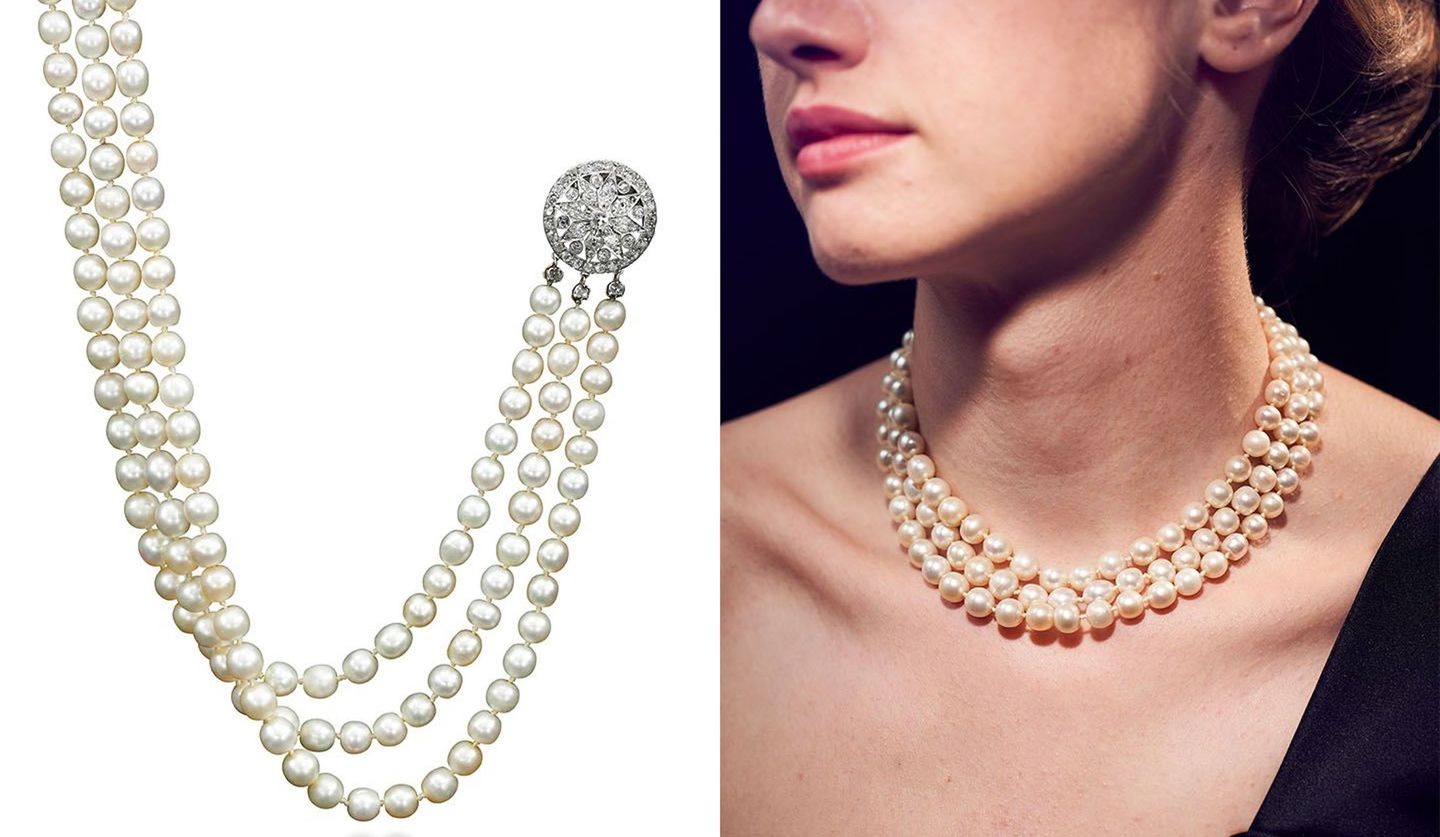
In November 2018, a historic event took place at the “Sotheby’s Jewelry Auction” in Geneva: the sale of the Royal Jewelry Collection of the House of Bourbon-Parma. The female auctioneer involved in this event is Daniela Mascetti, who has handled numerous famous pieces of jewelry. We spoke with Daniela during her visit to Japan about the details of that auction, impressive episodes from the jewelry she has admired, and “the value of acquiring jewelry at a Sotheby’s auction.”
From the 300-year-old collection of the House of Bourbon-Parma, to jewelry owned by the Duchess of Windsor of “the love that wagered a crown,” and even jewelry from Maria Callas and Elton John, she shared the appeal of Sotheby’s jewelry auctions, which she understands precisely because she has been involved in auctions of numerous famous pieces.
Daniela Mascetti
Chairman, Europe, Sotheby’s Jewelry Division
After working as an archaeologist in a museum in Italy, she studied general art at Sotheby’s Institute of Art in London. She then joined Sotheby’s when its jewelry auction business started in Milan. For 40 years since, she has been involved in record-breaking auctions.
The interaction with the House of Bourbon-Parma began around the year 2000. Initially, it was a consultation: “We want to know the market value for insurance purposes.” The descendant families were scattered across the world, and Sotheby’s specialists traveled to various locations to conduct appraisals.
After years of interaction, the idea emerged that instead of keeping these wonderful jewels scattered, it might be better to bring them to market as a beautiful whole collection. Therefore, over the course of a year, an extensive catalog of the Bourbon-Parma collection was produced, leading to the auction offering in 2018.
Her honest impression was that the beautiful and magnificent collection gave her goosebumps. Particularly impressive was the highlight piece: Marie Antoinette’s natural pearl and diamond pendant top. In the room where the appraisal was done, there was a portrait of a descendant wearing it.
The venue was full, with standing room only. The energy was incredible, the room was buzzing, and everyone was excited. About 100 lots were offered, and each received many bids, so it took about three hours for everything to finish. But those three hours flew by.
Since the descendants of the House of Bourbon-Parma are scattered across countries like Spain, Italy, France, and Austria, and their existence is widely known, bids came from clients in various countries, not just one specific nation. Of course, there were those who collect royal jewelry, but I also think there were many debut buyers who acquired jewelry with noble provenance for the first time, thinking such an opportunity would never come again.
I have handled truly many pieces. For example, diamond rings and brooches that Elton John wore on stage. A ruby and diamond necklace given to Maria Callas by her husband. In New York, I also handled jewelry from Jacqueline Kennedy Onassis.
Also memorable are Bulgari pieces from the 1950s-60s owned by the actress Gina Lollobrigida, who captivated an era in Italy and was also active as a photographer.
First, the jewelry of the Duchess of Windsor. Everything was from Cartier or Van Cleef & Arpels, custom-made pieces commissioned between the 1940s and 1970s with messages from the Duke and Duchess. It was a powerful collection that reflected personality.
The other is the Bourbon-Parma jewelry mentioned earlier. Compared to the Duchess of Windsor’s collection spanning about 30 years, this was a grand collection encompassing a long history of about 300 years from 1700 to 2000. You could even observe the transition in jewelry design.
In the 20th century, there was a profession managing the jewelry inventory of the nobility. Detailed lists existed, noting what kind of gemstones they were and who owned them through generations. Thanks to that, when offering them for sale, we were able to document each piece’s proud provenance.
One major feature is the ability to see jewelry from various brands gathered in one place, rather than searching at just one jeweler. Also, a big attraction is being able to search for precious vintage items not available in boutiques. And practically, being able to set a budget for acquisition is also important.
Furthermore, providing fair advice is something we strive for. European jewelry often comes with a long history and solid provenance. Who wore it, on what occasion, and how? Understanding that and wearing it brings a special feeling. The essence of acquiring at auction might lie there.
Perhaps the time has come for us to also adopt the European value of acquiring jewelry by knowing who wore it and how—its provenance.