Editor’s Note
This article clarifies a common misconception about lab-grown diamonds, emphasizing their identical chemical and physical properties to mined diamonds. The comparison to “fake stones” is incorrect, as these gems meet the same international grading standards.
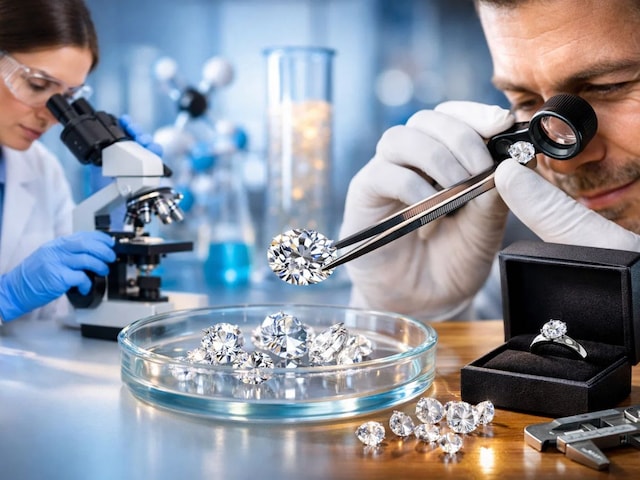
According to Prapanj S. K. Kota, Founder of Reia Diamonds, the biggest misconception is that people often mistake lab-grown diamonds for ‘American diamonds’ or imitation stones. He clarified that this comparison is entirely incorrect. Lab-grown diamonds are identical to mined diamonds in chemical composition, physical properties, and brilliance. They are also tested against international grading standards, with no difference in their strength and durability.
Prapanj says that associating lab-grown diamonds with cheap simulants or artificial jewelry is another major misunderstanding. Where imitation stones lose their sparkle over time, lab-grown diamonds maintain their quality and beauty like natural diamonds. He also mentioned that many reputable brands now offer buyback and exchange schemes, reducing consumer concerns about long-term value.
Sumit Dassani, Partner at Dassani Brothers, believes that debates around lab-grown diamonds often stem from a lack of information. According to him, the only real difference between natural and lab-grown diamonds is the method of their formation. These diamonds, created in a technologically controlled environment, meet every criterion. Sumit says that true luxury is determined by design, craftsmanship, finishing, and detailing, not just by whether the diamond came from the ground or a lab.
According to Yash Kataria, Director of Kataria Group of Companies, the real change is not in the product, but in the customer’s mindset. Millennial and Gen Z customers are placing greater importance on transparency, environmental protection, and ethics. Lab-grown diamonds offer them an opportunity for responsible purchasing without compromising on quality. Yash says that today’s buyers are viewing luxury from a ‘conscious and modern’ perspective.
Yash Kataria also challenged the notion that lab-grown diamonds have less emotional connection. According to him, the emotion of jewelry is not tied to its place of origin, but to the story it represents—whether it’s the beginning of a relationship, an achievement, or a gift to oneself. Lab-grown diamonds, in this sense, are a natural evolution of fine jewelry, combining beauty, responsibility, and trust. The opinions of these jewelry industry experts clearly indicate that lab-grown diamonds are not changing the definition of a diamond, but are reshaping the balance between luxury, value, and responsibility. With increasing awareness and correct information, these diamonds are securing a strong place in the future of fine jewelry.