Editor’s Note
This article discusses gold’s sharp recovery following a holiday sell-off, highlighting how geopolitical developments can rapidly shift market sentiment. The report references an unverified claim about Venezuela; readers should note this information lacks independent confirmation from major news agencies at time of publication.

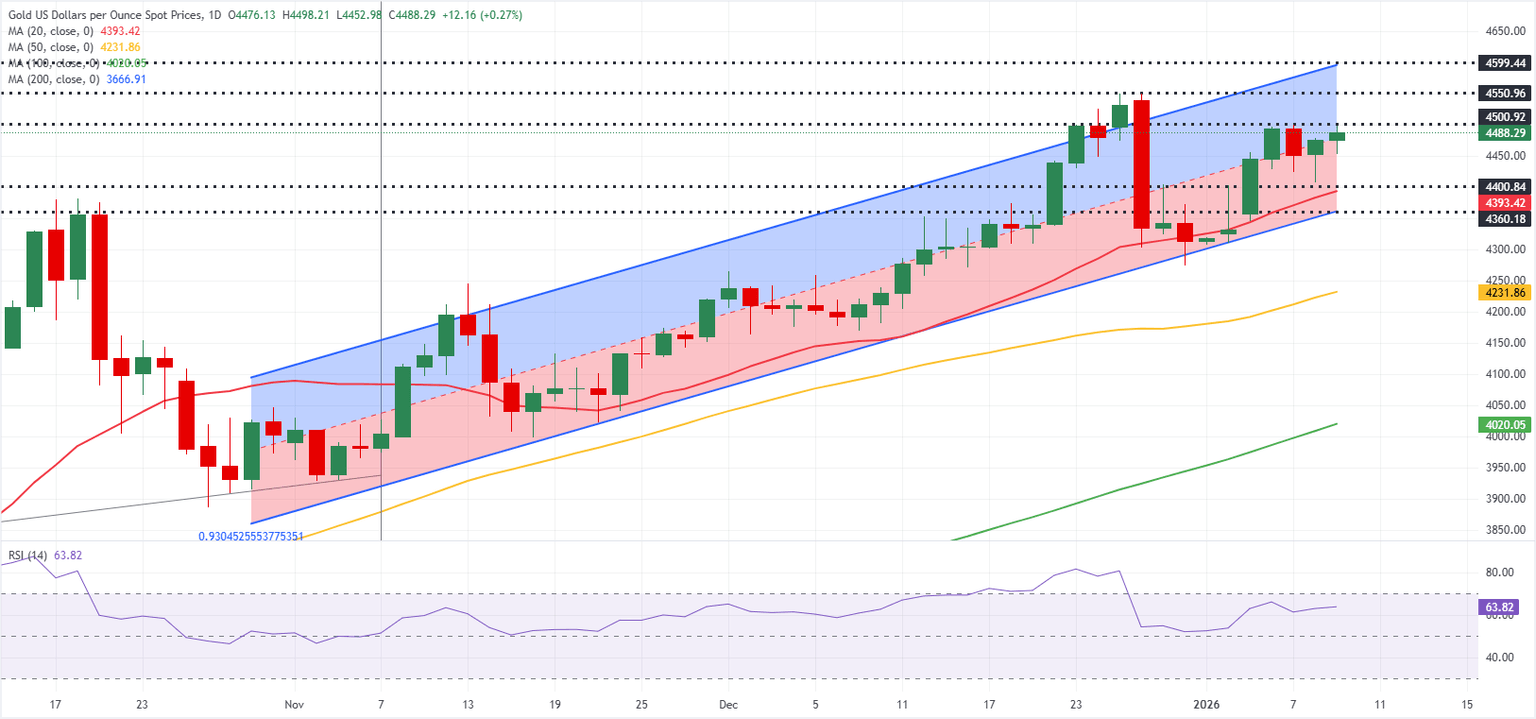
Gold recorded strong losses between the Christmas and New Year holidays. In the absence of fundamental drivers, profit-taking apparently triggered this move, which was intensified by reduced trading volumes.
As market conditions began to normalize, XAU/USD gained traction and rose over 2.5% on Monday. Furthermore, rising geopolitical tensions due to the news that the US military entered Venezuela and captured Venezuelan President Nicolás Maduro and his wife over the weekend allowed gold to benefit from safe-haven flows. After extending its recovery and gaining another 1% on Tuesday, renewed strength in the US Dollar (USD) and the CME Group’s decision to increase margins on gold and silver futures caused XAU/USD to lose traction.
Data released by Automatic Data Processing (ADP) on Wednesday showed that US private sector payrolls increased by 41,000 in December after the 29,000 decrease recorded in November. On another positive note, the Institute for Supply Management (ISM) reported that the Services Purchasing Managers’ Index (PMI) improved to 54.4 in December from 52.6 in November. Additionally, the Employment Index from the PMI survey rose into expansion territory above 50 for the first time since June. With this data cementing a wait-and-see policy from the Federal Reserve (Fed) in January, gold retreated mid-week before entering a consolidation phase.
Meanwhile, China announced export controls on silver (XAG/USD). With this development, silver prices surged sharply to start the week, gaining over 10% in a two-day span.
Although the CME margin hike triggered a sharp correction in XAG/USD, the Gold/Silver ratio, which represents the number of ounces of silver required to buy one ounce of gold, fell nearly 4% during the week. At around 57, the Gold/Silver ratio is currently at its lowest level since August 2013.
On Friday, the US Bureau of Labor Statistics (BLS) reported that Nonfarm Payrolls increased by 50,000 in December, compared to the market expectation of 60,000. On a positive note, the Unemployment Rate fell to 4.4% from 4.6% in November. The market reaction to the employment data was short-lived, and gold remained in the upper half of its weekly range heading into the weekend.
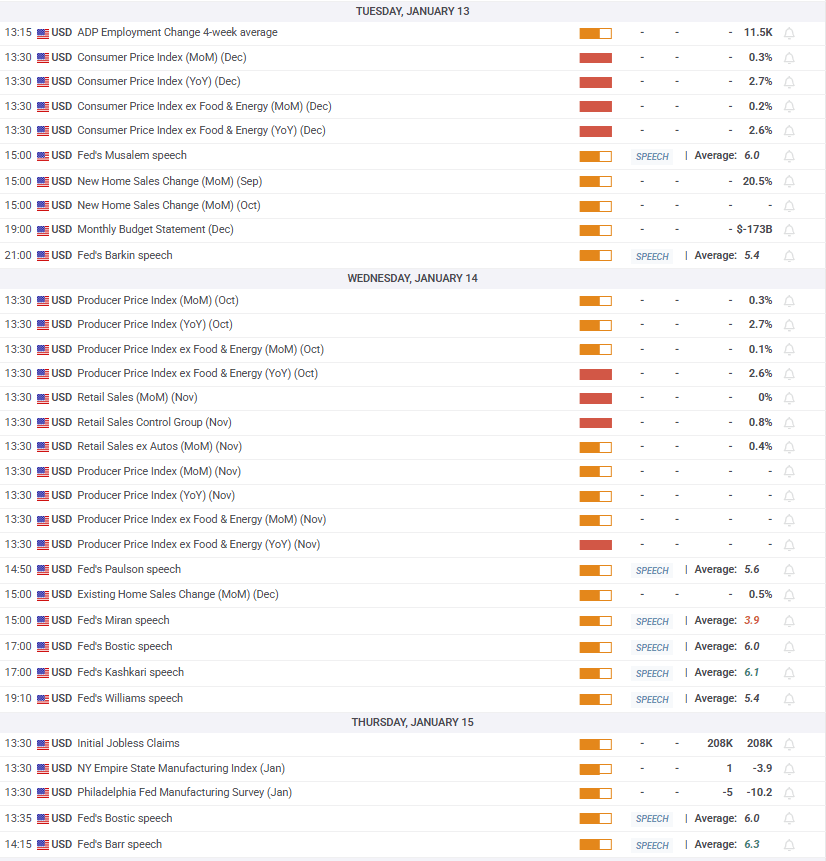
The economic calendar will be relatively light in terms of data releases. On Tuesday, the BLS will release the December Consumer Price Index (CPI) data. November Retail Sales and the Producer Price Index will also be on the US economic agenda, which are likely to be largely ignored by market participants.
The December inflation data is unlikely to significantly influence the Fed’s decision in January, but a significant surprise, especially in the monthly core CPI print, could trigger a market reaction. A reading of 0.3% or higher could revive concerns about persistent inflation and boost the USD in the short term. Conversely, a reading below 0.2% could have the opposite effect on the currency’s performance and help XAU/USD rise.
Investors will keep a close eye on geopolitical headlines throughout the week. US Secretary of State Marco Rubio plans to meet with officials from Denmark and Greenland. In an interview with the NY Times, US President Donald Trump reiterated his intentions to seize Greenland.
It is difficult to say what the next development in this matter will be, but an escalation in tensions between the European Union and the US could cause investors to seek shelter. In this scenario, gold could gain strength.
Discontent in Iran…