Editor’s Note
This analysis of Italy’s gold, silver, and jewelry sector reveals a complex picture. While revenue growth is projected to continue into 2025, the surge in precious metal prices presents a double-edged sword, creating headwinds for profitability across the industry.
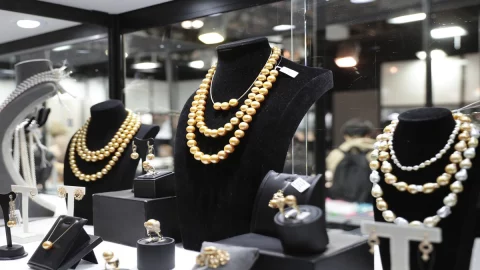
According to a recent study by the research department of Mediobanca, the Italian gold, silver, and jewelry sector will close 2025 with a revenue increase of 5.8%. The results are mixed, particularly regarding profitability and the impact of the gold and silver price rally on the entire sector.
In 2024, the 101 largest producers of precious assets in Italy recorded a total revenue of €8.9 billion (+6.1% compared to 2023, +10.1% compared to 2022) with nearly 17,100 employees (+12.5% compared to 2022). The presence of international groups remains significant: twelve companies together generated revenue of almost €2.4 billion, accounting for 26.7% of total revenue. The average revenue stands at €199 million, more than double that of Italian companies (€73.6 million).
In 2024, the top spot in terms of revenue will be held by Bulgari Gioielli (€846 million), followed by Morellato (€723 million) and PGI (€637 million). They are followed by Damiani (€368 million) and UnoAerre Industries (€283 million). In total, thirteen companies have revenue exceeding €150 million.

However, the revenue growth in 2024 did not translate into an increase in profit margins.
From a geographical perspective, companies in Northwestern Italy show the highest EBIT margins (8.8% in 2024, a decrease of 0.4 percentage points from 2022), followed by those in the Northeast (7.0%, +1%).
On the profitability podium, the leader is Gimet Ottone (38.7%), a manufacturer of fashion jewelry components, followed by the Valenza-based company RF Holding (Raselli Franco) with 29.1%, the Tuscan company Ferrifirenze (28.8%), Treemme (27.2%), and Monteholding (25.6%). The Mediobanca study shows that the net results of the precious metal and gemstone industry remain satisfactory, although there is a trend of partial reduction.

In 2024, investments increased by 37.8% compared to 2022 and by 1.2% compared to 2023. For foreign companies, the increase since 2022 (+59.7%) was more pronounced than for Italian companies (+29.1%). Considering the ratio of investments to initial investment in tangible assets, the most dynamic companies are those under foreign control (26.4% versus 12.3% overall) and those in Northwestern Italy (22.1%). Regarding company size, medium-large and large companies invest twice as intensively as medium-sized companies (13.3% versus 7% in 2024), while small companies lag significantly (5.7%).
The strong fluctuations in the valuations of key raw materials, with the gold and silver rally, hinder the correct planning of the production phase and can affect the financial situation of the sector. For the 101 selected operators, the total inventory of goods amounts to approximately €2.8 billion at the end of 2024 (+12.0% compared to 2022). Compared to 2023, inventories of finished goods increased by 4.2%, those of raw materials by 11.8% (due to rising gold prices), while work in progress overall decreased by 9.8%.
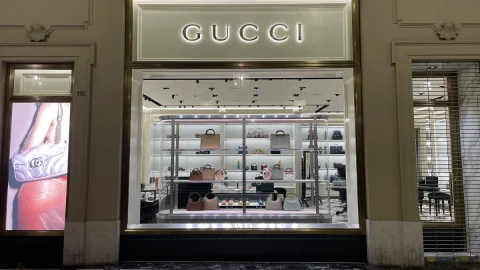
At the ownership level, 74.8% of the net assets of the largest precious metal producers are attributable to the control of Italian families. 25.2% are owned by foreign shareholders. Of the twelve foreign companies, five are owned by French shareholders, including LVMH with three subsidiaries (Bulgari Gioielli, Vpa-Villa Pedemonte Atelier, and BMC) and its compatriot Kering (Pomellato). Three companies (PGI, Buccellati Holding, and since 2024 Vhernier) belong to the Swiss group Richemont.
Kering itself has further strengthened its position in the Italian luxury jewelry market by signing an agreement in December 2025 for the gradual acquisition of the Raselli Franco Group by 2032. The direct connection to financial markets is negligible: Fope is traded on AIM, while the shares of Damiani, listed in November 2007, were suspended from trading in 2019. The degree of capital transparency of the companies in the panel is therefore limited, although further entries have recently been reported: in March 2024, the owning family sold 24% of the capital of Mattioli.