Editor’s Note
This article examines the remarkable surge in precious metals prices since early 2025, highlighting the extraordinary gains across gold, silver, platinum, and palladium. The data, current as of January 2026, underscores a significant and ongoing trend in the commodities market.
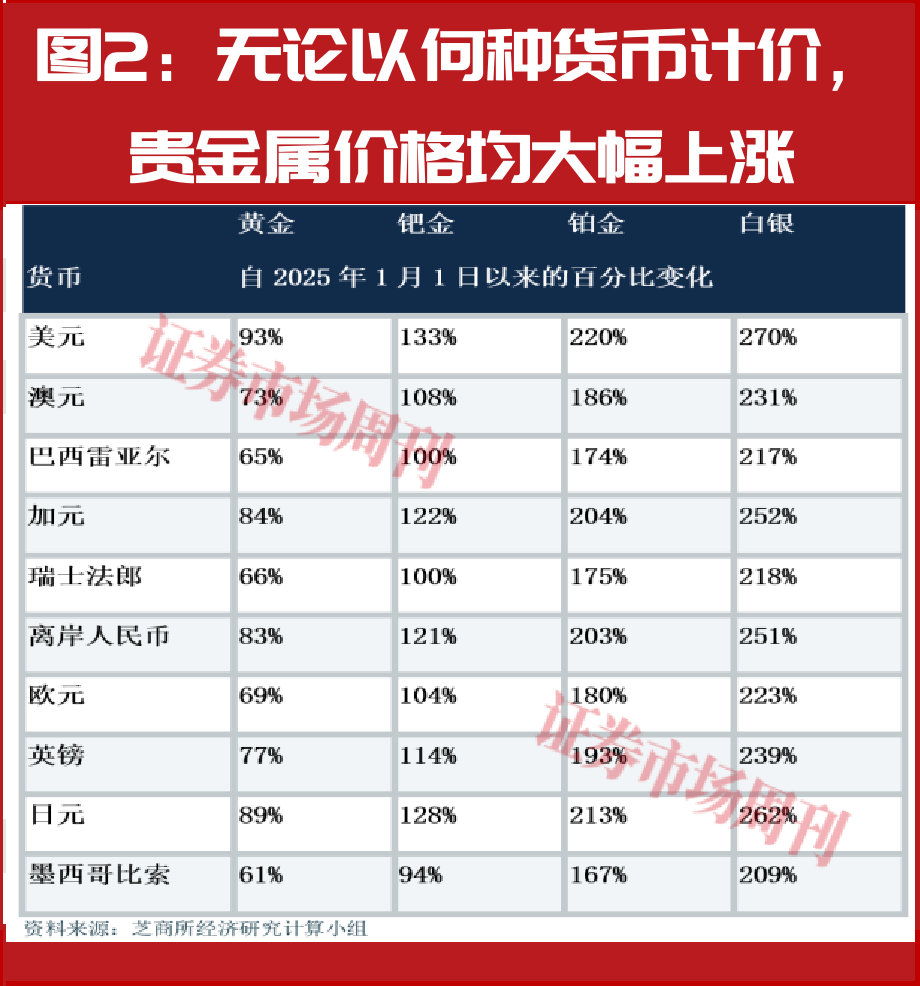
Since the beginning of 2025, precious metals prices have been soaring. As of January 21, 2026, among various precious metals, the relatively weaker gold has risen by 93%, silver by 138%, platinum by 226%, and palladium prices have surged nearly threefold, with an increase of 274% (Figure 1).
The precious metals market and the bond market hold diametrically opposite views on inflation. During periods of turmoil, precious metals are favored as safe-haven assets, but investors also have opportunities to exit or short stocks and other risky assets. However, this situation has not been evident since this year. On the contrary, the rise in precious metals seems to reflect market concerns about a resurgence of global inflation.
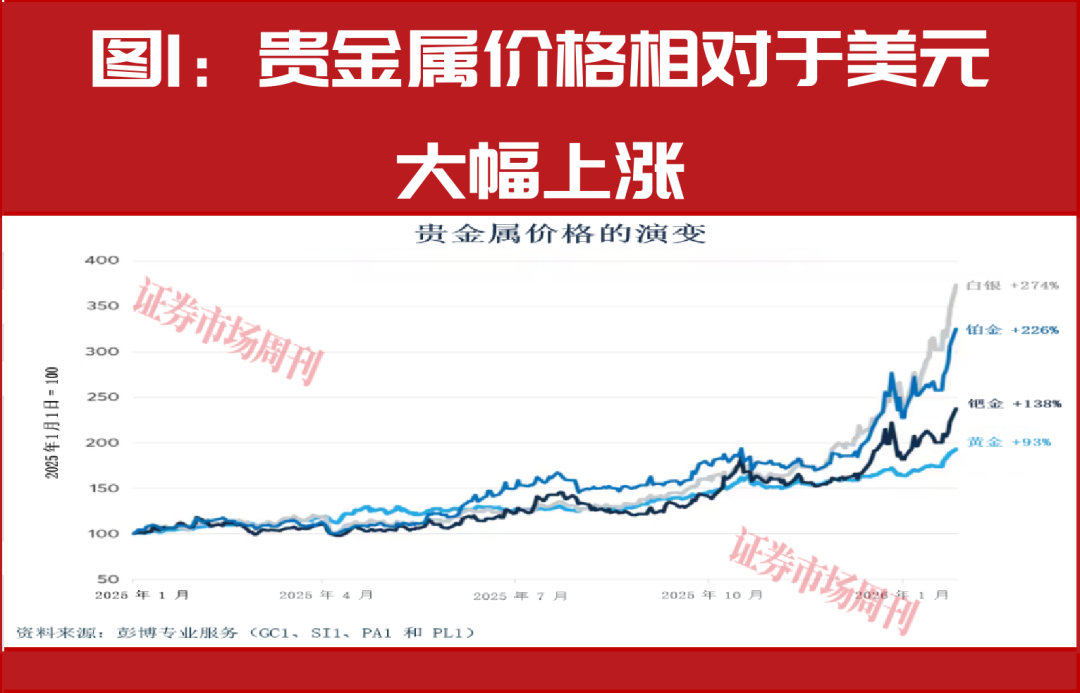
This global concern can be corroborated in the foreign exchange market. Since the beginning of 2025, even the Swiss Franc, one of the world’s strongest currencies, has only appreciated by 18% against the US dollar. Therefore, even from the perspective of the Swiss Franc, since early 2025, gold prices have still risen by 51%, while silver, platinum, and palladium have increased by 72%, 131%, and 162%, respectively.
If priced in other currencies, the return on precious metals is even higher than when priced in Swiss Francs (Figure 2).
Investors driving precious metals prices higher seem to be motivated by concerns about inflation for the following five reasons: 1) Increasing geopolitical uncertainty in the Middle East; 2) Except for China, inflation rates in almost all major countries remain above target levels; 3) Despite inflation being above target, central banks in various countries are still cutting rates; 4) Concerns about central bank independence; 5) Including Brazil, China, France, Germany, Japan, Switzerland, the UK, and the US, almost all major economies have relatively large budget deficits.
What is intriguing is that bond investors do not seem to share these concerns.
In the world’s largest public debt market—the US Treasury market—short-term yields continue to trend lower. On the long end of the yield curve, even after the recent sell-off of Japanese government bonds, yields remain stable. Considering that the Fed is forced to cut rates amid slowing core inflation and softening employment growth pressure, the decline in short-term yields is understandable. However, what is puzzling is that long-term bond yields have not risen in sync with the inflation concerns reflected by the precious metals market.
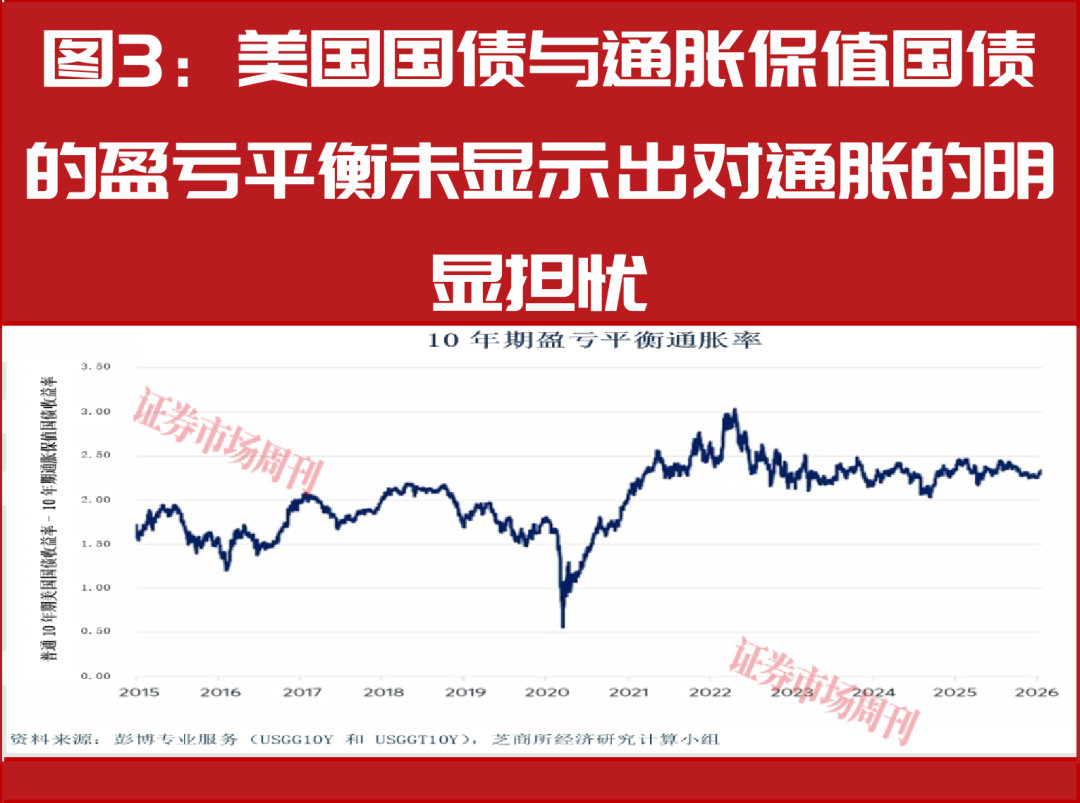
The break-even inflation rate between ordinary US Treasuries and inflation-protected Treasuries (TIPS) also shows no significant volatility. Currently, if the future ten-year Consumer Price Index (CPI) averages 2.38% annually, under the scenario of holding both types of bonds to maturity, the 10-year TIPS can only break even with ordinary 10-year US Treasuries.
This clearly does not indicate that bond investors are concerned about inflation (Figure 3).
In Europe, the yield spread between 2-year and 30-year government bonds has widened somewhat, but it has not reached a level indicating bond investors’ fear of inflation spiraling out of control. Meanwhile, precious metals investors seem to be hedging against this inflation risk. Only Japan’s bond yields truly show a rising trend, but that occurred in a market where the central bank did not raise rates until 2024, nearly two years later than other countries’ central banks.
In short, it is difficult to believe that both precious metals investors and bond investors can be simultaneously correct in pricing future inflation risk.
Either precious metals investors are proven right, inflation will rise, bond investors will demand higher yields, and central banks will be forced to raise rates; or bond investors are proven correct, inflation will not surge, and precious metals prices will revert to rationality.
So, what insights does history provide in similar situations? When precious metals prices surged significantly in the past, was it the metals market or the bond market that more accurately predicted inflation? Let’s look in reverse chronological order:
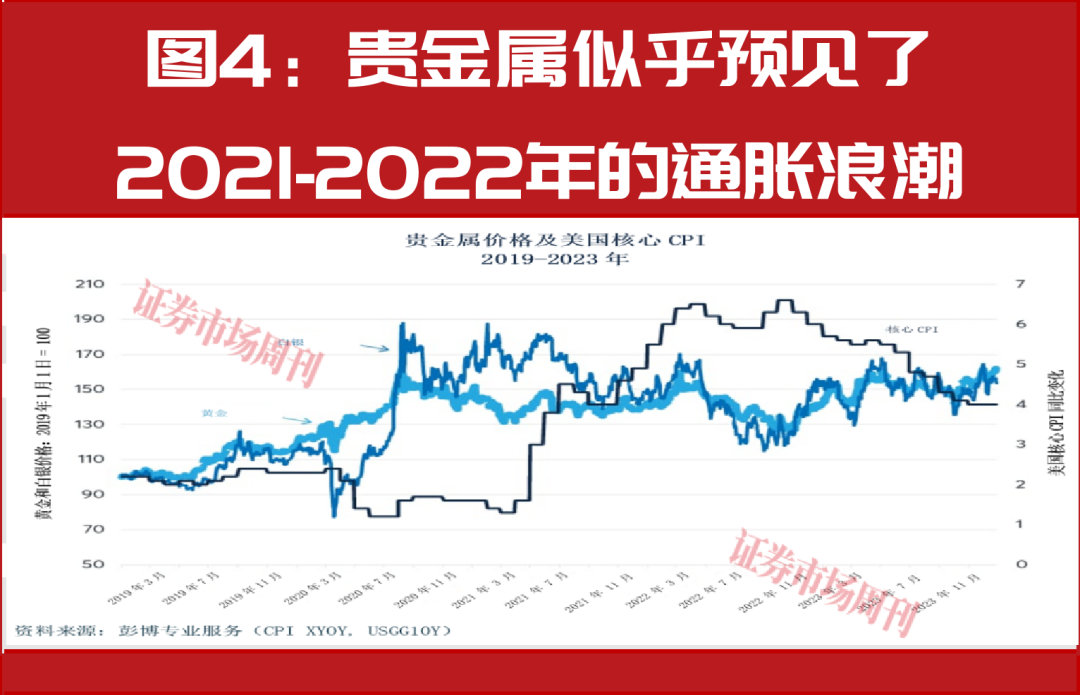
From early 2019 to mid-2020, gold and silver prices repeatedly surged, while core inflation initially remained low and only began to rise from April 2021 to the end of 2022. Precious metals seemed to accurately foresee the inflationary wave after the pandemic, especially between March and May 2020, when the Fed implemented $3 trillion in quantitative easing in just three months, and the federal government’s new pandemic-related fiscal spending ultimately reached $5.9 trillion (Figure 4).
Simultaneously, US Treasury yields rose with inflation, peaking at the end of 2023, by which time the peak in core CPI had already passed for nearly a year.
Objectively speaking, the reason US Treasury yields were suppressed was because the Fed implemented a $4.9 trillion quantitative easing policy, causing nearly one-fifth of US Treasuries to disappear from the market.
Gold and silver began to rise in 2002. By 2011, gold had risen sixfold, and silver had surged more than tenfold. However, during this period and the following years, core CPI showed almost no significant change, briefly approaching zero during the international financial crisis and then stabilizing at a level slightly below 2%.
This is almost like gold and silver predicting a round of inflation that ultimately never materialized. Another explanation is that the rapid development of emerging market economies like China, India, and Southeast Asian countries boosted global consumer demand for precious metals. The rise in metal prices may not have been related to genuine inflation expectations.
Regardless, US Treasury yields continued to decline during this period. This to some extent reflected the widespread easing of monetary policy and quantitative easing, especially after 2008; but similarly, this also seemed to be a response to declining inflationary pressures—core CPI remained subdued at 2% or lower for an extended period (Figure 5).
From 1977 to 1980, core CPI rose from 6% to 14%. During this period, the relationship between gold, silver, US Treasuries, and inflation was relatively ambiguous. Gold and silver prices mostly showed a slow upward trend between 1977 and 1978, then surged significantly in 1979, peaking in early 1980, about nine months before the inflation rate peaked (Figure 6). Simultaneously, US Treasury yields continued to rise from 1977 to 1979 but did not truly peak until 1981.
In August 1971, President Nixon announced the decoupling of the US dollar from gold, allowing US citizens to legally own and trade gold for the first time since 1933. From 1972 to early 1973, gold and silver rose slowly but steadily, seen as an early reflection of the oil crisis triggered by the Arab oil embargo in October 1973.