Editor’s Note
This article discusses the significant share price appreciation of Nam Cheong Limited, supported by a substantial one-off debt waiver that dramatically improved its FY2024 earnings. Investors should note that such non-recurring items can materially distort a company’s reported profitability and may not reflect its underlying operational performance.
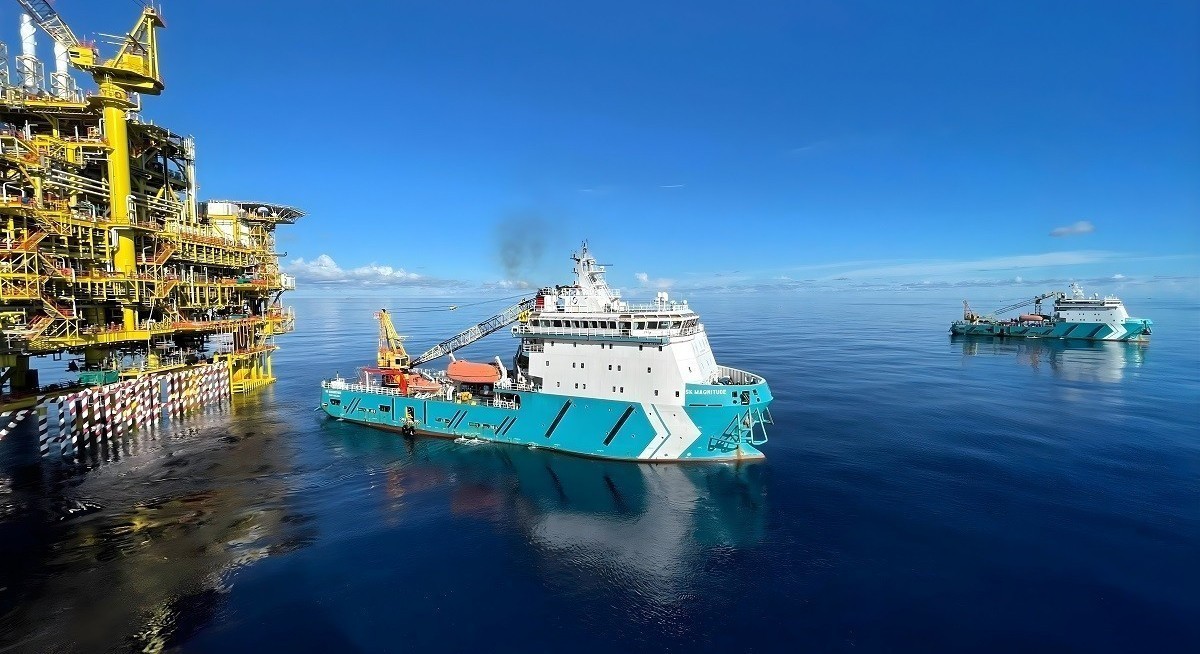
Similar to the Straits Times Index (STI), favorable winds are propelling the share price of Mainboard-listed Nam Cheong. From a range of 15 to 20 cents in the middle of last year, its share price has surged threefold to close at 77 cents on November 18.
The share price gain is backed by bottom-line improvements at the Sarawak-based company, boosted by a one-off debt waiver that lifted FY2024 earnings to RM800.2 million ($250 million) from RM180.6 million. More critically, Nam Cheong won a series of multi-year chartering contracts for its fleet of 38 offshore support vessels (OSVs), including about RM1.22 billion in orders announced last November, as well as additional smaller orders since then.
DBS analyst Ho Pei Hwa believes that, with Nam Cheong trading at around five times P/E, it is an “undervalued gem” compared with other SGX-listed charterers such as Marco Polo Marine (12 times) and Pacific Radiance (eight times). By applying a P/E of eight times to her projected earnings for FY2026, Ho estimates Nam Cheong’s fair value to be $1.25. If the value of Nam Cheong’s shipyard at Miri is included, that could add up to $1.15 per share when orders for new vessels make a comeback.
Ho’s optimism is based on several factors. Firstly, among OSV operators in Malaysia, Nam Cheong’s fleet is among the youngest, with an average age of 8 years, compared with 13 to 15 years for rival fleets. Customers generally prefer such newer vessels due to better safety and lower operating costs.
Secondly, Ho has better visibility of the company’s earnings due to multi-year vessel leases. As of June 30, Nam Cheong’s order book stood at about RM1.7 billion, representing more than two years of revenue visibility. More than 60% of the fleet is on multi-year charters and the company intends to raise this to 70%.
The multi-year contracts were signed with Petronas, Malaysia’s national oil company, and with other clients from Southeast Asia and the Middle East. There was a contract with a client in Japan, but it was cancelled in September. Ho is encouraged by the company’s expansion into these other markets for growth and diversification.
In addition, the increasing utilization rate from the second half of this year to next year will support sequential revenue growth of 18% between 1HFY2025 and the current 2HFY2025, bringing full-year growth between FY2025 and FY2026 by around 12%.
With OSV supply likely to remain tight due to ageing fleets and a lack of newbuilds, especially in Malaysia, Ho believes that Nam Cheong can maintain its current gross margin of more than 50%, supported by stable day rates.
The market outlook for newbuild OSVs also points to increased activity, with operators under pressure to rejuvenate ageing fleets. According to the Malaysia OSV Owners’ Association, 80% of Malaysian vessels will be older than 12 years this year and a significant percentage will soon reach 20 years of age, the limit for Petronas’ OSV tender requirements.
On its part, Petronas launched the Safina newbuild programme in 2023 to rejuvenate Malaysia’s OSV fleet. The initiative targets up to 100 domestically built OSVs to be delivered over four to five years.
Before the downturn in the oil and gas industry, Nam Cheong was a leading OSV builder. Its Miri shipyard has a production capacity of up to 12 vessels annually. During the peak OSV cycle from 2012 to 2014, the company delivered 24 vessels, including those built by partner yards. Nam Cheong remains a leading contender to win newbuild contracts.