Editor’s Note
De Beers, long synonymous with natural diamonds, has made a historic pivot by launching a new company dedicated to lab-grown stones. This move targets price-conscious millennials and acknowledges the significant market impact of synthetic diamonds.

De Beers, the world’s largest diamond miner, has launched a new company to sell lab-grown diamonds. These “affordable” man-made gems are targeted at price-conscious millennials. Lab-grown diamonds are created by adding gas and heat to a very small diamond fragment called a “carbon seed.” The diamond giant has acknowledged that the impact of synthetic diamonds is real.
De Beers, which once explicitly stated it would never sell artificial stones and controls about 30% of the global natural diamond market, announced on May 29 (local time) that it would launch a new company selling only lab-grown diamonds. This is a historic moment for the company and contradicts its previous statements about man-made stones.
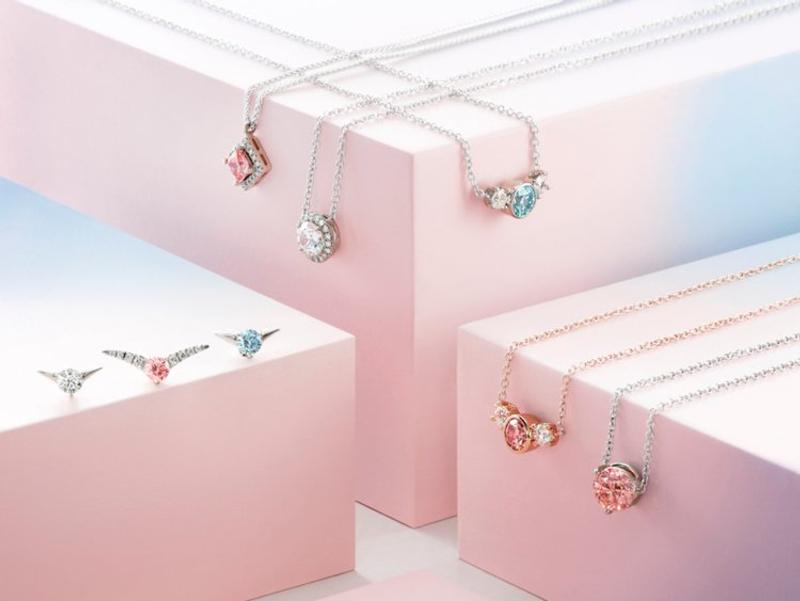
The newly launched “Lightbox Jewelry” by De Beers targets millennials, who are increasingly inclined to choose diamond alternatives due to their heightened social and economic consciousness. Lightbox Jewelry, set to go on sale in September, will be priced from $200 (0.25 carats) to $800 (1 carat). According to a Morgan Stanley report cited by Forbes, synthetic diamonds could capture 7.5% of the market share by 2020.
In the release for Lightbox Jewelry, De Beers CEO Bruce Cleaver positioned these synthetic diamonds as an affordable alternative, ideal for “now” if not “forever.”
Lab-grown diamonds closely resemble natural diamonds in appearance. They are made from tiny diamond fragments and share the same physical structure and chemical composition as mined diamonds. By adding gas and heat to a diamond “seed,” a diamond slowly forms over a process of 10 to 12 weeks.
Cleaver stated that De Beers’ synthetic diamonds will be branded with a logo, making them “easy to distinguish under magnification, even if not visible to the naked eye.” He also noted that their prices will be more accessible than those of other manufacturers, with a bolder range of colors.
This is not just about cheaper synthetic diamonds aligning with the price-sensitive preferences of millennials. These diamonds also tap into another millennial trend: the desire to purchase socially conscious products. By choosing lab-grown diamonds, they can sleep soundly without the risk of “blood diamonds.”