Editor’s Note
As wedding season approaches, many couples are exploring alternatives to traditional mined diamonds. This article explains what lab-grown diamonds are and how they offer a more accessible option for brides seeking elegant jewelry within a budget.
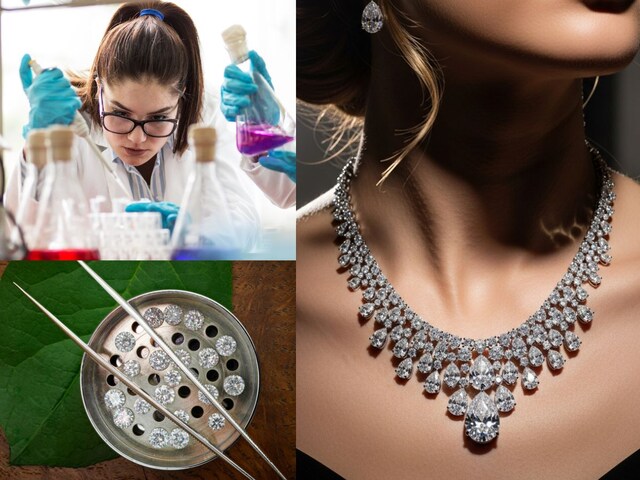
It’s the wedding season. During this time, brides-to-be prefer everything from their dressing to jewelry to be unique, trending, and stylish. The choice of today’s girls is shifting from gold, silver, and artificial ornaments towards diamonds. Now, brides-to-be have started desiring to see themselves adorned in diamond necklaces, rings, and earrings. If you also wish to buy a diamond necklace for your wedding that fits your budget, it is possible through lab-grown diamonds. Everyone knows that real diamonds are extremely expensive and do not fit everyone’s budget. But now, you can fulfill your dream with lab-grown diamonds. If you have been satisfying your passion for wearing diamonds with American diamonds until now, there is no longer a need to do so. These days, the demand for LGD, i.e., lab-grown diamonds, is rapidly increasing in the market. It is currently trending. So, what exactly are these lab-grown diamonds, what are their features and price? Find out here.
Usually, people cannot afford to buy diamonds because they are extremely expensive. These days, the demand for lab-grown diamonds is increasing rapidly. Any artificial diamond created inside a lab is called a lab-grown diamond. Its manufacturing takes place in a controlled research laboratory. They are not obtained through mining. However, they look exactly like real diamonds. Looking at jewelry made from LGD, you will not be able to tell at all that these are not real diamonds but manufactured in a lab.
They are a durable and extremely beautiful alternative to diamonds extracted through mining. Today’s couples do not believe in buying ornaments that are only meant to be displayed in a locker; rather, they prefer to buy ornaments that are affordable, can be worn daily, and do not get damaged quickly. Lab-grown diamonds meet all these criteria.
The price of diamonds obtained from mines is quite high. In comparison, the price of lab-grown diamonds is about 40 to 50 percent lower. Actually, LGDs are cheaper also because their production is on a large scale. The shine and strength of lab-grown diamonds are exactly like natural diamonds.
These lab-created diamonds are also graded based on their size, color, and clarity. Talking about their physical and chemical properties, the properties of both natural and lab-created diamonds are the same. If you take any item of this diamond, you will also get a certificate along with it. According to some jewelry experts, LGDs are durable and also affordable. They do not take many years to prepare.
If you want to give a diamond gift to a close friend, family member, or your boyfriend/girlfriend on their birthday, these diamonds can be the best option. This is because they look exactly like natural diamonds in terms of shine, shape, and cuts. You can wear them anywhere at public events, parties, weddings, etc.
– You can clean it with water as well. However, use a lint-free cloth for drying.
– If you want to do a thorough deep cleaning, for this, mix a mild soap in warm water. Use a soft toothbrush for cleaning.
– Soak your diamond ornaments in this soapy water for 10 to 20 minutes. Then gently scrub with a toothbrush and rinse under running warm water.