Editor’s Note
A piece of history comes to auction as Christie’s prepares to offer the magnificent 23.24-carat Golconda Blue diamond—the largest Fancy Vivid Blue ever to appear at auction—in Geneva in May 2025.
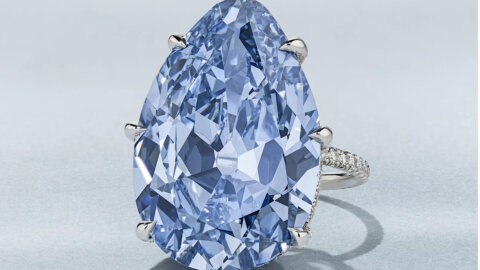
The Golconda Blue diamond, the largest Fancy Vivid Blue diamond ever to appear at auction and one of the rarest and most significant diamonds ever discovered in history, will shine at auction with its extraordinary weight of 23.24 carats. This exquisite historical treasure will be offered by Christie’s on May 14, 2025, at the Four Seasons Hotel des Bergues in Geneva, with an estimate of $3.5 to $5 million.
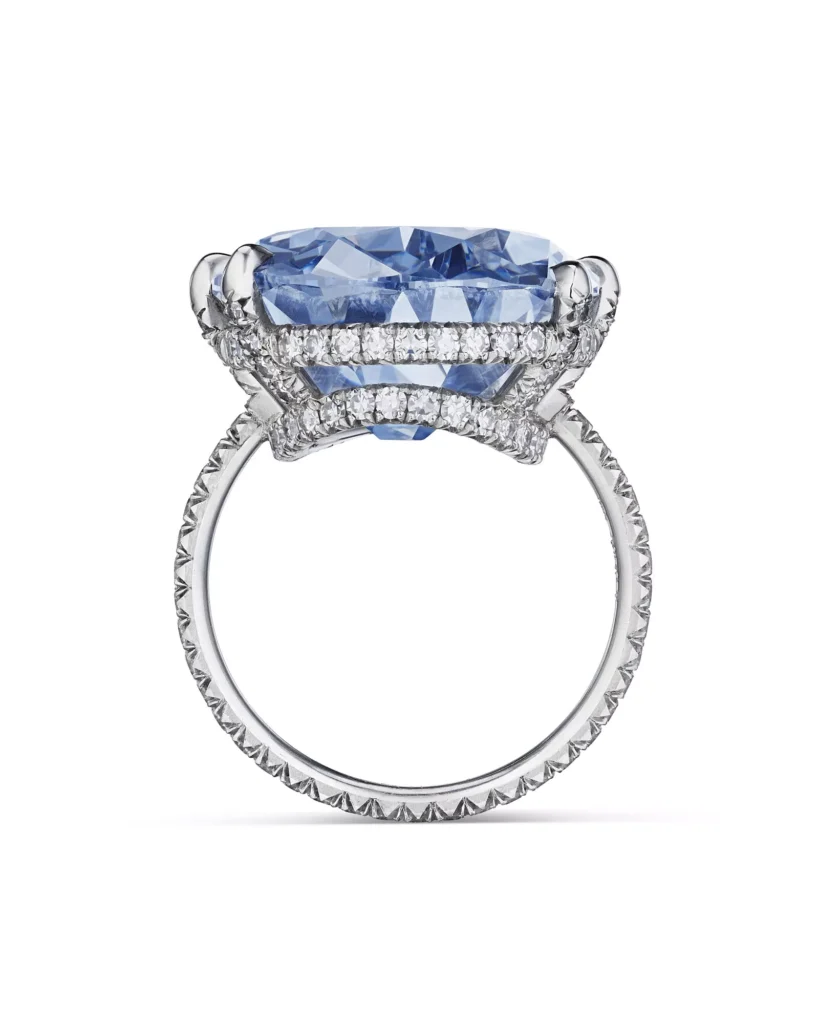

This unique pear-shaped Golconda diamond boasts an origin traceable to Indian royalty. Maharaja Yeshwant Rao Holkar of Indore, a member of the Holkar dynasty, and his wife were known in the 1930s and 1940s for their elegant and cosmopolitan lifestyle. A Knight of the Order of the Indian Empire, the Maharaja spent much of his time abroad with a keen interest in Western art, design, and jewelry. In 1913, her father purchased the famous Indore Pear diamond from Chaumet, marking the beginning of a lasting partnership with the historic Parisian house. In 1923, during another visit to Chaumet, she commissioned the house to create a diamond bracelet set with a 23-carat pear-shaped Golconda blue diamond.
Yeshwant Rao Holkar also collaborated with other iconic jewelers, including Harry Winston. In 1946, Mr. Winston purchased the Indore Pear from the Maharaja, and the following year, in May 1947, he acquired this 23-carat blue diamond. Winston set it with a 23-carat white diamond into a brooch, which he then sold to the Maharaja of Baroda. This brooch was later repurchased by Mr. Winston and resold as part of a new design to its present owner. Now, more than a century later, this legendary blue diamond is being offered at auction for the first time, set in a stunning modern ring created by the renowned Parisian designer JAR.

The legend of Golconda diamonds begins with mentions in Sanskrit manuscripts from the 4th century BC. In 327 BC, Alexander the Great brought diamonds from India to Europe, sparking a lasting Western fascination with these rare gems. In 1292 AD, Marco Polo described the captivating beauty of Indian diamonds in his travel writings. Today, Golconda Blue is not only a natural wonder but also a historical treasure that has traversed continents, dynasties, and centuries.