Editor’s Note
This article provides a concise overview of aluminum’s key properties and applications, highlighting its advantageous strength-to-weight ratio and common uses in high-performance industries.
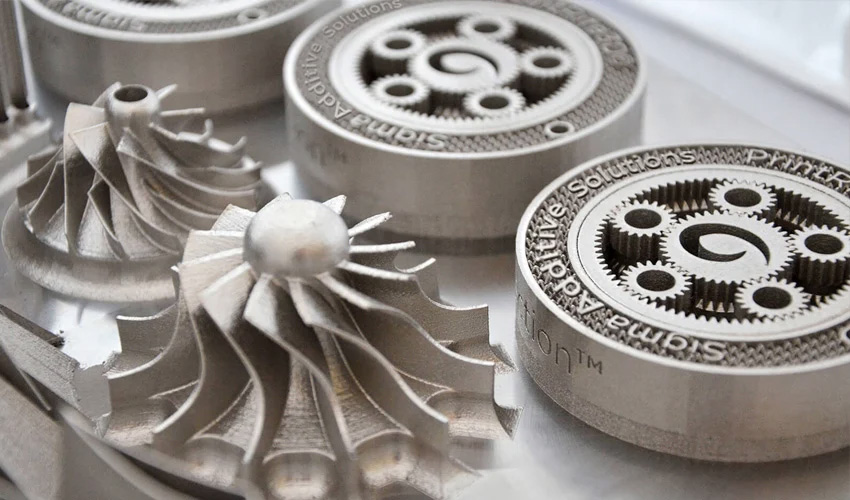
Aluminum offers an excellent combination of lightness and strength. In addition to being corrosion-resistant, it can also be welded. Compared to steels, it is less resistant and more sensitive to high temperatures. It is mainly used in fields where weight is essential, such as mechanical parts for race cars, aeronautics, aerospace, bicycles, etc. It is rarely found in its pure state and is more often found as an alloy with metals that improve its physical and mechanical properties, such as silicon and magnesium. A typical example is aluminum AISi10Mg, offered by the German manufacturer EOS in powder form. In this way, it is possible to manufacture strong and complex parts.
As mentioned, aluminum alloys are found more often than the pure form and are traditionally used in many industrial, aerospace, and automotive applications. Moreover, they possess a high strength-to-weight ratio and also exhibit good resistance to metal fatigue and corrosion.
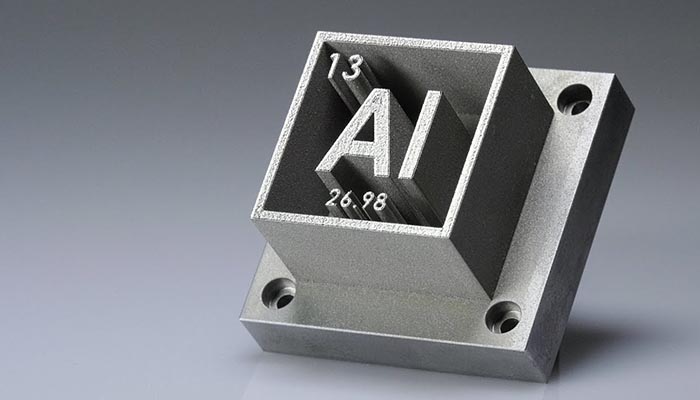
Being one of the most common metals in the 3D industry, it is not surprising that steel was the first metal used in additive manufacturing. In this group, we can find two types: stainless steel and maraging steel.
Stainless steel is very present in everyday life, the mechanical industry, and medicine. It has good metallic properties and allows for a polished and shiny surface. Several manufacturers in the 3D industry offer this material, such as EOS, ProMetal, or Desktop Metal. Some of its properties include: hardness, tensile strength, formability, and impact resistance. It is also possible to print parts in bronze or gold using stainless steel as the base material. This is achieved, for example, by coating layers of stainless steel powder with bronze injection glue during printing. On the other hand, the company EOS has developed the so-called Maraging Steel MS1, which is used in the manufacture of tools or molds, thanks to its strength and fracture resistance.
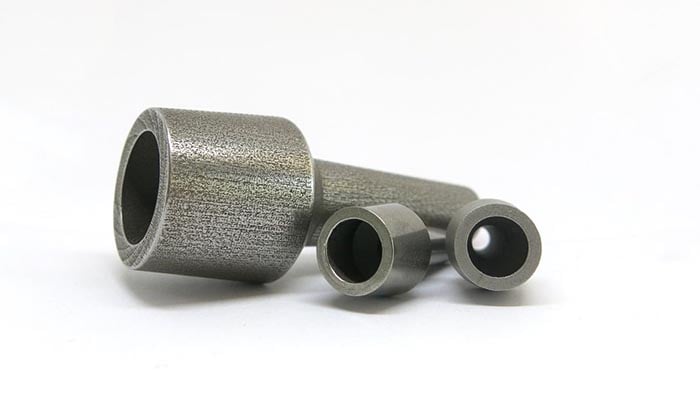
Copper is another of the metals compatible with additive manufacturing. Its properties include high electrical and thermal conductivity, ductility (plastic deformation without fracture), and malleability (deformation by compression). In the 3D printing sector, copper is found both as filament and as metal powder. Due to its characteristics, this metal is ideal for thermal management and electrotechnical applications (inductors, electrodes, heat exchangers, etc.), as well as for tooling and tool manufacturing. Some of its most common alloys are: CuNi2SiCr, CuCrZr, CuCP, Cu.
Even in R&D, gallium is used as an alloy with 25% indium, to print objects from small metal bubbles or self-supporting metal wires for assembling electronic components. The particularity of this alloy is that in addition to melting at a low temperature of nearly 30°C, both metals also harden in air while the interior remains liquid, allowing the print to be flexible. However, price remains the main obstacle when it comes to commercializing this material for use in 3D printing.
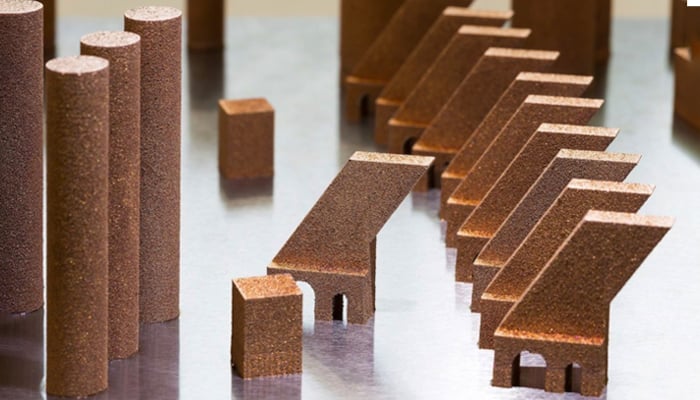
Titanium is the material of choice for medicine and the aerospace industry, thanks to its excellent composition in terms of strength and weight, as well as its high corrosion resistance and bio-compatibility. It is a metal that can be found in powder or filament form. All grades of titanium exhibit corrosion resistance, ductility, and weldability, although grade one is relatively more castable than grades two, three, and four. The fourth grade is the strongest. 3D printing facilitates the manufacture of titanium parts and avoids impurities obtained with traditional techniques during the welding phase. However, a major drawback of this material is its high cost, as it is about 50 times higher than that of steel.
Like aluminum alloys, titanium alloys have improved mechanical properties and chemical behavior. The Ti6Al4V alloy is a prime example.