Editor’s Note
This article explores the unexpected origins of a household staple, tracing its journey from a specialized industrial cleaner to a ubiquitous domestic product. It also delves into the unique corporate culture of the company behind its success.

The popular product was originally used to clean circuits in jewelry and was repurposed for domestic use.
The offices of KH Lloreda, located in Granollers (Barcelona), resemble a rally team headquarters more than a company specializing in degreasers. They even have a television studio where they film their own commercials.
Josep Maria Lloreda, the 70-year-old owner and director, has just returned from the Titan Desert, the desert race in Arabia where they sponsor a team.
An enduro motorcycle with the KH-7 logo —their star product— sits in the center of the office floor. It belongs to Laia Sanz, a seven-time Dakar champion and one of the main ambassadors of the Barcelona-based brand, which celebrates its 75th anniversary this year. According to the Nielsen 2023 Valor report, it is the leader in degreasers (42.8% market share) and stain removers (48.1% share).
What started as a small family business dedicated to cleaning jewelry and electronic circuits has ended up as a cleaning product icon. Founded in 1949 by his father, Jaume Lloreda, the company was created to polish and clean rings and precious stones. Trained as a jeweler, he began receiving orders to coat the solder joints of necklaces and bracelets with gold.
The crisis of the nineties arrived, and the company faced its worst moment.
Very close to the end, that’s when it all began. The spray that occupies the shelves of half of Spain had the sole function at that time of cleaning the circuits that were later coated with precious metals.
In 2023, KH Lloreda reached 58 million euros in revenue, and the forecast is to exceed 65 million by the end of this fiscal year.
Another element that accompanied this new management was, according to Lloreda, knocking down all the office walls.
This year, investment in technological innovation has risen to 1.5 million euros.
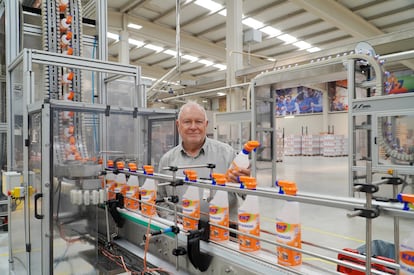
The silent robots in the factory produce 120,000 bottles per day. The owner of the Catalan company also boasts of having the world’s smallest bottle (by volume). It weighs, he says, only 28 grams, and a new version that will be 100% recyclable will be released this autumn.
With 77 workers, the company has landed in the USA and is present in 14 countries. By the end of this year, they will begin working in Ireland. Peru and Colombia are their next two targets.