Editor’s Note
This article examines the enduring preference for gold jewelry as an investment in India, despite expert advice suggesting it may not be the most financially sound strategy. It highlights the cultural and practical considerations that drive this choice.
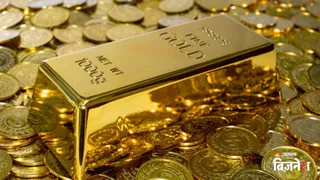
In India, physical gold is considered the best option for investment. However, there are three choices within this category: biscuits, coins, and jewelry. Yet, many Indian families still prioritize gold jewelry for investment even today. This is because that jewelry can serve as an investment and can also be worn when needed. However, experts believe that buying gold jewelry for investment is not a good strategy.
Sanjeev Prasad, Managing Director of Kotak Institutional Equities (KIE), clearly stated in a recent note that buying gold in the form of jewelry yields significantly weaker returns. His advice is for investors to choose Gold ETFs, or physical investment options like coins, bars, and biscuits (Gold Coin, Gold Biscuit, Gold Bar), as they are more beneficial and transparent.
According to the KIE report, when consumers buy gold jewelry, only 60-70% of the price they pay constitutes real gold value. The remaining portion goes towards making charges, diamonds, and other stones. The report stated that the weak performance of diamonds further reduces the returns.
Sanjeev Prasad further explains in the note:
According to Sanjeev Prasad, households buying jewelry need at least a 25-30% increase in gold prices just to break even. This means real profit will only come when prices rise even higher than that.
According to a report, Indian households have purchased $500 billion worth of gold and precious stones so far, while foreign investors have bought $200 billion worth of equities during the same period. The Kotak Institutional Equities report indicates that the value of Indian families’ gold holdings was $694 billion in FY15, which has increased to $2,113 billion by the end of FY25.
Meanwhile, according to the World Gold Council (WGC), high prices have weakened gold jewelry demand worldwide in the October quarter of 2025. Although seasonal increases were seen in India and China, demand remained significantly lower on a year-on-year basis. According to the WGC:
At the same time, the WGC reported that investment in Gold ETFs is growing rapidly. Inflows of $77 billion have been recorded so far in 2025, leading to an increase of over 700 tonnes in global ETF holdings. Looking from May 2024, the total increase is about 850 tonnes, which is half compared to the previous bull cycle, meaning there is significant room for further growth. Overall, reports indicate that for investors, Gold ETFs and Gold Bars are becoming safer and more cost-effective options compared to jewelry.