Editor’s Note
India’s first high-speed rail corridor is taking physical shape, marking a pivotal step in the nation’s infrastructure modernization. This report details the transition from planning to construction on the Mumbai–Ahmedabad line.
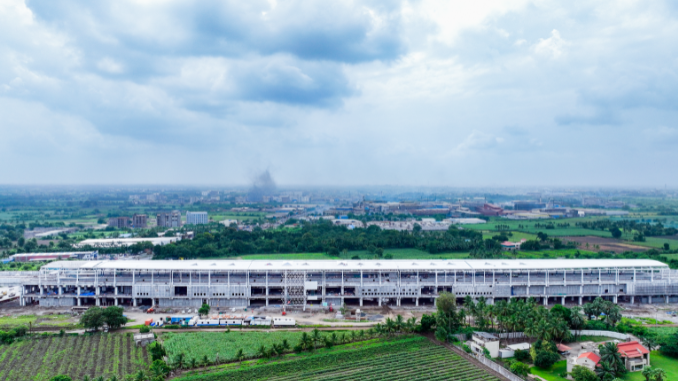
The Mumbai–Ahmedabad High-Speed Rail Corridor moves from blueprint to steel and concrete, as India readies its first true high-speed line and, as project notes from National High Speed Rail Corporation Limited confirm, embeds this route at the centre of its rail modernisation plans.
On the ground, engineers say the project finally looks tangible, not theoretical. They now walk along long runs of new viaducts, recently completed bridges, and fresh stretches of track bed that, frankly, change the mood on site.
Official figures show 326 kilometres of viaduct, 17 of 25 river bridges, and over 400,000 noise barriers installed along 216 kilometres; coverage in outlets like The Times of India underlines the sheer scale of that mitigation work.
For a single corridor, that already signals a substantial share of India’s current transport build-out.
Prime Minister Narendra Modi’s review in Surat gave political weight to that progress, and it also sent a message to project teams. He toured the under-construction station, questioned engineers about methods and timelines, and, to be fair, treated the visit as a working inspection rather than a photo opportunity, much as the official note from PM India makes clear.
At the same time, planners weave in very practical elements—lounges, retail space, clear circulation routes—because they know passengers judge a system by everyday comforts.
Engineers also stress multi-modal links. They design the station to plug into the future Surat Metro, city buses, and existing rail services; in practice, that connectivity will decide whether travellers see the bullet train as a seamless option or an isolated premium product.
In economic terms, the Mumbai–Ahmedabad High-Speed Rail Corridor does more than cut journey times on paper. It takes trips that now last 6–7 hours by road, or 4–5 hours by conventional train, and shrinks them to roughly two hours—changing how executives, workers, and tourists plan their day.
That time gain runs along a very specific map. The corridor links Mumbai, Thane, Virar, Boisar, Vapi, Surat, Bharuch, Vadodara, Anand, Ahmedabad and Sabarmati, so it effectively stitches together a chain of industrial clusters, logistics hubs, and service centres that already drive much of western India’s output.
For many commuters and small businesses, the implications feel more gradual than dramatic. Faster links can pull investment toward station areas, raise land values, and open up new labour markets—developments that usually arrive step by step, not overnight, but still alter local economies over time.
Inside the project, the human stories matter almost as much as the concrete. Engineers from Kerala and Bengaluru describe working with robotic welding units, intensive quality checks, and design reviews that challenge every assumption, and those experiences quietly build a deeper pool of high-speed rail expertise in India.
That mindset echoes earlier phases of India’s space programme, when initial satellite missions created the institutional memory for later successes. If this corridor follows the same pattern, the bullet train will not just move passengers faster; it will also leave behind a tested playbook for the next generation of large transport projects.
