Editor’s Note
This article introduces the distinction between traditional ceramics and advanced technical ceramics, highlighting the two main categories—oxides and non-oxides—used in modern applications.
CERAMIC
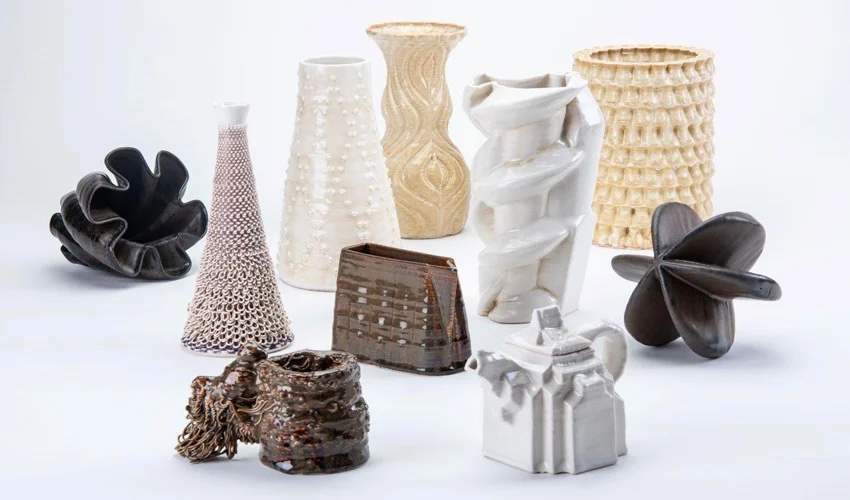
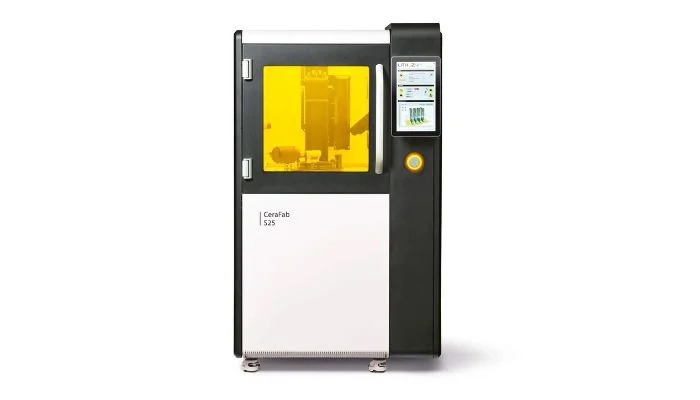
When we talk about ceramics, we often think of more traditional materials like clay or porcelain. However, there is also technical ceramics for advanced applications. Currently, there are two main groups of technical ceramics on the market: oxides and non-oxides. The first group includes metal oxides such as aluminum oxide, zirconium dioxide, and silicon dioxide. The second group includes materials like silicon carbide, silicon boride, or silicon nitride. The use of these materials is ideal for parts requiring high temperature and wear resistance. A ceramic 3D printer can use various manufacturing processes, from powder binding and stereolithography to extrusion. In our listing, you can learn more about the different ceramic 3D printers available on the market.
Sand could also fall under the ceramic category. It is used to manufacture complex parts, primarily for creating casting molds. Using this material reduces waste and saves energy, and the manufacturing time is significantly shorter than with other processes. It can be used for mass production of finished products or for prototyping with machines like the S-Max Flex from ExOne.
Cement is part of ceramic materials and, combined with aggregates and water, forms a uniform concrete mixture suitable for 3D printing. Thus, additive manufacturing has gained increasing importance in the construction sector, as we have already seen in various projects like 3D-printed houses. Using concrete as a building material is very economical, while printer prices range from €160,000 to over €1 million. Some printers available on the market include the Apis Cor House printer or the Crane from WASP. Speed is one of the advantages characterizing the printing of these machines.
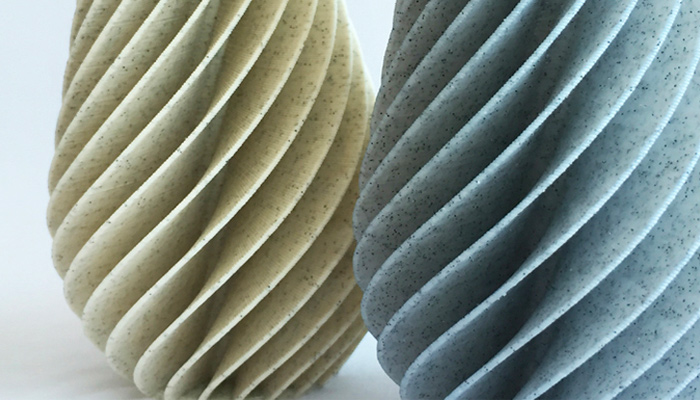
Stone is another ceramic option suitable for additive manufacturing. The material is mainly used in the form of filaments for FDM/FFF 3D printers. These stone filaments consist of a mixture of gypsum and plastic. Manufacturers offering such filaments include ColorFabb and Formfutura. The amazing thing about these filaments is that they actually look and feel like stone. This makes them ideal for decorative applications aiming for a natural appearance.
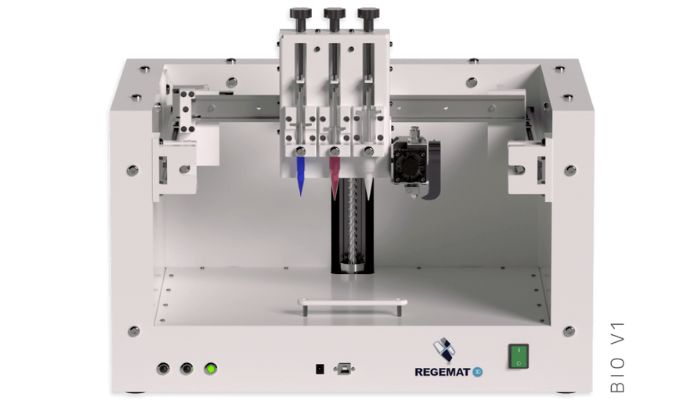
Having covered ceramic materials, let’s now turn to organic materials, starting with bioprinting. Bioprinting is the 3D printing of a “bio-ink.” This printing material consists of cellular material and can be used to create skin, tissue, tendons, or even organs. The printing process is done by layer-by-layer deposition using a laser or a syringe, depending on the type of bioprinter. Just a few years ago, it would have been considered impossible to develop a 3D-printable material that mimics complex biological tissue. Today, this is possible thanks to the great potential of 3D printing.
Wood is an organic material mainly used in the form of filaments, similar to stone, for FDM/FFF 3D printers. The filaments for 3D printing contain 30-40% wood fibers and 60-70% polymer. Manufacturers offering these filaments include ColorFabb and Formfutura. The interesting thing about these materials is that they are very similar to wood both visually and haptically. They can also be used to manufacture more sustainable finished parts. There are also solutions like the Desktop Metal Shop System™ – Forust Edition, which uses binder jetting for 3D printing with wood.
This organic material is mainly used for casting, whether for mechanical parts, artworks, in dentistry, or for jewelry manufacturing. Regarding the material, for example, M3 Hi-Cast is used with the ProJet MJP 3600W and 3600W Max 3D printers from 3D Systems. Additionally, the company Solidscape from Stratasys specializes in 3D wax printing machines and offers models like the 3Z Studio, 3Z Pro, and MAX2. They function similarly to FDM printers for plastic but include a milling tool in each layer to make them uniform and flat. Furthermore, 3D Systems offers the ProJet MJP 3600W or Projet MJP 2500W series, which are ideal for jewelry manufacturing.
As we can see, 3D printing has a wide variety of applications. Who would have thought that today we could print food?