Editor’s Note
This article examines how cultural patronage, exemplified by figures like Sheikha Moza bint Nasser, serves as a powerful instrument of soft power and national branding on the global stage, particularly within high-profile events like Art Basel.
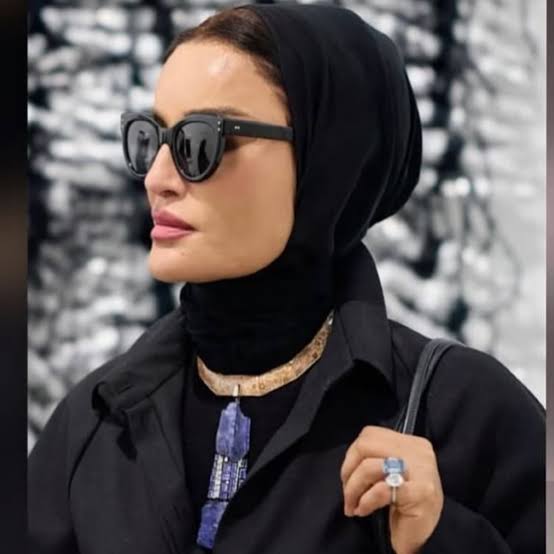
In an era where the art world and nation-states increasingly converge, Qatar’s leading figure and fashion icon, Sheikha Moza bint Nasser, has captured international attention with her distinctive image, which has become a symbol of opulence and soft power.
During the inaugural Art Basel Qatar—the prestigious contemporary art fair’s first foray into the Middle East, North Africa, and South Asia, held in Doha through a collaboration between Art Basel, Qatar Sports Investments, and QC+—the Sheikha drew notice.
Moza, adorned in an elegant and striking black ensemble, wore a ring set with a blue diamond valued at over $500,000, renowned for its rarity and pure hue. This gemstone, one of the world’s most coveted, instantly made her the focus of international media and gem enthusiasts.
But the true surprise was the sculptural necklace by Edmond Chin, crafted from tanzanite, diamonds, and organic materials, which many critics hailed not only as a striking piece but as a true wearable artwork—a bridge between contemporary design and jewelry craftsmanship.
Moza’s presence at this significant art fair must be viewed through the broader lens of cultural diplomacy: in recent years, Qatar has been committed to consolidating Doha’s position as a regional hub for international art and collecting. The opening of Art Basel Qatar and numerous ongoing cultural projects attest to this ambition.
Beyond frequently captivating attention with her unique style, Sheikha Moza has long been engaged in institutional and social causes. She is the co-founder and chairperson of the Qatar Foundation for Education, Science and Community Development (QF) and is dedicated to advancing global education, innovation, and social development projects, including collaborations with the United Nations.
Moza’s status as a fashion icon is well-established: she has repeatedly topped international fashion rankings and is often associated with haute couture and precious, rare jewelry collections. Her personal collection of accessories, including pieces from Cartier, Van Cleef & Arpels, and other master jewelers, is considered one of the world’s most opulent.
Her role extends far beyond aesthetics: for years, Moza has been a leading figure in public initiatives, from launching education summits to promoting culture, health, and social rights. Recently, she also presided over ceremonies related to significant cultural institutions, such as the opening of the Pearl and Islamic Art exhibition in Doha.