Editor’s Note
This article examines the recent surge in silver prices to a 45-year high, driven by a potent mix of investor FOMO and market dynamics. As precious metals capture global attention, we break down the factors behind this historic rally.
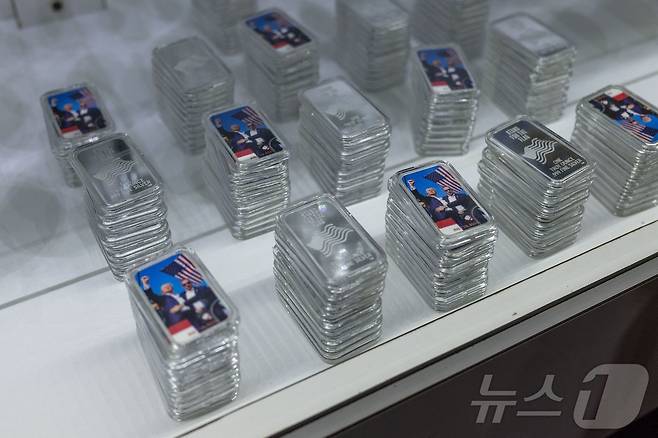
International silver prices have hit a record high for the first time in 45 years. Following gold, which has been rewriting its own all-time highs, the surge in silver prices has swept the precious metals market into a so-called ‘FOMO’ (fear of missing out) frenzy, potentially fueling a massive rally.
On the 13th (local time), both spot and futures prices for silver in London and New York broke historical records, surpassing the 1980 peak. The London spot price surged 6.8% to $52.58 per ounce, while the New York futures price jumped 4.3% to $50.27 per ounce.
Silver has skyrocketed 73% this year, outpacing gains in gold (56%) and the tech-heavy Nasdaq index (17%) on the New York stock exchange.
The immediate trigger for the recent silver price surge is a ‘short squeeze’ phenomenon in the London market. Silver inventories in London saw a massive outflow due to concerns that silver could become a target of import tariffs imposed by President Donald Trump.
This caused the London spot price to become unusually high compared to New York futures. Traders who had bet on falling silver prices were forced to buy silver to cover their losses amid the inventory shortage and price spike, further accelerating the price increase.
Adding to the upward pressure, silver’s inclusion in the Trump administration’s ‘Section 232 investigation into critical minerals’ has intensified buying.
President Trump issued an executive order in April to investigate the impact of imports of key minerals, including silver, on national security. The Commerce Department is expected to submit a related report by mid-month. While the statutory maximum deadline is mid-January next year, there were instructions for swift processing.
Like gold, silver is considered a safe-haven asset, but it also attracts investment demand due to being undervalued relative to gold. Its role as a key material for future industries, beyond just an investment asset, also supports the price. Silver is used in everything from solar panels to AI hardware and high-performance electronics.
Bank of America (BoA) and Citigroup have raised their silver price forecasts, citing high inflation, potential interest rate cuts, and geopolitical uncertainty.
However, caution is needed as the silver market is only one-ninth the size of the gold market, implying lower liquidity. The previous record high in 1980 was followed by a crash after it was revealed to have been manipulated by the sons of a Texas oil tycoon.
Analysts cited by Bloomberg and The Wall Street Journal (WSJ) expect that even small-scale selling, such as silver coins, could emerge in the current soaring price environment, potentially putting downward pressure on prices.
Goldman Sachs analysts pointed this out in an investment note.
Goldman also anticipates that in the absence of central bank buying to support silver prices, a temporary slowdown in investment flows alone could trigger a sudden correction (typically a 10% decline from a high).