Editor’s Note
This article introduces the emerging concept of the “Tariff Dividend,” a proposed U.S. policy framework aiming to balance trade protectionism with direct public benefit. It outlines a model where revenue from tariffs funds citizen dividends while protecting domestic industry, presenting it as a potential path to a “dual benefit” economy.
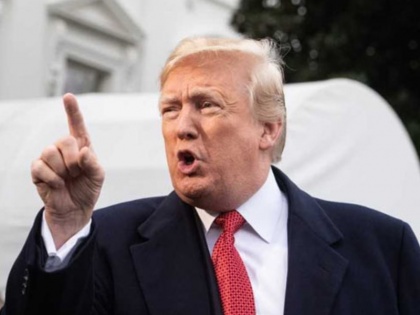
- A portion of the revenue is returned directly to citizens as a dividend or bonus.
- Domestic industry gets protection, while citizens’ purchasing power is maintained.
- The primary goal of the Tariff Dividend is to bring the US economy into a situation of dual benefit.
Amidst increasing global trade competition and political tensions, the United States has given birth to a new economic concept, being called the ‘Tariff Dividend’. The core idea is that when a country imposes import duties (tariffs) on foreign goods and earns substantial revenue, a portion of that revenue is returned directly to its citizens as a dividend or bonus.
This provides protection to domestic industry on one hand, while on the other hand, citizens’ purchasing power is maintained.
The primary goal of the Tariff Dividend is to bring the US economy into a situation of dual benefit. First, to secure billions of dollars in additional revenue for the government by imposing high duties on foreign goods, and second, to provide cash incentives to citizens from this same revenue to boost domestic consumption. Currently, the US annual customs revenue is between approximately $80 to $90 billion, which has nearly doubled after the tariff increases of the Trump era.
This policy also has some limitations and risks. When imports become expensive, the prices of goods increase, putting pressure on inflation. For example, after tariffs on steel and aluminum increased, the cost of construction materials in the US rose by up to 12 percent. An average price increase of 8-10 percent has also been observed in the electronics and automobile sectors. This impacts the pockets of ordinary consumers, and if inflation rises, the cash benefit from the Tariff Dividend quickly diminishes.
For India, this situation is mixed. It is an opportunity on one hand and a challenge on the other.
It is an opportunity because the US is now working on a policy of ‘friend-shoring’, i.e., sourcing goods from trusted countries. In this process of moving away from China, India could become a key partner. If the US reduces imports from China and increases them from India, significant growth opportunities will open up for India in sectors like electronics, pharma, engineering, chemicals, textiles, and auto parts.
On the other hand, the Tariff Dividend policy also creates challenges. If the US continues to impose high tariffs on Indian goods to protect its domestic industries, our exporters could face a setback. The US already imposes duties ranging from 7 percent to 12 percent on Indian gems-jewelry, pharmaceutical, and textile sectors. If this increases, India’s competitive capacity could be affected.
India will have to adopt a balanced strategy in this scenario. First, it will have to diversify into new export markets like Europe, Gulf countries, and Africa to reduce dependence on any single country. Second, programs like ‘Make in India’ and the PLI scheme must be strengthened so that India emerges as a global manufacturing hub. Third, attention must be paid to technological improvements and a skilled workforce to enhance quality and production capacity.
It can be said that the Tariff Dividend is an innovative experiment in American politics and economy. It can provide relief to American citizens in the short term and offer protection to domestic industry. However, its long-term effects are mixed.