Editor’s Note
This article highlights the growing market for sustainable smartphones, spotlighting manufacturers leading the way in ethical and eco-friendly practices. While the challenges are significant, it argues that progress is both achievable and already underway.
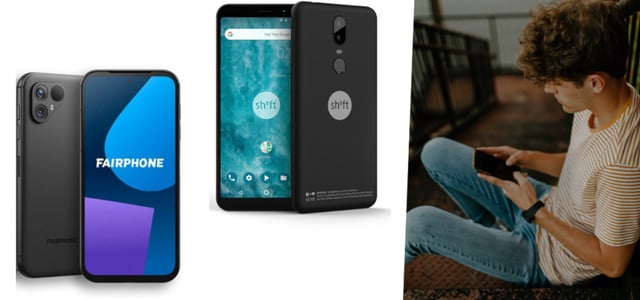
The sustainability issues of smartphones are complex; you’ll learn more about them below. First, we would like to name manufacturers that are doing better than the competition and are trying to offer fair and sustainable phones.
The Dutch technology company Fairphone introduced its Fairphone 5 in August 2023. We have already put the new Fairphone through a practical test. Like its predecessors, the more sustainable smartphone is built modularly. This allows users to buy spare parts and, in many cases, repair their phones themselves if they break.
Fairphone has been committed to living wages since its founding and wants to expand its existing program to include suppliers. This is intended to prevent workers in mines from being exploited. The company now sources 14 materials like gold and lithium from fair sources or from recycling. Fairphone is also committed to recycling as many smartphones as the company sells.
The Fairphone is produced in China. However, the company has credibly set itself the goal of changing conditions on the ground and is transparent about its global supply chains. According to the manufacturer, production in Europe would even be associated with a higher carbon footprint because most components would still have to be sourced from Asia.
Since 2014, the Hessian company has developed seven more sustainable smartphones. All Shiftphone models are built so that they can be repaired by the owners themselves. For example, the battery is replaceable. You can order spare parts in their own shop or have repairs partly carried out by Shiftphone.
The special thing about Shiftphone: The company started with the goal of generating maximum meaning instead of maximum profit. That’s why the smartphones are modular, repairable, with a simple design and produced as fairly as possible. Shiftphone operates its own factory in China and, according to its own statements, pays about three times the local average wage. Several media outlets have confirmed this, such as a report by the magazine Galileo a few years ago.
The global demand for smartphones, laptops, and other electronic devices has been high for years. At the same time, too few smartphones are properly recycled and the raw materials used are not reused. This leads to a high demand for new raw materials.
Raw material extraction mostly takes place in politically unstable countries in Africa and other countries of the Global South, sometimes under inhumane conditions and with the help of child labor. This makes conventional smartphone production highly problematic.
Smartphones contain numerous metals and plastics, including so-called conflict minerals. If the extraction of raw materials leads to violent conflicts, they are counted as conflict minerals. This is the case with gold, tantalum, tungsten, and tin, among others.
Production also pays little attention to environmental protection; most materials travel long distances, and pollutants during extraction are commonplace. Finally, there is the problematic disposal of electronic waste.
Samsung also states – like Apple – that it aims for a circular economy for its products. The South Korean company has initiated recycling programs worldwide.