Editor’s Note
The global appetite for avocados has significant environmental and social consequences in producing regions, from deforestation to water scarcity. This article examines the true cost behind the popular superfood.
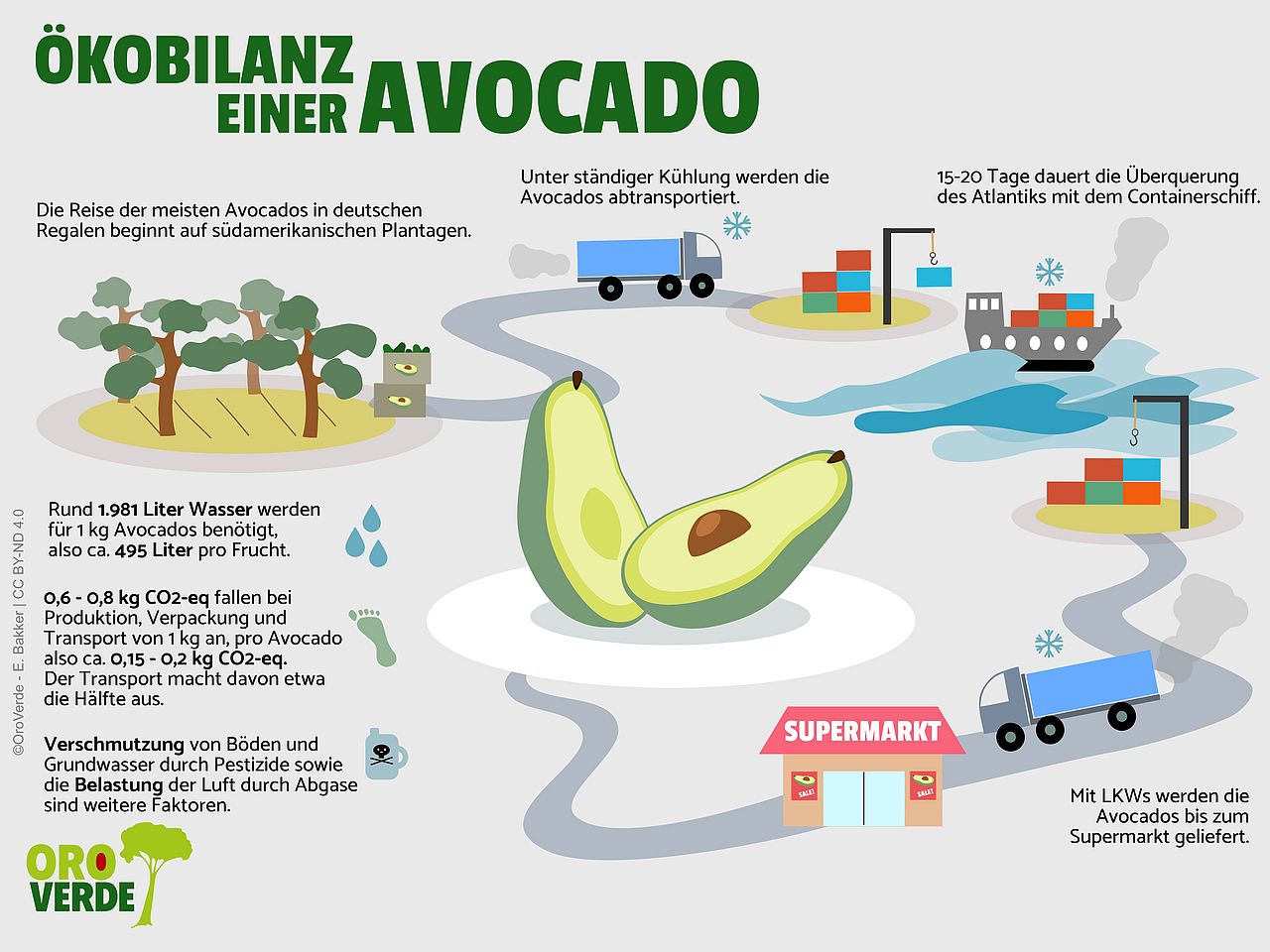
Avocados have been a popular trend food in Western cultures for years. Germany ranks fifth among the world’s largest avocado importers. However, the avocado boom is leaving its mark on the cultivation regions. Deforestation, water scarcity, and rising crime are the consequences of the growing demand for avocados.
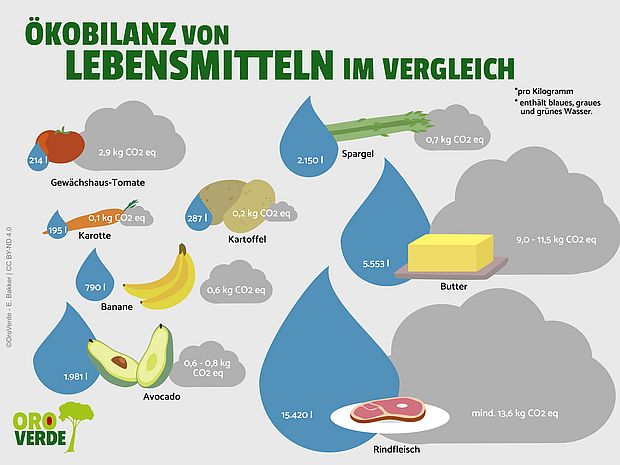
The superfruit is highly controversial due to its environmental footprint. The high water consumption of avocados is frequently criticized – yet it is rarely compared to other foods. In comparison to other fruits and vegetables, but especially to animal products, the “green gold” does not perform as poorly in terms of its environmental balance. Nevertheless, it is important to make our consumption more sustainable. How can this be achieved?
1. Avocados originate from South and Central America. The world’s largest producer is Mexico.
2. Tropical and subtropical forests are often cleared for avocado plantations. Approximately 20 percent of deforestation in the Mexican state of Michoacán is attributed to the expansion of avocado plantations.
3. Avocado cultivation is often linked to crime. As the business is very lucrative, it attracts gang crime in many places. This has become an intensified problem in Michoacán in recent years.
4. Avocado cultivation requires a lot of water. Almost 272 liters of water are needed to produce a single avocado.
5. Compared to foods such as winter tomatoes from greenhouses or meat and dairy products, the avocado’s environmental footprint is less poor than expected.
The avocado tree (Persea americana) belongs to the laurel family and originally comes from South and Central America. To bear fruit, the shrub-like trees, which can grow up to 20 meters tall, need a lot of water and a warm climate. For this reason, the largest producers of the coveted green fruit are located in the tropical forest belt.
Mexico is by far the world’s top avocado producer, followed by Peru, Colombia, the Dominican Republic, and Kenya. In 2024, Mexico produced a staggering amount of over 2.7 million tons of avocados.
Despite their tropical origin, avocados are now also cultivated in other, primarily Mediterranean, climate zones. For example, Israel ranks eighth among global producers (as of 2024). Within Europe, Spain leads in the production of this trend food. In 2024, over 112,000 tons were produced there.

More and more avocados are consumed each year: In Germany alone, import volumes have more than quintupled in the last ten years. To meet the enormously increasing demand for avocados, more and more land is needed for avocado plantations. According to data from the Food and Agriculture Organization of the United Nations (FAO), the global harvest area for avocados nearly doubled between 2012 and 2022: In 2022, avocados were harvested from a total of 884,035 square kilometers worldwide – that’s more than twice the size of Germany!
However, this figure does not provide precise information on the total global cultivation area for avocados. The successful cultivation of avocados requires a lot of time and planning. It can take three to four years for a small avocado tree to bear fruit. If the plant is grown from an avocado pit, it often takes 13 years or longer for the plant to bear fruit. Therefore, the total area of avocado plantations is likely far greater than the 884,035 square kilometers recorded in 2022.
The booming avocado industry is a major driver of deforestation. To make room for monocultures, forests must be cleared. A 2023 study found that the increased demand in Michoacán poses a serious threat to the local forests, especially to tropical dry forests with pines and oaks. Avocado plantations were established on almost 20 percent of the area deforested in Michoacán between 2001 and 2017. By 2050, an expansion of cultivation areas by a further 117 percent is predicted in this so-called “Avocado Belt.” The mass-planted avocado trees absorb only a quarter of the CO2 that native species store and offer little to no habitat for animals and plants.
This deforestation often occurs illegally. Land use changes must normally be approved by the Mexican government; but according to a New York Times report, almost all avocado plantations in Michoacán were established unlawfully. In more extreme cases of illegal plantation establishment, private land is seized by another party, often by landowners or organized criminal groups. This process is called land grabbing.
However, not only Mexico suffers from the consequences of the avocado boom. In Peru, Colombia, and the Dominican Republic, there have also been increasing land use changes in recent years, which have enormous impacts on the local tropical dry and rainforests.
In cultivation areas, water scarcity or groundwater contamination can occur.