Editor’s Note
This summary highlights the robust growth trajectory of the global gemstones market, projected to nearly double in value over the next decade. The primary driver remains strong consumer demand for luxury and personal adornment.
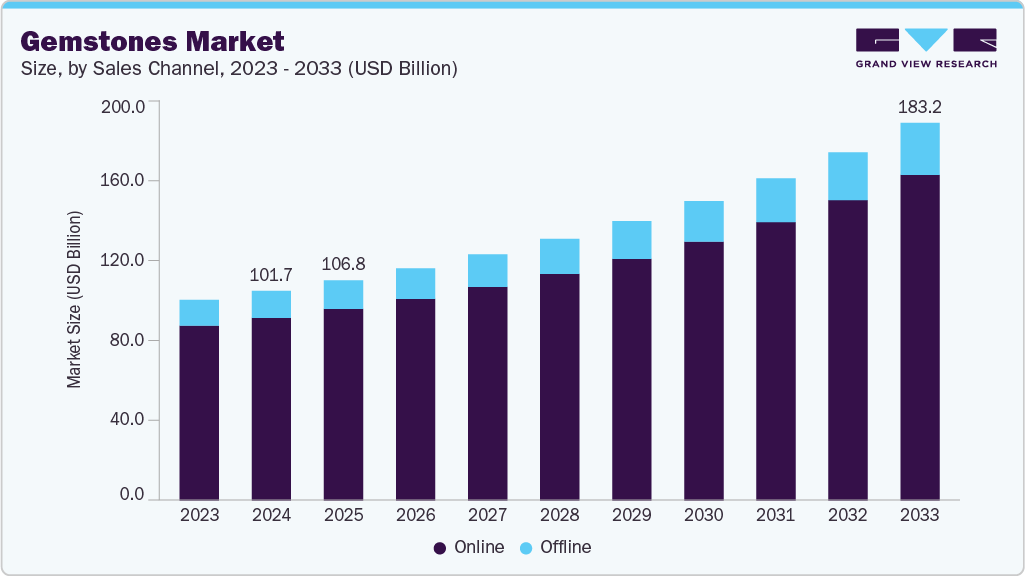
The global gemstones market size was estimated at USD 101.73 billion in 2024 and is projected to reach USD 183.17 billion by 2033, growing at a CAGR of 7.0% from 2025 to 2033. The gemstones industry is experiencing growth driven by rising consumer demand for luxury goods and personal adornment.
- Asia Pacific dominated the gemstones market with the largest market revenue share of 46.3% in 2024.
- The gemstones market in the U.S. is expected to grow at a substantial CAGR of 7.4% from 2025 to 2033.
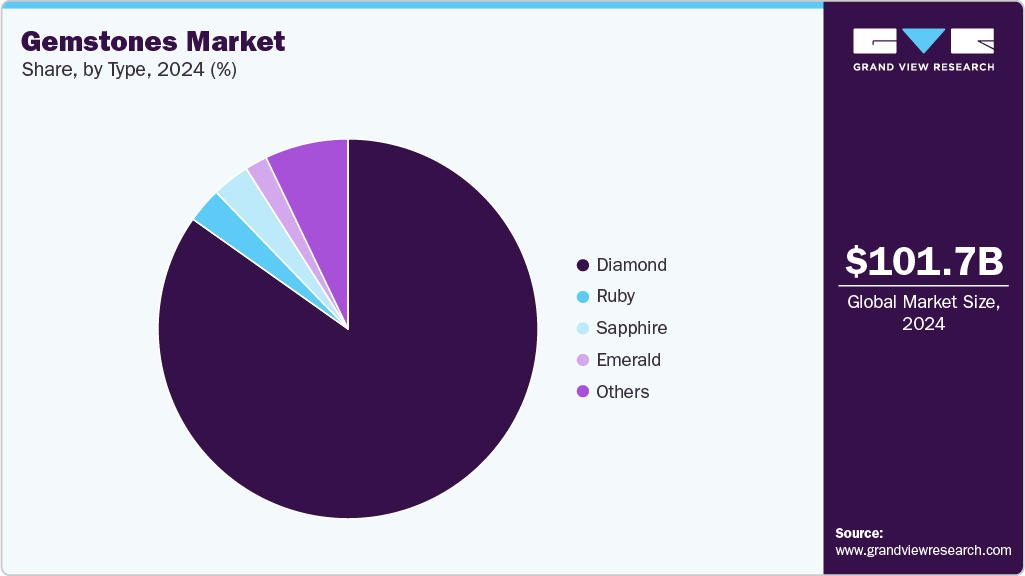
- By type, the diamond segment led the market with the largest revenue share of 84.8% in 2024.
- By sales channel, the offline segment is anticipated to register at the fastest CAGR of 7.8% from 2025 to 2033.
- 2024 Market Size: USD 101.73 Billion
- 2033 Projected Market Size: USD 183.17 Billion
- CAGR (2025-2033): 7.0%
- Largest Market Region in 2024: Asia Pacific
Increasing disposable incomes in developing countries have expanded the customer base for premium jewelry. As more consumers view gemstones as symbols of wealth, elegance, and individuality, retailers invest in innovative designs and marketing campaigns to capture demand. The growing middle-class population in regions such as the Asia Pacific has also created strong momentum in sales. For instance, in India and China, sales of high-value jewelry collections during festive seasons and weddings have surged, boosting demand for diamonds and other precious stones. Global jewelry brands such as Tiffany & Co. and Chow Tai Fook are expanding their retail presence in Asia Pacific to tap into this rising demand, reflecting the growing appeal of gemstones as symbols of wealth, elegance, and individuality.
Gemstones are no longer confined to high-end jewellery but are also used in watches, accessories, and clothing lines. For example, luxury watchmakers like Rolex and Cartier use sapphires and rubies in limited-edition models, while fashion brands such as Gucci and Louis Vuitton incorporate gemstone embellishments into handbags and couture lines. These applications broaden the consumer base and allow gemstones to reach new lifestyle-driven markets, fuelling overall growth.
The rising popularity of colored gemstones is also a major growth factor. While diamonds have traditionally dominated the market, colored stones such as emeralds, sapphires, and rubies are gaining traction due to their rarity and unique visual appeal. For example, Gemfields Group has promoted ethically sourced emeralds from Zambia and rubies from Mozambique, which younger consumers increasingly seek after. Millennials and Gen Z are particularly drawn to colored gemstones that express individuality, as seen in the growing demand for alternative engagement rings featuring sapphires or morganites instead of traditional diamonds.
Technological advancements in gemstone mining and processing are supporting market expansion. Improved extraction methods and authenticity verification tools are helping ensure better quality and transparency. Companies such as ALROSA and Rio Tinto have introduced blockchain-based certification systems to guarantee the authenticity of diamonds. At the same time, online platforms like Blue Nile provide digital certificates and purchase options. This technology adoption builds consumer trust and enhances accessibility, with e-commerce driving significant gemstone sales in regions such as North America and Europe.